24/7 cover · Nationwide from Oxfordshire

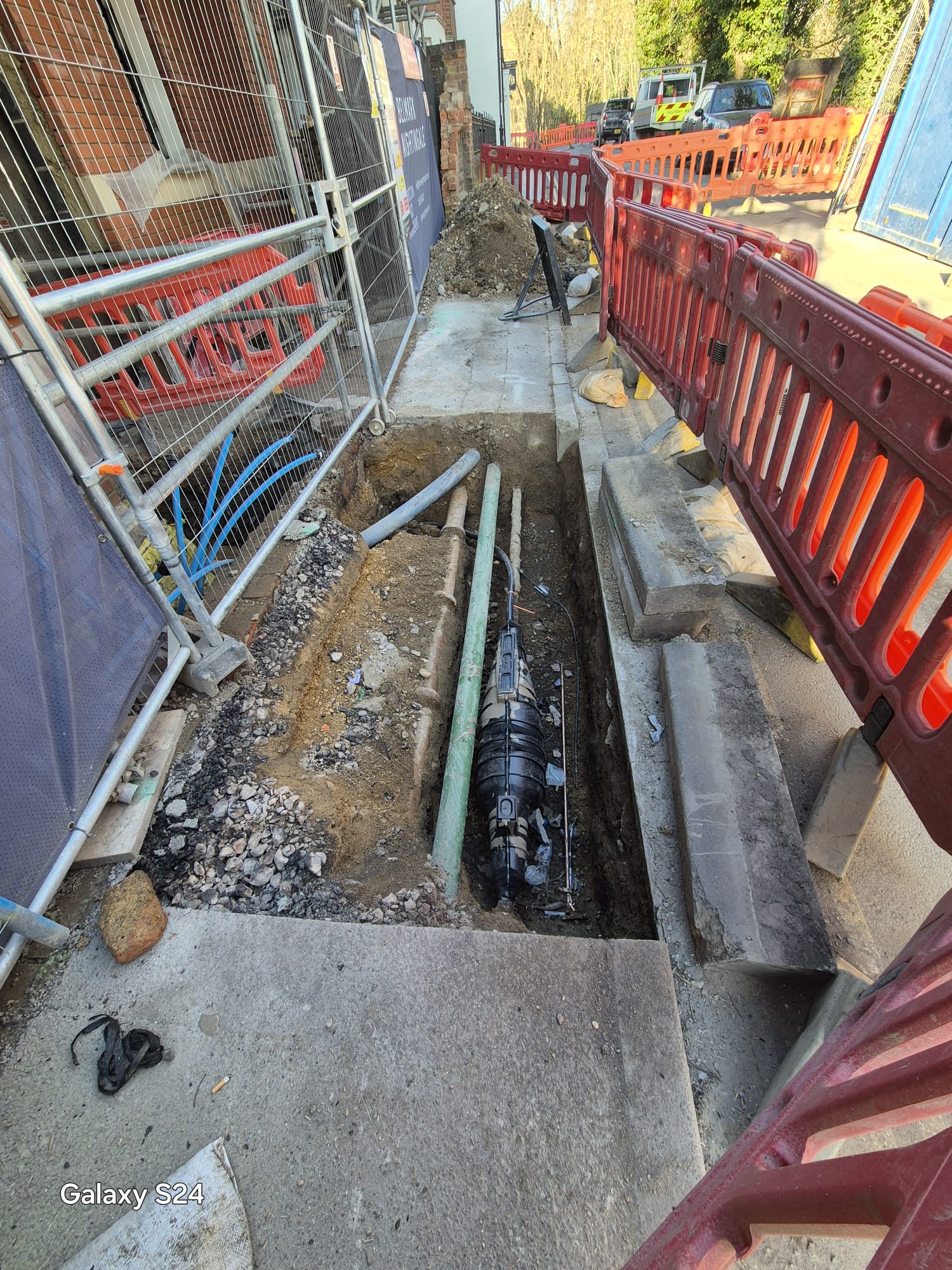
Utilities excavation guarded by barriers and fencing with a protected pedestrian route

Barriers, separators & access control

Barriers, Separators andControlled Site Accessfor Oxfordshire and UK sites.

Physical separation is what stops a pedestrian stepping into a live lane and a delivery driver reversing into a footway. We supply, install and maintain the barriers, the ground protection and the manned access points that keep both apart.

Pedestrian and vehicle barriers · separators and ground protection · manned access points · Chapter 8 compliant · around 150 vehicles for delivery · £10m public liability.

25

Years in traffic management

~300

Operatives & staff

~150

Lorries, vans & cars

£10m

Public liability cover

24/7

Cover, including call-outs

The service

Physical separation and controlled access, supplied and installed

Barriers do the job signs cannot. A sign asks for compliance; a barrier makes the safe route the only route. On highway and site works that means pedestrian barriers with tapping rails guiding people along a protected footway, water or plastic separators dividing a working space from a running lane, and vehicle barriers and gates controlling who enters a compound.

We supply, deliver, install and maintain the range: pedestrian guardrail and barriers, interlocking separators, ground protection and trackway, cones and cylinders, gates and access points, and marshalled or manned access where the movement needs a person rather than a lock. Everything is installed to the scheme drawing rather than left for site staff to arrange.

It suits developer site accesses onto public highways, footway closures around scaffold and hoardings, long-term compound entrances, works where plant repeatedly crosses a footway or carriageway, events needing crowd separation and controlled crossing points, and any site where deliveries have to enter from a live road.

Professional help matters because separation is a design decision. Barrier type, height, continuity, ground fixing and the geometry of an access point all determine whether the arrangement actually works, and an access badly positioned relative to sight lines creates a new hazard rather than controlling an existing one.

What it costs to get wrong

Cones ask politely. Barriers decide the outcome

The most common failure is using cones where a barrier is required. Cones mark an edge; they do not stop a distracted pedestrian, a child, a wheelchair or a cyclist entering a working space, and they give a visually impaired person nothing to detect. That is why compliant pedestrian routes use barriers with tapping rails at ground level.

Site access points fail differently and more expensively. A gate placed where drivers cannot see approaching traffic, or with no space to hold a waiting HGV clear of the carriageway, produces vehicles reversing on a public road and queues blocking a lane. Those are the incidents that reach the authority and the client's safety report.

Then there is the slow degradation. Barriers get moved by the public and by deliveries, ground protection shifts, gates get propped open because they are inconvenient, and an arrangement that was compliant at handover is unrecognisable a month later. Without inspection and resetting, nobody notices until something happens.

Mistakes we are called in to unpick

  • Using cones and tape instead of barriers with tapping rails for a pedestrian route, leaving visually impaired users with nothing to follow.
  • Leaving gaps between barrier units, which is where pedestrians take a short cut into the working space.
  • Positioning a site access without checking sight lines or leaving no holding area, so HGVs wait or reverse on the live carriageway.
  • Failing to protect verges, footways and services with ground protection, then paying for reinstatement at the end of the job.
  • Propping access gates open for convenience, which removes the entire control the access point was there to provide.

Our process

How the scheme gets fromenquiry to signed-off completion

  1. Step 1

    Requirement and risk review

    We identify what must be separated from what: pedestrians from traffic, the public from the working space, plant movements from footways, and site vehicles from the highway — and where a person, not just a barrier, is needed.

  2. Step 2

    Layout and access point design

    Barrier lines, route widths, crossing points, ground protection and access geometry are drawn as part of the scheme, including sight lines and vehicle holding areas so waiting vehicles stay clear of the carriageway.

  3. Step 3

    Approval and permissions

    Where the arrangement occupies the highway we take it through the authority with the permit, order, footway closure or licence it requires, so the installation has a legal basis as well as a drawing.

  4. Step 4

    Delivery and installation

    Barriers, separators, ground protection and gates are delivered and installed by our operatives to the drawing, with continuity checked so there are no gaps where people can cut through.

  5. Step 5

    Manning, inspection and resetting

    Where required we man access points and escort movements. Throughout the scheme we inspect, reset and repair the arrangement, and respond to damage and displacement including out of hours.

  6. Step 6

    Phase changes, collection and reinstatement

    Between phases the layout is changed as a planned operation, and at completion everything is collected, the ground protection lifted and the footway or verge returned to normal use.

What you get

Specific outcomes,not vague reassurance

Separation that actually separates
Continuous barrier lines with tapping rails, no gaps, and route widths that work for wheelchairs and pushchairs rather than only for able-bodied adults.
Accesses that do not queue onto the road
Access geometry designed with sight lines and holding areas, so deliveries wait on site rather than on the carriageway.
Ground and services protected
Trackway and ground protection prevent the verge, footway and buried service damage that turns into a reinstatement bill at the end of the job.
Arrangements that stay as designed
Inspection and resetting through the scheme, because barriers get moved by the public and deliveries every single week.
Manned control where it is needed
Where a movement needs judgement — plant crossing a footway, an HGV entering from a live lane — a ticketed operative is there rather than a sign.
One order with the wider scheme
Barriers, signage, signals, permits and crews from one contractor, backed by £10m public liability and £10m employers' liability.

In detail

Barrier types, ground protection and access control arrangements

The right product depends on what it must resist, how long it must stay, and who is on the other side of it. Below is the range and where each type belongs.

Pedestrian barriers and guardrail

Used to form protected footway routes past works, around excavations and along scaffold lines. Compliant units include a tapping rail at low level so that visually impaired pedestrians using a cane can detect the edge of the route, and they interlock so there are no gaps.

Route width matters as much as the barrier: too narrow and wheelchairs, pushchairs and two-way pedestrian flow cannot pass, which pushes people into the carriageway and defeats the arrangement.

Separators and vehicle delineation

Interlocking separators, water-filled and plastic barrier systems provide a continuous physical division between a working space and a running lane, and are the usual choice for contraflows, lane closures of any duration and long-term site frontages.

Cones and cylinders remain appropriate for delineation on shorter-duration and mobile works, but they are a visual device rather than a physical one, and the design should be explicit about which role is required.

Ground protection and trackway

Ground protection spreads load across verges, footways, grassed areas and surfaces over buried services, protecting them from tracked plant, deliveries and repeated vehicle movements. It is far cheaper than reinstating a churned verge or a cracked footway at the end of the job.

Trackway also creates usable temporary routes and standing areas on soft ground, which keeps site vehicles off the highway and reduces mud tracked onto the public road — itself a common source of authority complaints.

Site access points and gates

A controlled access point needs three things: adequate sight lines for vehicles emerging onto the highway, a holding area so waiting vehicles stand clear of the carriageway, and a clear pedestrian arrangement across the access so people are not stepping between reversing HGVs.

Gates, barriers and signing define the access, and where movements are frequent or the sight lines are constrained, a marshal or banksman controls them. On long-term developer sites the access arrangement typically needs revising as the site progresses.

Crowd separation for events

Events need separation between pedestrian flows and vehicles, defined crossing points, and barrier lines that channel large numbers of people to those crossings rather than allowing them to spread across a carriageway.

Because event arrangements are installed and removed in tight windows around a fixed date, the layout and the delivery sequence are planned in advance rather than resolved on the day.

Duration, maintenance and hire

Short hires are typically install, use, collect. Long-duration arrangements need a maintenance regime: barrier lines reset, damaged units replaced, ground protection relaid as it shifts, and gates checked because a propped-open gate is a control that has quietly stopped existing.

Equipment is available as part of a full traffic management scheme or as a standalone supply-and-install package with maintenance, whichever fits how your site is resourced.

On site

Barriers & Access Control we have installed

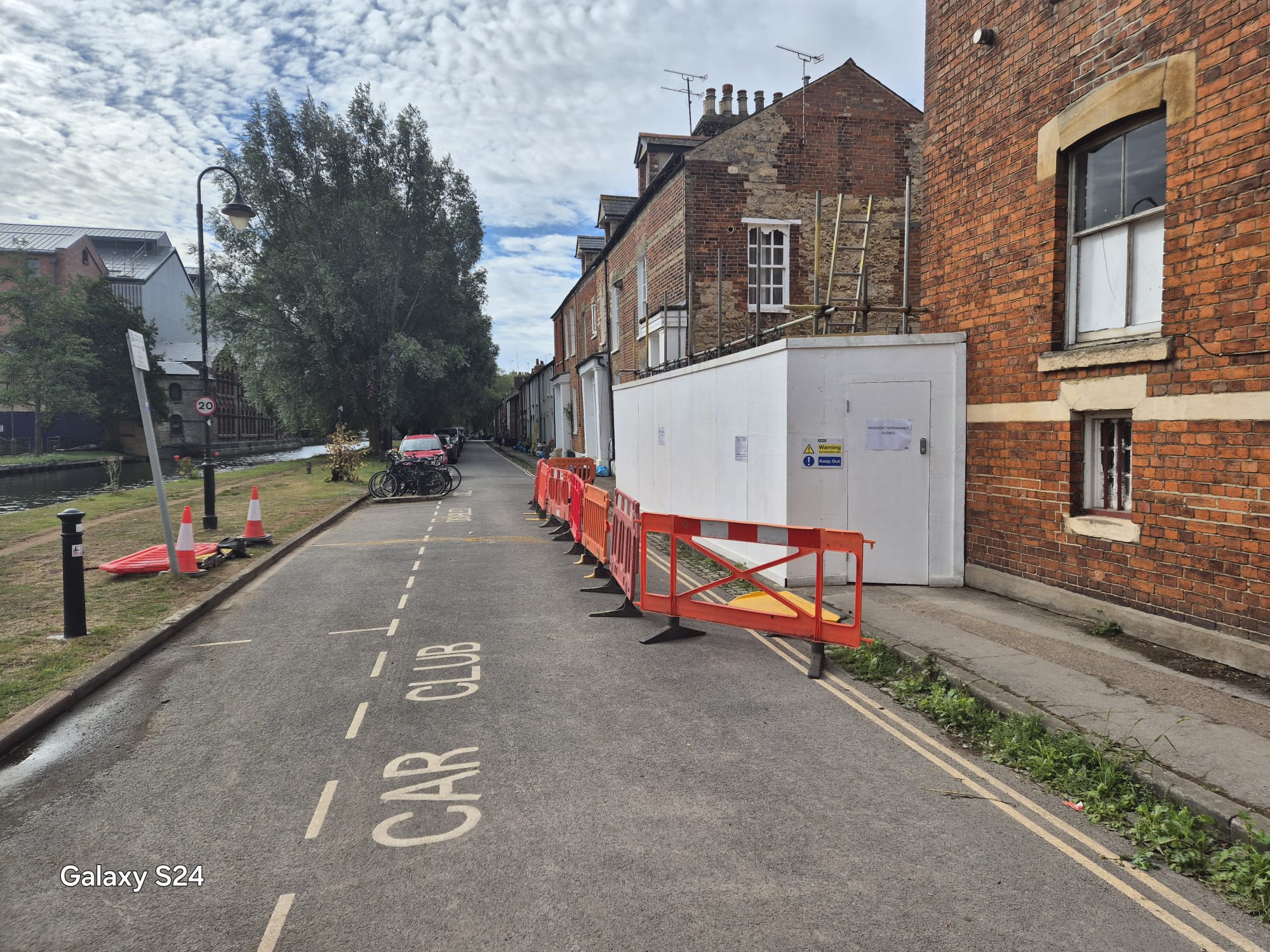
Continuous line of pedestrian barriers separating a closed footway from the live carriageway beside a hoarded site
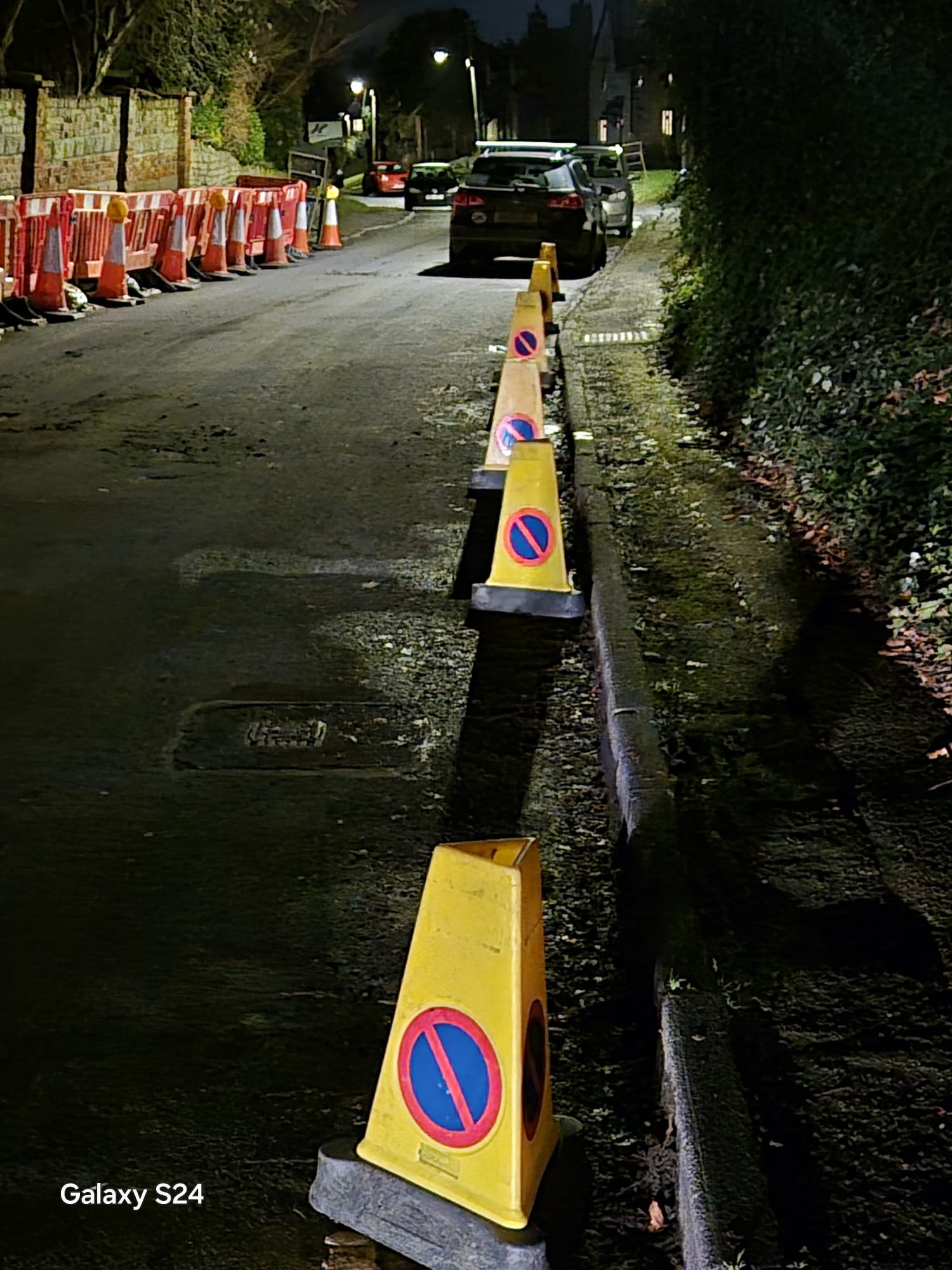
No waiting cones setting out a parking suspension along a kerb line at night
Utilities excavation guarded by barriers and fencing with a protected pedestrian route

More photography from live schemes is on our our work gallery.

Standards this work is delivered to

  • Sector Scheme 12 — 12A, 12B, 12C & 12D
  • Chapter 8 (Traffic Signs Manual)
  • New Roads & Street Works Act (NRSWA)
  • Lantra/NRSWA cards, T1/T2/T3 tickets
  • £10m public liability & £10m employers' liability insurance

Accreditations held

  • National Highway Sector Schemes
  • Constructionline Gold
  • BM Trada
  • CHAS
  • Acclaim
  • Achilles UVDB
  • Avetta
  • Builder's Profile
  • SafeContractor
  • ISO 9001

Certificates are issued for your pre-qualification pack on request. We work direct for end clients and as a subcontractor to principal contractors.

Straight answers

Barriers & Access Controlquestions we are asked

How much does barrier hire cost?

Cost is driven by the type and quantity of units, the length of the run, the hire duration, delivery and installation, and whether an access point needs manning. Pedestrian barriers around a short footway closure are inexpensive; a long separated frontage with ground protection and a manned access is a larger package. We quote per site in writing.

Do I need barriers or will cones do?

If pedestrians are being routed past a working space, you need barriers with tapping rails — cones provide no physical protection and nothing for a visually impaired person to detect. Cones are appropriate for vehicle delineation on shorter-duration and mobile works. We specify which the scheme requires rather than leaving it to the day.

Do you install the barriers or just deliver them?

We supply, deliver and install to the scheme drawing, and maintain the arrangement for the duration. Standalone supply is possible where you have competent crews, but continuity and positioning are where most non-compliance appears, so installation by us is the recommended route.

Can you control access into our compound from a live road?

Yes. That covers the access geometry and sight lines, the holding area so waiting vehicles stay off the carriageway, the pedestrian arrangement across the access, gates and signing, and marshalling or banksman support where movements are frequent or visibility is constrained.

How quickly can barriers be on site?

Equipment and crews are usually available at short notice, and with around 150 lorries, vans and cars, delivery across our coverage areas is routine. Where the arrangement occupies the highway, the constraint is the authority permit or licence lead time, which we handle and confirm in writing.

Do you provide ground protection for verges and footways?

Yes. Ground protection and trackway spread load and protect verges, footways, soft ground and surfaces above buried services. It typically costs a fraction of the reinstatement it prevents, and it also reduces mud carried onto the public highway.

Who resets the barriers when they get moved?

We do, as part of the scheme. Barrier lines get displaced by the public, deliveries and vehicles every week, so inspection and resetting are built into long-duration arrangements, with call-out cover for out-of-hours damage.

How long can I keep the equipment on hire?

From a few days to the full length of a long-term site access scheme. Longer hires include the maintenance regime needed to keep the arrangement as designed rather than as it has ended up.

Do you handle the permits for a footway closure with barriers?

Yes. Authority liaison is handled end to end, including permit applications, footway closure permissions and Temporary Traffic Regulation Orders where required, submitted with the scheme drawing.

Which areas do you supply barriers to?

Oxfordshire and Oxford as our heartland, plus London and all boroughs, the South East, Gatwick, the South West, Wales, the Midlands, the North and Scotland.

Related services

  • Low-Speed Traffic Management

    Urban and residential traffic management in Oxford, Oxfordshire and nationwide. Footway and lane closures, signals, pedestrian routes, permits handled. 25 years, £10m insurance.

  • Convoy, Stop-Go & Pedestrian Management

    Convoy working, stop-go boards and compliant pedestrian management in Oxfordshire and nationwide. Ticketed operatives, Chapter 8 routes, 24/7 cover, £10m public liability.

  • Signage

    Chapter 8 compliant advance warning, diversion and information signage supplied, installed and maintained across Oxfordshire and nationwide. 24/7 replacement cover, £10m insurance.

  • Site Safety & Professional Services

    Traffic management coordination, incursion prevention and warning systems, dynamic speed signage and site safety support across Oxfordshire and nationwide. 25 years, £10m insurance.

Where we deliver it

Based in Oxfordshire and working nationwide. See the full service areas list, browse all traffic management services, read about the company, or return to the homepage.

  • Oxfordshire
  • Oxford
  • Banbury
  • Bicester
  • Witney
  • Abingdon-on-Thames
  • Didcot
  • Kidlington
  • London
  • South East
  • Gatwick
  • South West
  • Wales
  • Midlands
  • North
  • Scotland

Tell us what needsseparating from what.We will design and install it.

Send the site, the access arrangement and the duration. You get a written estimate covering the barriers, ground protection, access control and the maintenance to keep it as designed.

25 years · Sector Scheme 12A–12D · £10m public liability · 24/7 cover

Send the details

Road type, duration and start date is enough to price it. We reply to every enquiry.