24/7 cover · Nationwide from Oxfordshire

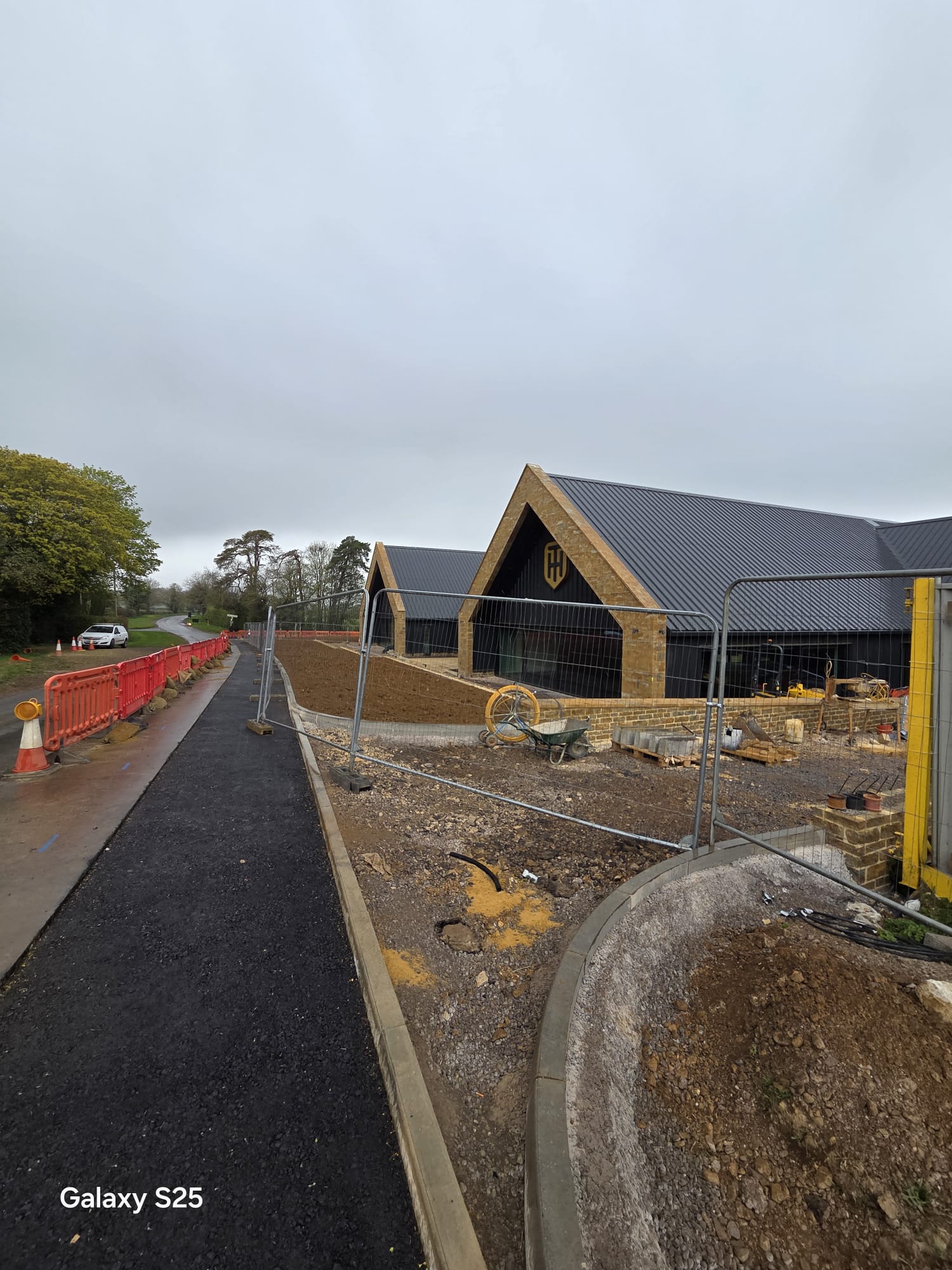
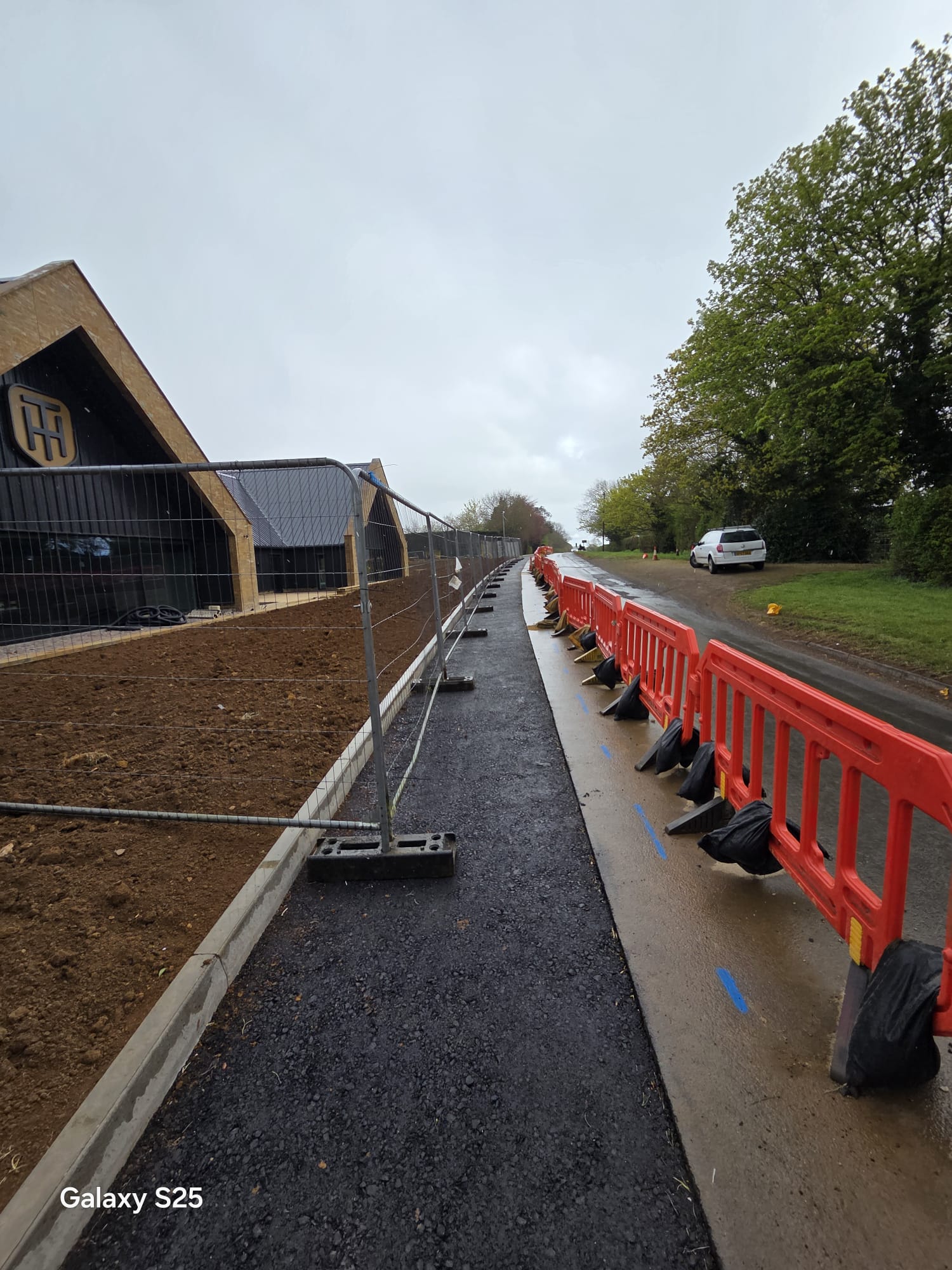
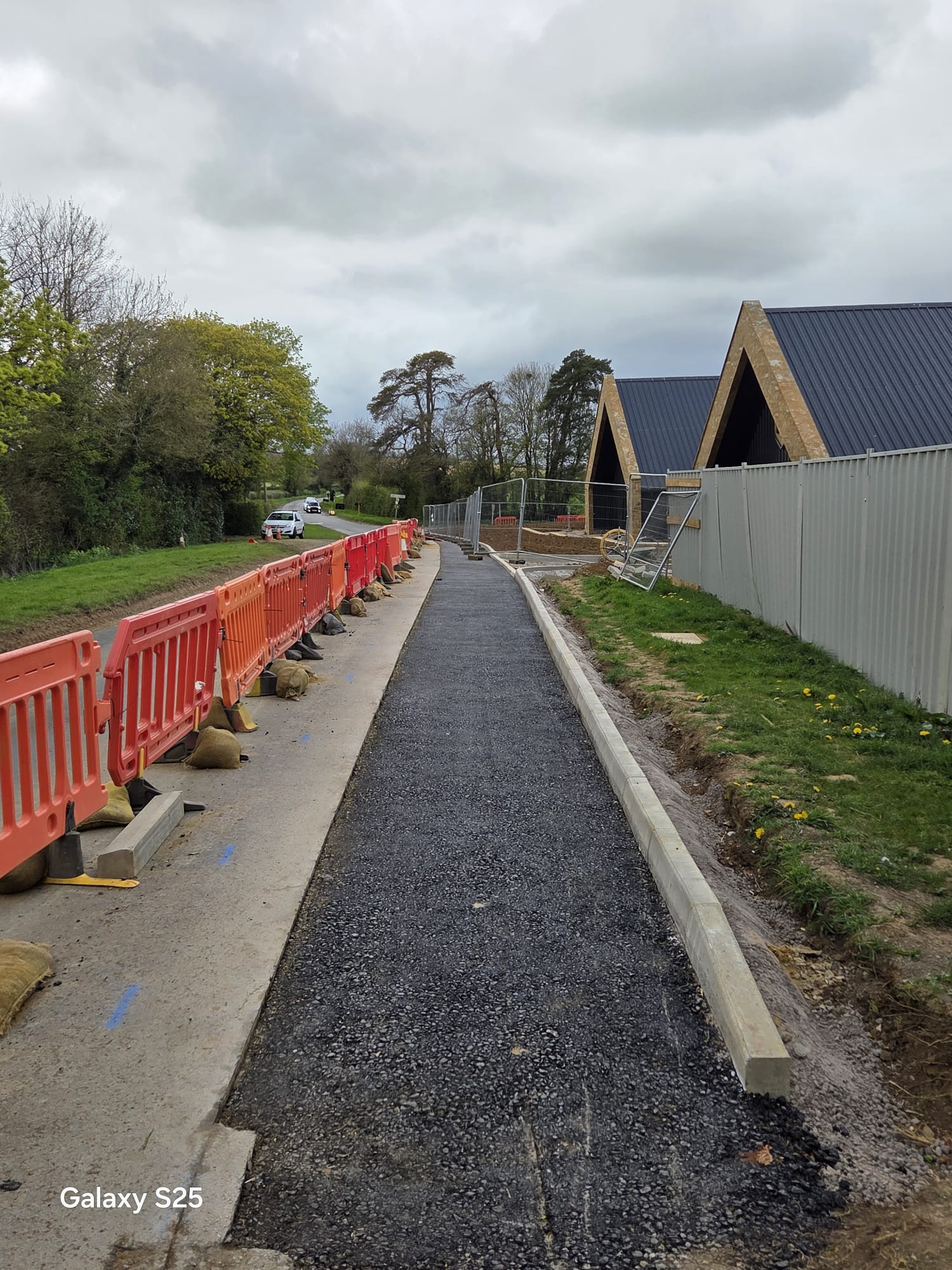
New footway under construction with pedestrian management barriers in place

Convoy, stop-go & pedestrian management

Convoy, Stop-Go and PedestrianManagement in Oxfordshireand across the UK.

Where signals cannot cope and a closure is not acceptable, trained operatives keep traffic and pedestrians moving safely past your works — with the drawing, the approval and the crew from one contractor.

25 years on live carriageways · around 300 ticketed operatives · Lantra/NRSWA cards, T1/T2/T3 · Sector Scheme 12A–12D · £10m public liability · 24/7 cover.

25

Years in traffic management

~300

Operatives & staff

~150

Lorries, vans & cars

£10m

Public liability cover

24/7

Cover, including call-outs

The service

Manual and signal-controlled traffic control, plus pedestrian routes that comply

Some sites cannot be controlled by portable signals alone. Long single-lane sections, poor visibility, steep gradients, multiple side roads and accesses, tracked plant crossing the road, or works that move along the carriageway all need people making decisions in real time. That is what convoy working and stop-go control are for.

Convoy working uses a lead vehicle to escort groups of traffic through a single-lane or restricted section at a controlled speed. Stop-go working uses operatives with boards, in radio contact, releasing traffic alternately from each end. Both are delivered by operatives who hold the tickets for the road type they are working on, working to a designed arrangement rather than improvising at the kerb.

Pedestrian management sits alongside it. When a footway is taken out of use, the people who used it still have to get past your works — including wheelchair users, people with pushchairs and visually impaired pedestrians. We design and install signed, physically separated routes with the right width, tapping rails and crossing points, and keep them continuous through every phase.

Professional help matters here more than anywhere, because these arrangements depend on human judgement in a live carriageway. Untrained people waving traffic through is how incidents happen. Trained operatives working to a drawing, with defined communication and defined stopping points, is how a job runs for weeks without one.

What it costs to get wrong

Manual control done badly is the most exposed position on any site

The operative on a stop-go board stands closest to moving traffic and makes decisions that drivers rely on. Get the sequence wrong, lose radio contact between the two ends, or leave a gap where two vehicles enter the single lane from opposite directions, and the outcome is a head-on conflict in a space designed for one vehicle.

Then there are the costs that arrive without an incident. Queues form when releases are badly timed or the section is too long for the flow, and queues on a town centre street mean complaints, authority attention and pressure to stop working during peak hours — which quietly turns your eight-hour shift into five.

Pedestrian arrangements fail even more often, and more visibly. A closed footway with a Pedestrians Please Cross sign and no dropped kerb pushes a wheelchair user into a live carriageway. That is both a genuine safety failure and one of the most reliable ways to generate a formal complaint against your project.

Mistakes we are called in to unpick

  • Using site labour rather than ticketed traffic management operatives to control live traffic, so nobody on the board holds the competency for that road type.
  • Running stop-go over a section too long for reliable communication or too long for the traffic flow, causing queues and driver frustration.
  • Failing to plan for side roads and private accesses within the controlled section, so vehicles emerge into the middle of a released convoy.
  • Closing a footway without a compliant alternative route, adequate width, tapping rails or safe crossing points.
  • Changing the pedestrian route at every phase of the works so regular users stop trusting the signage and walk in the road instead.

Our process

How the scheme gets fromenquiry to signed-off completion

  1. Step 1

    Control method assessment

    We assess visibility, the length of the restricted section, traffic flow, gradient, side roads and accesses, and the nature of the works, then recommend priority signs, portable signals, stop-go boards, convoy working or a combination by phase.

  2. Step 2

    Drawing and pedestrian route design

    The arrangement is drawn: sign schedule and positions, stopping points, taper details, plant crossing points, and the pedestrian route with widths, separation, ramps and crossing locations for every phase of the works.

  3. Step 3

    Approval and notification

    We take the design through the highway authority and handle the permit or order alongside it, including any consultation needed where bus stops, loading, cycle routes or resident access are affected.

  4. Step 4

    Installation and briefing

    Signs, cones, barriers and pedestrian routes go in to the drawing. Operatives are briefed on the stopping points, the release sequence, radio protocol, plant movements and how emergency vehicles and access traffic are handled.

  5. Step 5

    Manned control and monitoring

    Ticketed operatives run the control for the duration of the shift, adjusting release timings to the flow, escorting convoys, managing accesses, and keeping the pedestrian route clear, signed and intact as the works progress.

  6. Step 6

    Handback, reset and reporting

    At the end of each shift the arrangement is either made safe for the overnight period or removed, and at completion everything is taken away and the footway reinstated. Records and inspection sheets come to you.

What you get

Specific outcomes,not vague reassurance

Traffic keeps moving without a closure
Manual control lets works proceed where a full closure would be refused or unacceptable, and where signals alone cannot handle the section.
Competency you can evidence
Lantra and NRSWA cards with T1, T2 and T3 tickets, delivered under Sector Scheme 12A–12D. The person on the board is qualified for that road type.
Shorter queues, longer working hours
Release timings are set to the actual flow and adjusted through the day, which keeps queues down and keeps the authority off your programme.
Plant crossings handled safely
Where excavators, dumpers or deliveries have to cross a live carriageway, the crossing is a planned, controlled movement rather than an ad hoc one.
Accessible pedestrian routes
Signed, separated routes of adequate width with tapping rails and proper crossing points — designed for wheelchairs and pushchairs, not just able-bodied adults.
Cover whenever you work
Day shifts, night shifts, weekends and emergency call-outs, resourced from around 300 operatives so your shift pattern is not our constraint.

In detail

Control methods, communication and pedestrian route construction

The choice between priority working, signals, stop-go and convoy is a technical decision with clear inputs. Below is how we make it, and what each arrangement involves on the ground.

Stop-go board working

Two or more operatives with stop-go boards, in continuous radio contact, release traffic alternately through a single-lane section. It suits sections where visibility or flow rules out priority working and where the flexibility of a human decision beats a fixed signal cycle.

The critical details are the stopping positions, sight lines to the approaching traffic, an agreed radio protocol including what happens if communication is lost, and how private accesses and side roads within the section are managed.

Convoy working

A lead vehicle escorts a group of traffic through the restricted section at a controlled speed. It is used where the section is long, where the surface or alignment demands a low speed, where mobile works move along the road, or where there is no safe intermediate stopping point.

Convoy schemes need a defined turnaround arrangement at each end, a controlled speed appropriate to the works and the surface, and clear signing so drivers understand they must follow rather than overtake.

Signal-controlled alternatives

Portable traffic signals, with vehicle detection where appropriate, handle many single-lane situations more economically than manual control and are the right answer for longer-duration works with steady flows. We supply, install and maintain them as part of the same service.

In practice many schemes are hybrids: signals for the steady overnight and off-peak periods, manned stop-go or convoy during peak flows, plant movements or phases where the layout changes frequently.

Pedestrian route construction

A compliant temporary pedestrian route needs adequate clear width, continuous physical separation from traffic using barriers with tapping rails rather than cones, a firm level surface with ramps where levels change, and clear signing at the point where the route diverges from the normal footway.

Where the route must enter the carriageway we provide a protected walkway with barriers on the traffic side, and where it must cross the road we provide a controlled or clearly signed crossing point rather than expecting pedestrians to find their own gap.

Situations this applies to

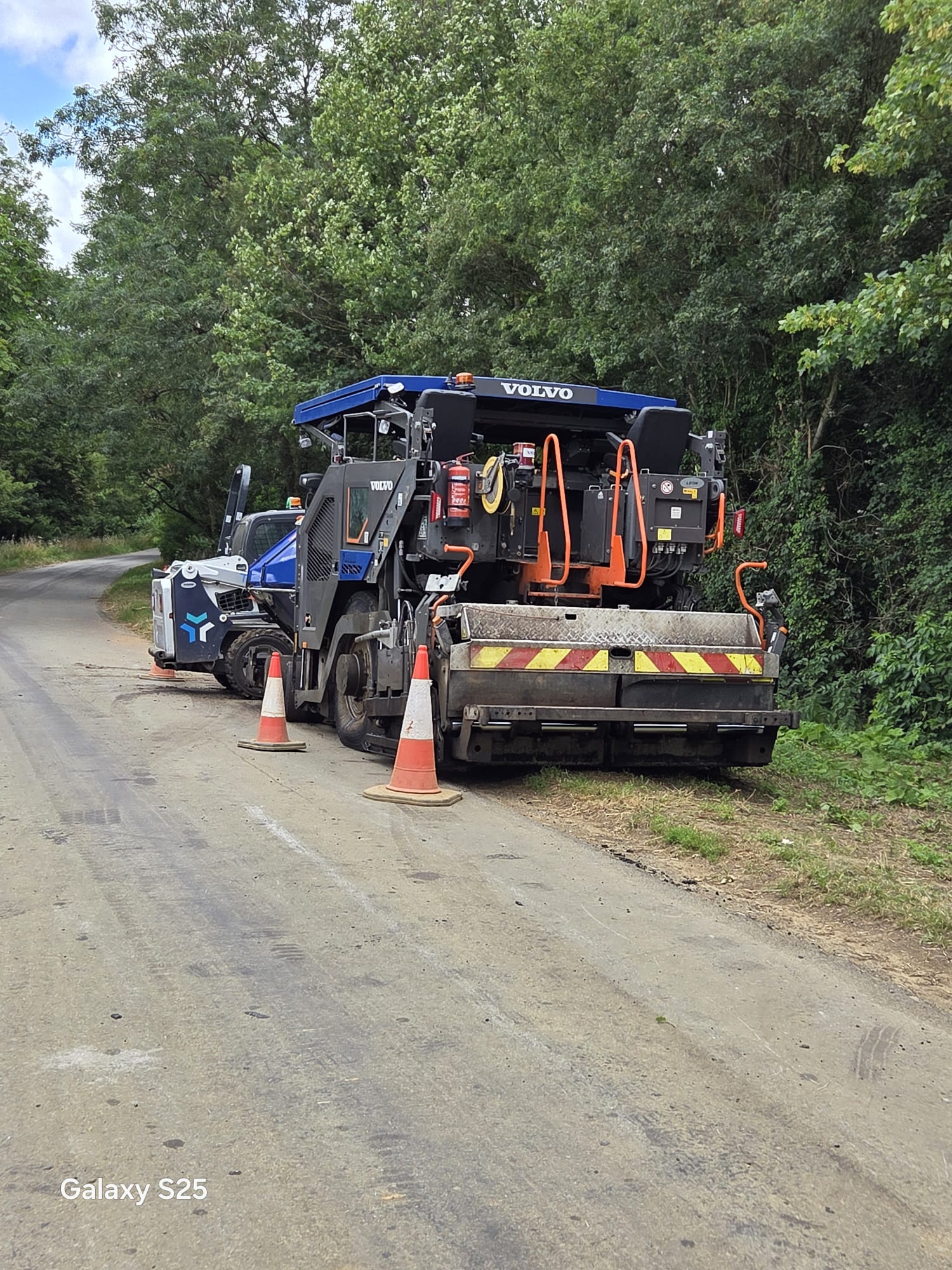
Utility works in rural single carriageways, resurfacing and patching on narrow lanes, structures and bridge works with restricted width, tree and vegetation works, surveys and inspections that move along the road, and site accesses where heavy plant crosses a footway or carriageway.

In urban settings it covers footway reconstruction outside shops and schools, scaffold erection over a footway, crane lifts requiring short holds, and events needing marshalled pedestrian crossings across a live road.

Commercial and residential differences

Outside commercial frontages the priorities are servicing and delivery windows, keeping shop access visible and open, and avoiding peak footfall periods. Business complaints about lost trade are the usual escalation route, so route width and clear signing matter more than they appear to on the drawing.

In residential streets the priorities are driveway access, refuse collection days, school run timings and parking. Both cases are handled better with the same discipline: plan the phases, keep the route consistent, and tell people what is happening before it happens.

On site

Convoy, Stop-Go & Pedestrian Management we have installed

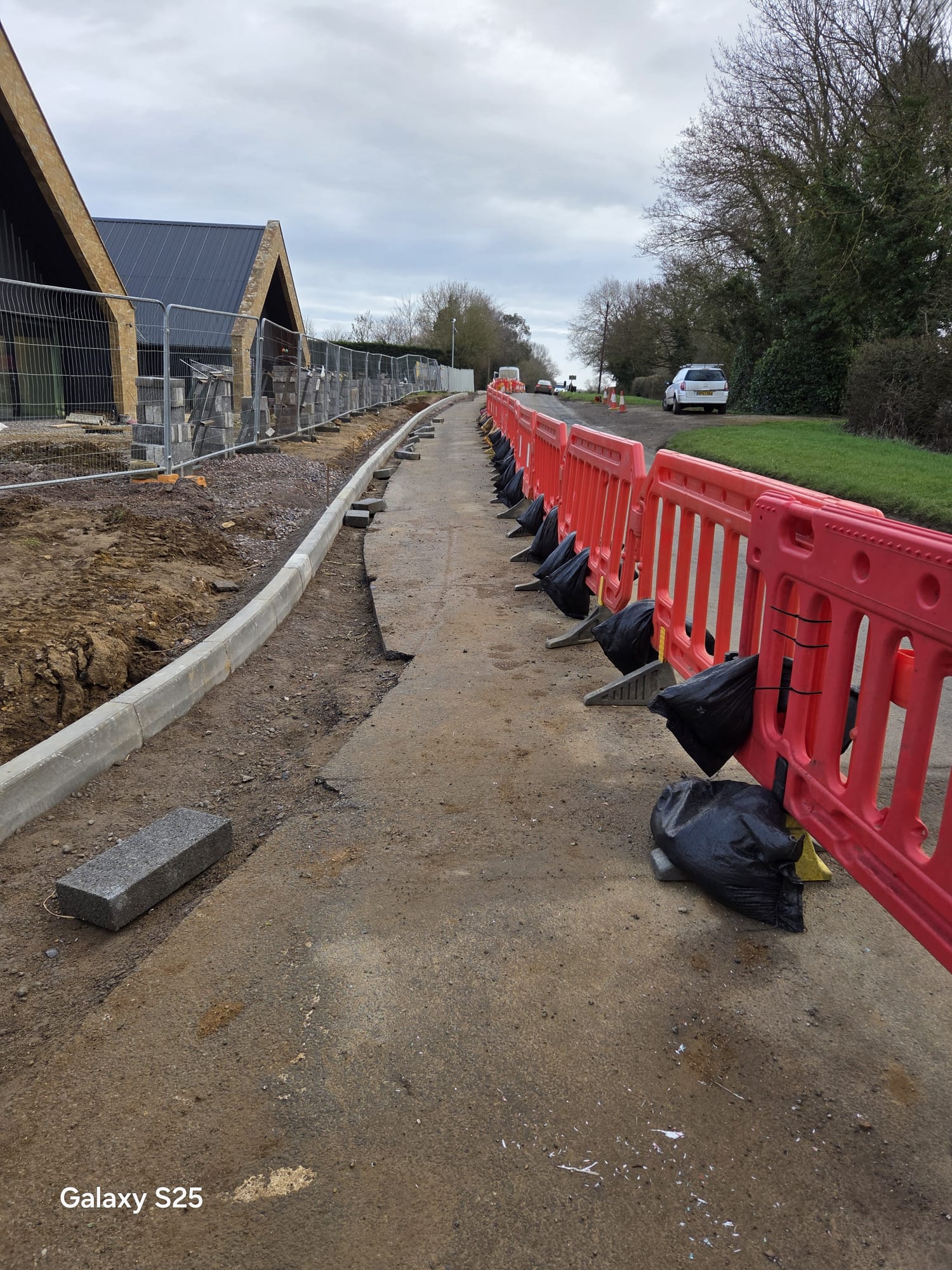
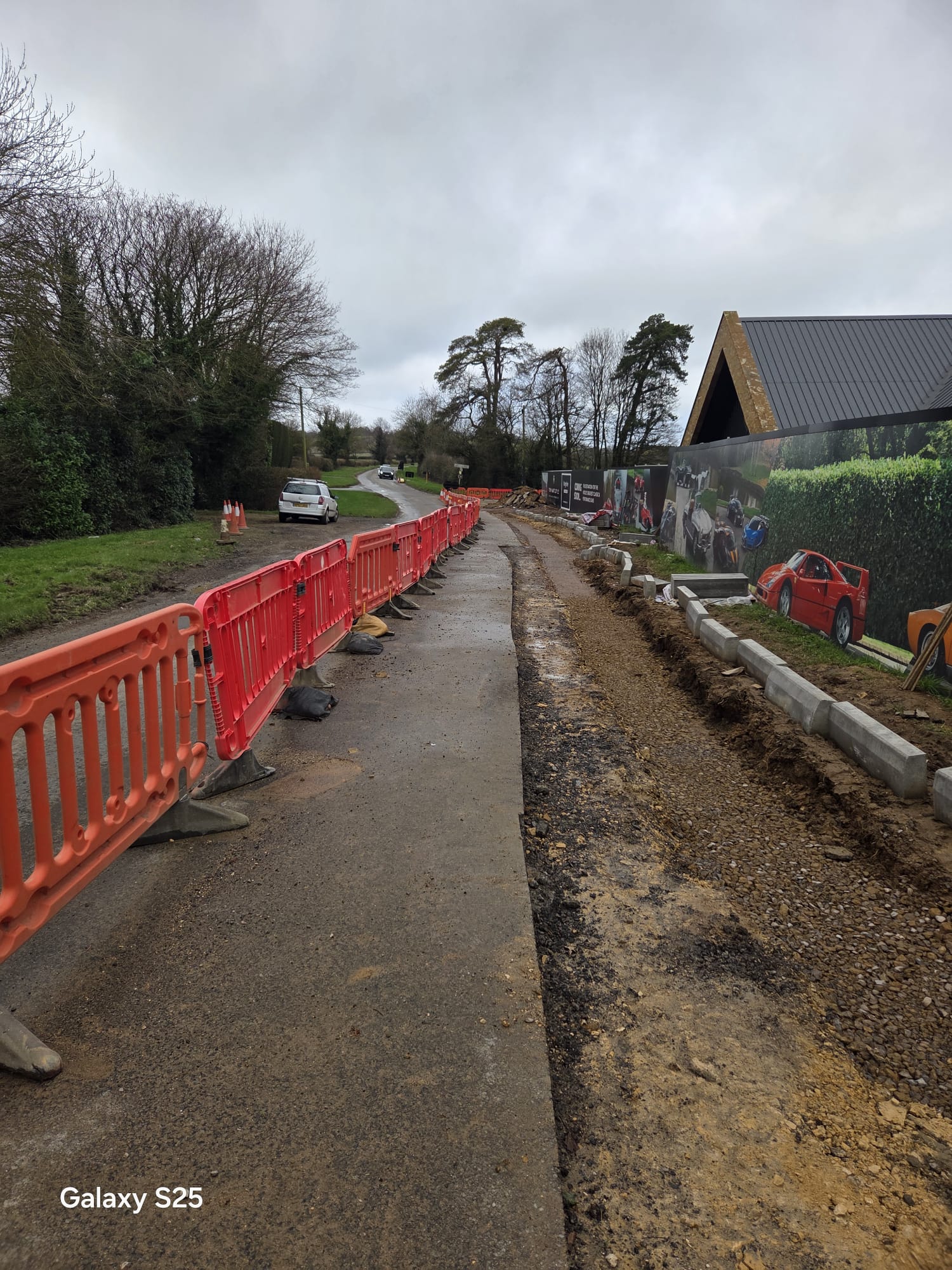
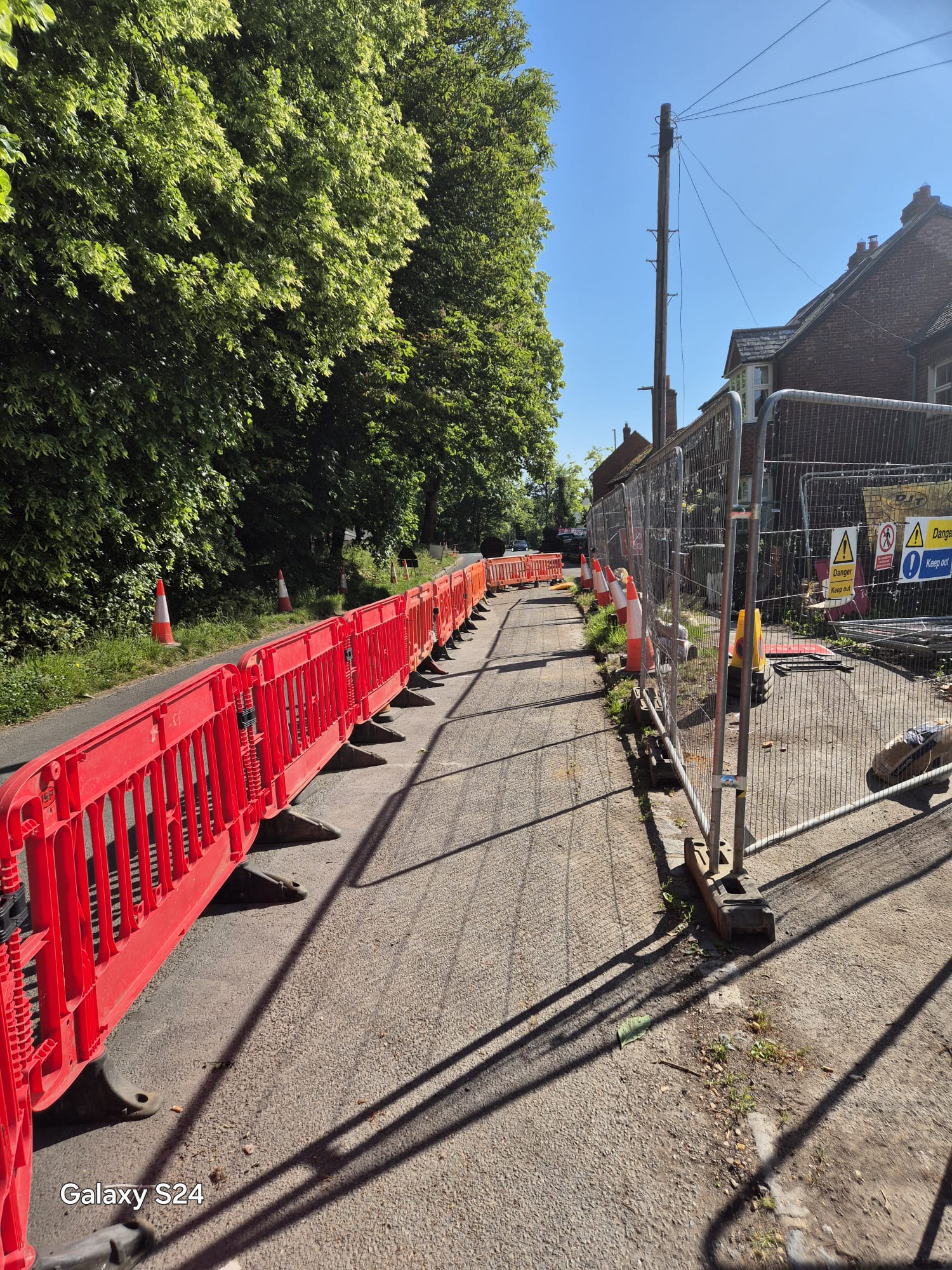
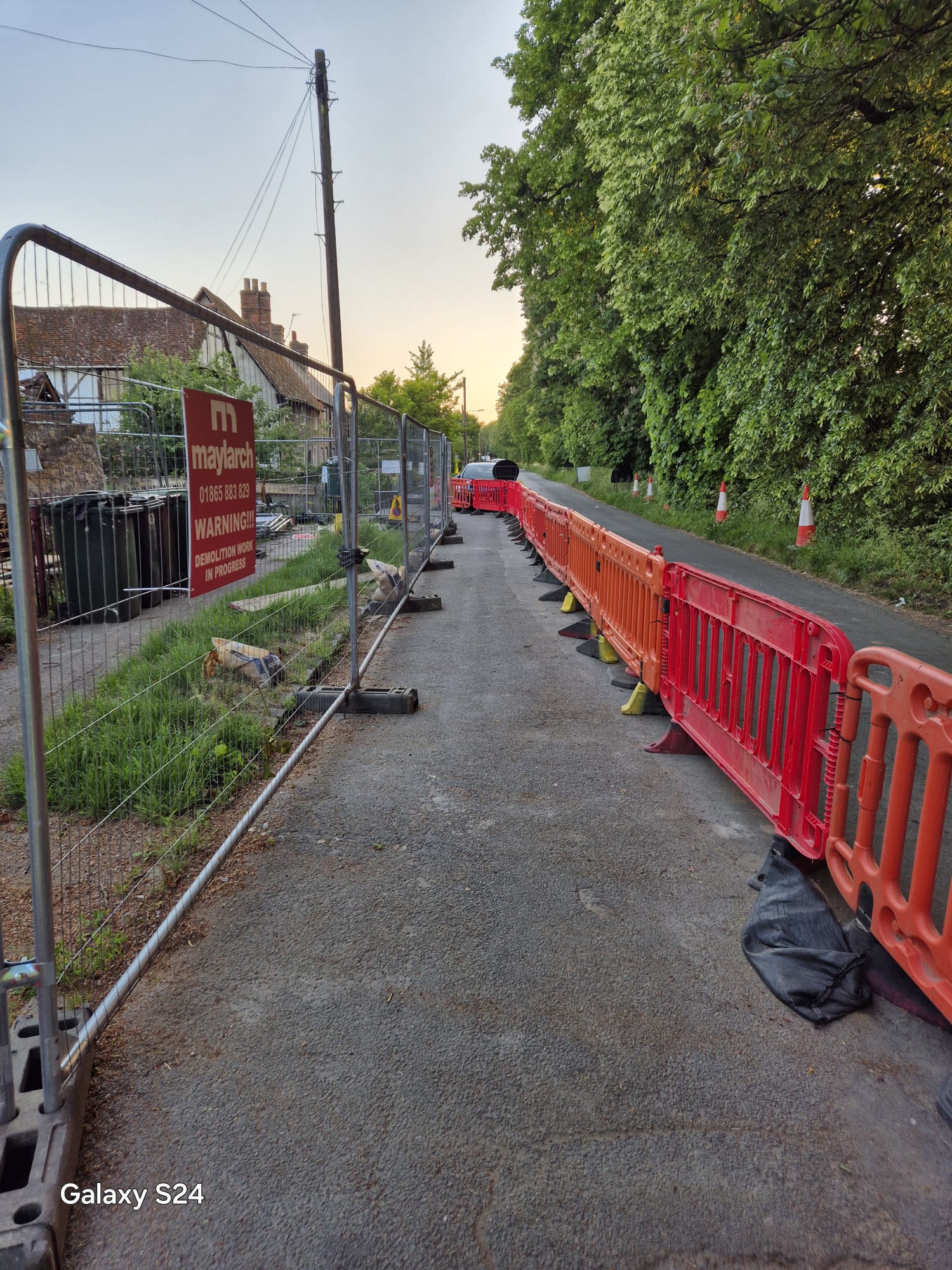
Temporary pedestrian walkway formed with red barriers and mesh fencing alongside a construction site
Barriered pedestrian route alongside footway construction works
New footway under construction with pedestrian management barriers in place
Temporary pedestrian walkway formed with barriers and ballast beside a work site
Temporary walkway protected by barriers next to an excavated road shoulder
Temporary pedestrian corridor formed by barriers and fencing on a sunny day
Fenced pedestrian diversion route at dusk near a residential area
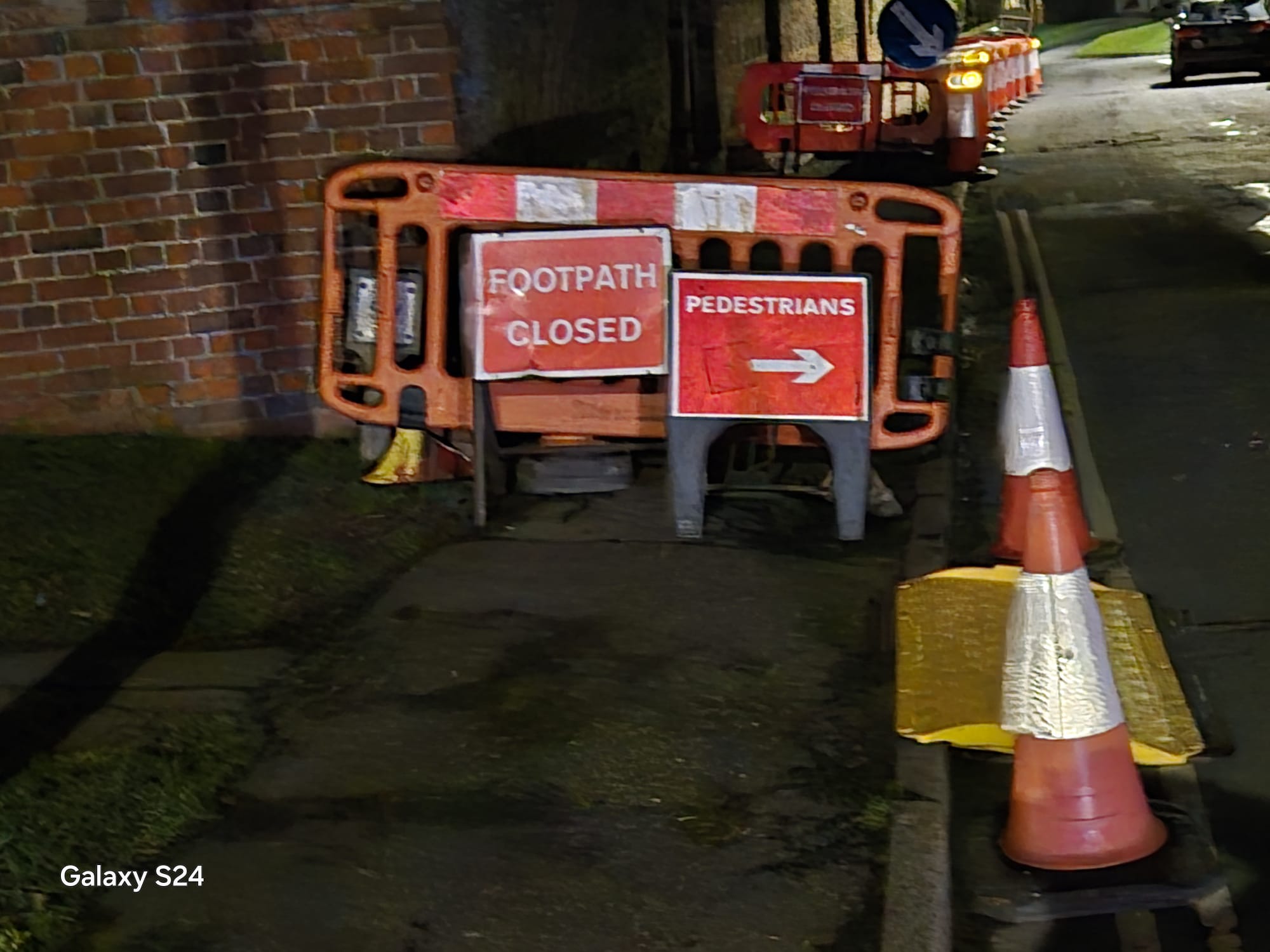
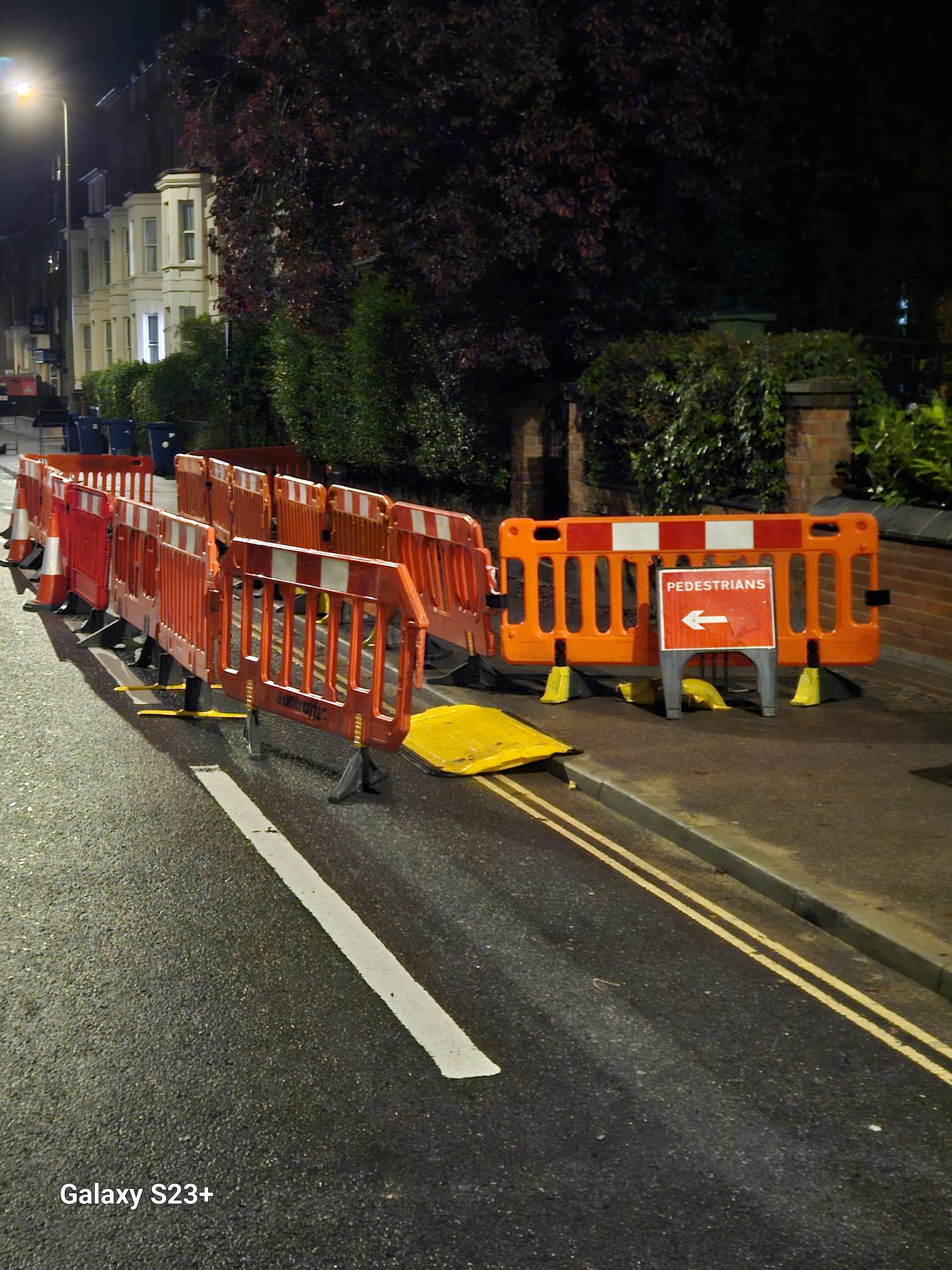
Footpath closed and pedestrian detour signage with cones at night
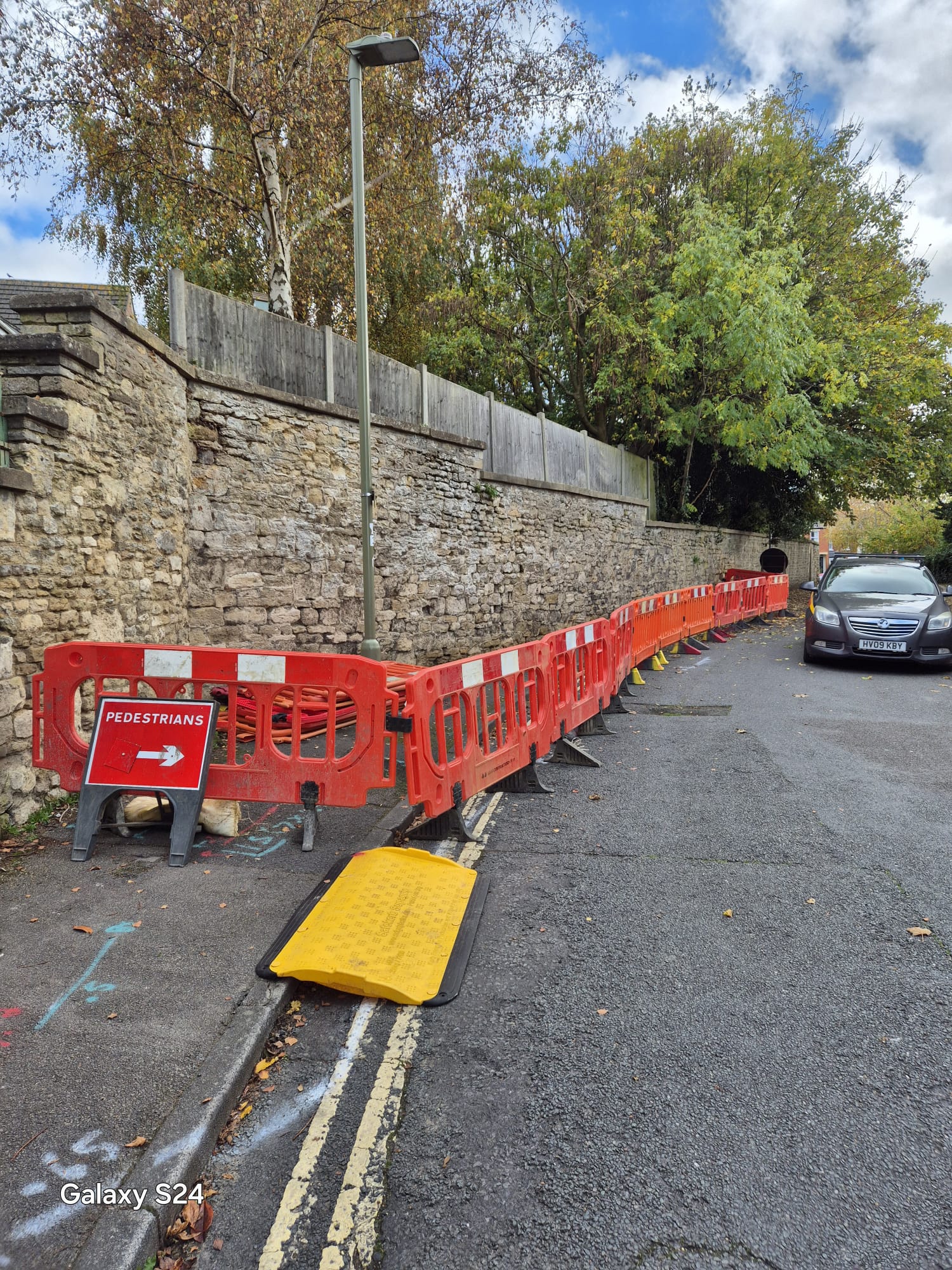
Footway closure with barriers and a cable ramp protecting pedestrians
Night-time pedestrian diversion using barriers and a cable ramp crossing

More photography from live schemes is on our our work gallery.

Standards this work is delivered to

  • Sector Scheme 12 — 12A, 12B, 12C & 12D
  • Chapter 8 (Traffic Signs Manual)
  • New Roads & Street Works Act (NRSWA)
  • Lantra/NRSWA cards, T1/T2/T3 tickets
  • £10m public liability & £10m employers' liability insurance

Accreditations held

  • National Highway Sector Schemes
  • Constructionline Gold
  • BM Trada
  • CHAS
  • Acclaim
  • Achilles UVDB
  • Avetta
  • Builder's Profile
  • SafeContractor
  • ISO 9001

Certificates are issued for your pre-qualification pack on request. We work direct for end clients and as a subcontractor to principal contractors.

Straight answers

Convoy, Stop-Go & Pedestrian Managementquestions we are asked

How much does stop-go or convoy working cost?

Manual control is priced on operatives and hours, because it needs people on site for the whole working period, plus the signing and equipment for the arrangement. It is usually more expensive per shift than portable signals but cheaper than the delay of a scheme that cannot function. We quote the specific shift pattern and duration in writing.

When is stop-go better than portable traffic lights?

When the situation needs judgement: long or poor-visibility sections, frequent plant crossings, multiple accesses within the controlled length, works that move along the road, or peak flows where a fixed cycle would create queues. For steady flows over a fixed layout, signals are usually the more economical answer, and we will tell you when that is the case.

Are your operatives qualified to control live traffic?

Yes. Operatives hold Lantra and NRSWA cards with T1, T2 and T3 tickets, and we are registered under Sector Scheme 12 across 12A to 12D. The competencies are matched to the road type, which matters most on higher-speed roads where the requirements are stricter.

How long does it take to set up?

The physical set-up of a stop-go or convoy arrangement is usually a matter of an hour or two on the day, including advance warning signs and the pedestrian route. The lead time is the authority permit or notice period, which varies by authority and works type, so involve us as soon as you have dates.

Can you provide pedestrian management on its own?

Yes. Footway closures with a compliant alternative route are a common standalone requirement, for example around scaffold, forecourt works or a site hoarding. We design the route, supply and install the barriers, separators and signage, and maintain it for the duration.

How do you keep wheelchair users and visually impaired pedestrians safe?

By designing for them from the start: adequate clear route width, continuous barriers with tapping rails at ground level rather than cones, firm surfaces with ramps where levels change, and defined crossing points. The route is kept consistent between phases so regular users are not relearning it every week.

Can you cover night shifts and weekends?

Yes. Night working, weekends and out-of-hours shifts are routine, and we operate 24/7 including emergency rapid-response call-outs. With around 300 operatives and staff, an unusual shift pattern is a scheduling question rather than an obstacle.

What happens if a driver ignores the board?

The arrangement is designed on the assumption that some will. Stopping positions, sight lines and safety zones are set so an operative is not relying on every driver behaving, and incidents are recorded and reported to you. Where a location has a recurring problem we will propose a change to the arrangement rather than repeat it.

Do you cover rural Oxfordshire lanes as well as urban streets?

Yes, and they need different answers. Rural single carriageways typically call for convoy or stop-go because of visibility and section length; urban streets more often need signals plus a carefully designed pedestrian route. We work across Oxfordshire, Oxford, London, the South East, South West, Wales, the Midlands, the North and Scotland.

Do you handle the permit for this type of scheme?

Yes. We handle authority liaison end to end, including permit applications and Temporary Traffic Regulation Orders where the arrangement requires one, and we take the drawing through to highway authority approval before your crews arrive.

Related services

  • Traffic Management

    Temporary traffic management in Oxfordshire and nationwide: TTM design, permits, signals, signage and ticketed crews from one contractor. 25 years, 24/7 cover, £10m insurance.

  • Traffic Light Hire

    Portable and temporary traffic light hire in Oxfordshire and nationwide. Supplied, installed and maintained for the full hire period, with permits handled and 24/7 fault response.

  • Low-Speed Traffic Management

    Urban and residential traffic management in Oxford, Oxfordshire and nationwide. Footway and lane closures, signals, pedestrian routes, permits handled. 25 years, £10m insurance.

  • Barriers & Access Control

    Pedestrian and vehicle barriers, separators, ground protection and controlled site access points supplied, installed and maintained. Oxfordshire base, nationwide cover, £10m insurance.

Where we deliver it

Based in Oxfordshire and working nationwide. See the full service areas list, browse all traffic management services, read about the company, or return to the homepage.

  • Oxfordshire
  • Oxford
  • Banbury
  • Bicester
  • Witney
  • Abingdon-on-Thames
  • Didcot
  • Kidlington
  • London
  • South East
  • Gatwick
  • South West
  • Wales
  • Midlands
  • North
  • Scotland

Tell us the section.We will tell you whether it needssignals, stop-go or convoy.

Send the road, the visibility, the flows and the shift pattern. You get a written estimate with the control method we would actually recommend and the pedestrian route it needs.

25 years · Sector Scheme 12A–12D · £10m public liability · 24/7 cover

Send the details

Road type, duration and start date is enough to price it. We reply to every enquiry.