24/7 cover · Nationwide from Oxfordshire

Barriers, cones and site fencing protecting an excavator working next to the highway

Traffic management · Oxfordshire & nationwide

Traffic Management in Oxfordshireand across the UK,run by one accountable team.

You get the drawing, the authority approval, the signals, the signs and the ticketed crew from a single contractor — so your works start on the day you planned instead of the day the last supplier finally turns up.

25 years in temporary traffic management · around 300 operatives and 150 vehicles · Sector Scheme 12A–12D · £10m public liability · 24/7 cover including emergency call-outs.

25

Years in traffic management

~300

Operatives & staff

~150

Lorries, vans & cars

£10m

Public liability cover

24/7

Cover, including call-outs

The service

Complete temporary traffic management, planned and delivered in-house

Temporary traffic management (TTM) is the system of signs, signals, cones, barriers and trained operatives that lets work happen on or beside a road without putting the workforce or the travelling public at risk. Done properly, it is invisible: traffic keeps moving, pedestrians keep their route, residents keep their access, and your crews get an uninterrupted working area for the hours they were promised.

We deliver that system end to end from our Oxfordshire base for clients across construction and civils, local authorities, highways, rail, utilities, events and film and TV. That includes the design work, the highway authority approval, the permit or Temporary Traffic Regulation Order, the equipment on the ground and the operatives who install, maintain and remove it. Because all of it comes from us, there is one order, one point of contact and one company accountable for the scheme.

The service suits anyone whose works touch the highway: a groundworks contractor needing a lane closed for three shifts, a utility crew opening a footway outside a parade of shops, a council resurfacing a market town high street, an events team moving several thousand people across a road, or a principal contractor who needs a subcontractor able to resource night works without pulling crews off another job. If you are unsure whether your works even need formal TTM, describe them to us and we will tell you what the road type and duration actually require.

Professional help matters because the rules are not advisory. Chapter 8 of the Traffic Signs Manual, the New Roads and Street Works Act and Sector Scheme 12 set out taper lengths, sign positions, visibility, competencies and inspection duties. A scheme that ignores them is not merely untidy — it invites an authority to shut the works down, and it puts the operative standing nearest the traffic at genuine risk.

What it costs to get wrong

Traffic management is a small line on the budget that decides the whole programme

Almost every delay we are called in to rescue has the same shape. The works themselves were ready. What was not ready was the drawing the authority would accept, the permit applied for in the right window, or the signals with somebody competent to install them. A fully resourced crew then stands at the gate on day-rate while somebody makes phone calls.

The costs escalate quietly. A refused permit application means reapplying and waiting out the notice period again. A closure that overruns its approved window attracts authority attention and, on many road types, a charge. Emergency mobilisation on a Friday afternoon costs more than the same scheme booked in advance, because it has to be resourced out of somebody else's plan.

Then there is the risk that does not appear on a spreadsheet until it happens. An incursion into a working space, a pedestrian forced into a live carriageway because the diversion was not signed, or a sign blown flat overnight and never reset — each is a reportable event, each triggers an investigation, and each is far easier to defend when the scheme was designed, installed and inspected by a Sector Scheme 12 registered contractor with the records to prove it.

Mistakes we are called in to unpick

  • Booking crews and plant before the traffic management approval and permit dates are confirmed, so the whole programme hinges on a document nobody has yet seen.
  • Treating a drawing as decoration rather than a buildable design, then discovering on site there is no room for the required taper or sign spacing.
  • Hiring signals from one supplier and labour from another, leaving nobody responsible when the lights fail at 2am.
  • Assuming pedestrian and cycle routes can be closed with a sign, rather than provided with a compliant alternative route.
  • Skipping the maintenance and inspection regime for long-duration schemes, so displaced cones and knocked-over signs go unrecorded.

Our process

How the scheme gets fromenquiry to signed-off completion

  1. Step 1

    Site and scheme review

    We take the road type, speed limit, duration, whether the activity is static or mobile, the pedestrian and cycle movements to be maintained and the access residents and businesses need. That determines whether the works call for high-speed TTM, a low-speed urban arrangement, convoy or stop-go working, a contraflow or a full closure with a signed diversion.

  2. Step 2

    Design and CAD drawings

    Our designers produce scheme-specific CAD drawings and a TTM design with correct taper lengths, sign schedules, sign positions, safety zones and set-up and removal sequences — drawn so the crew can actually build it on the ground, not just so it looks right on paper.

  3. Step 3

    Authority approval, permits and TTROs

    We take the design through the highway authority and handle the paperwork alongside it: permit applications, Temporary Traffic Regulation Orders, notice periods, statutory consultation and council sign-off. You get confirmed dates rather than an open question.

  4. Step 4

    Installation by ticketed operatives

    Equipment is delivered and installed by operatives holding Lantra and NRSWA cards with T1, T2 and T3 tickets, in the sequence set out in the design. Advance warning signs, tapers, signals, barriers and pedestrian routes all go in before the working space is handed over to you.

  5. Step 5

    Maintenance, inspection and monitoring

    For the life of the scheme we inspect, reset and repair. Displaced cones, knocked signs, signal faults and battery or fuel checks are dealt with as part of the job, and 24/7 cover means a night-time fault is a call-out, not a morning discovery.

  6. Step 6

    Removal, reinstatement and records

    At completion we remove every sign, cone, barrier and signal head, confirm the road is returned to its permanent arrangement and close the permit out. You keep the drawing, the approval and the inspection record for your own file and your client's audit.

What you get

Specific outcomes,not vague reassurance

Start dates you can build a programme on
Design, approval and delivery sit in one business, so the dates we give you are dates we control rather than dates we are waiting on somebody else to confirm.
Scale that does not rob your other jobs
Around 300 operatives and staff and roughly 150 lorries, vans and cars means night works, weekend windows and multi-phase schemes can be resourced properly.
Safety built into the design
Safety zones, taper lengths and pedestrian routes are set at design stage to Chapter 8 and Sector Scheme 12, not improvised by whoever is holding the cones.
Fewer variations and reapplications
Getting the design and the permit right first time avoids the reapplication notice periods and standing-time costs that turn a small TTM line into a programme problem.
One contact, one invoice
Drawings, permits, signals, signage, barriers and crews on one order. When something changes on site you make one call, not four.
Paperwork that survives an audit
Constructionline, CHAS, SafeContractor, Achilles UVDB, Acclaim, BM Trada and ISO 9001, plus £10m public liability and £10m employers' liability behind every scheme.

In detail

The methods, equipment and variations behind a traffic management scheme

No two schemes are identical, but they are assembled from a known set of arrangements, materials and competencies. The detail below is what we work through when specifying your works, whether that is a footway closure in Oxford city centre or a dual carriageway lane drop on a nationwide framework.

Arrangements we design and deliver

Static schemes cover fixed working areas: footway and lane closures, full road closures with signed diversions, contraflows and priority working with give-and-take signs. Mobile and short-duration arrangements cover works that move along a road, such as inspections, gully cleansing, lining, surveys and cable pulling.

Control methods range from priority signs on lightly trafficked roads through portable traffic signals, manual stop-go boards and convoy working on longer single-lane sections. Choice depends on visibility, the length of the single-lane section, traffic flow, gradient and the presence of side roads or accesses.

Equipment and materials on the ground

Typical schemes use Chapter 8 compliant signs on frames or posts, cones and cylinders, lamps, road plates, pedestrian barriers and separators, ground protection, and portable or temporary traffic signals with vehicle detection where required.

For higher-risk or longer-duration works we can add incursion prevention and warning systems, dynamic speed signage to moderate approach speeds, and vehicle-mounted signage. Everything is supplied, installed and maintained by us for the full duration rather than dropped off for you to manage.

Road type and speed limit change everything

On high-speed roads such as dual carriageways, the safety zone, lead-in taper and sign spacing all grow, lane closures often need to be installed under rolling restrictions, and the crews must hold the relevant Sector Scheme 12D competencies. The margin for improvisation is effectively zero.

On low-speed urban and residential roads the technical distances shorten but the practical complexity rises: bus stops, loading bays, refuse collection, school routes, resident parking, shop deliveries and cycle lanes all have to be accommodated, and the consultation with the authority is usually more detailed than the drawing itself.

Pedestrians, cyclists and accessibility

Closing a footway without providing an alternative is one of the fastest ways to generate complaints and an authority visit. Compliant schemes provide a signed, physically separated route of adequate width with ramps or crossing points where the route steps into the carriageway.

We design for wheelchair users, pushchairs and visually impaired pedestrians as standard, using barriers with tapping rails rather than open cones, and we keep the route continuous through each phase of the works rather than reinventing it every shift.

Sectors and situations we work in

Construction and civils sites needing long-term access, utilities carrying out street works under NRSWA, local authorities resurfacing and patching, highways frameworks, rail possessions with road-side compounds, events requiring road space and marshalled crossings, and film and TV productions needing controlled holds.

We work direct for end clients and as a subcontractor to main and principal contractors, aligning with your existing site rules, RAMS process, permit-to-work system and reporting requirements rather than imposing our own.

Duration, phasing and long-term schemes

Short-duration works are usually a single visit: install, work, remove. Multi-phase schemes need a phasing plan so each stage is a complete, compliant arrangement in its own right, with defined transitions between phases and a maintained pedestrian route throughout.

For long-term site access we also plan for the boring but expensive details: sign cleaning and resetting, seasonal changes in daylight, festive embargoes on some authority networks, and the inspection frequency the authority expects to see recorded.

On site

Traffic Management we have installed

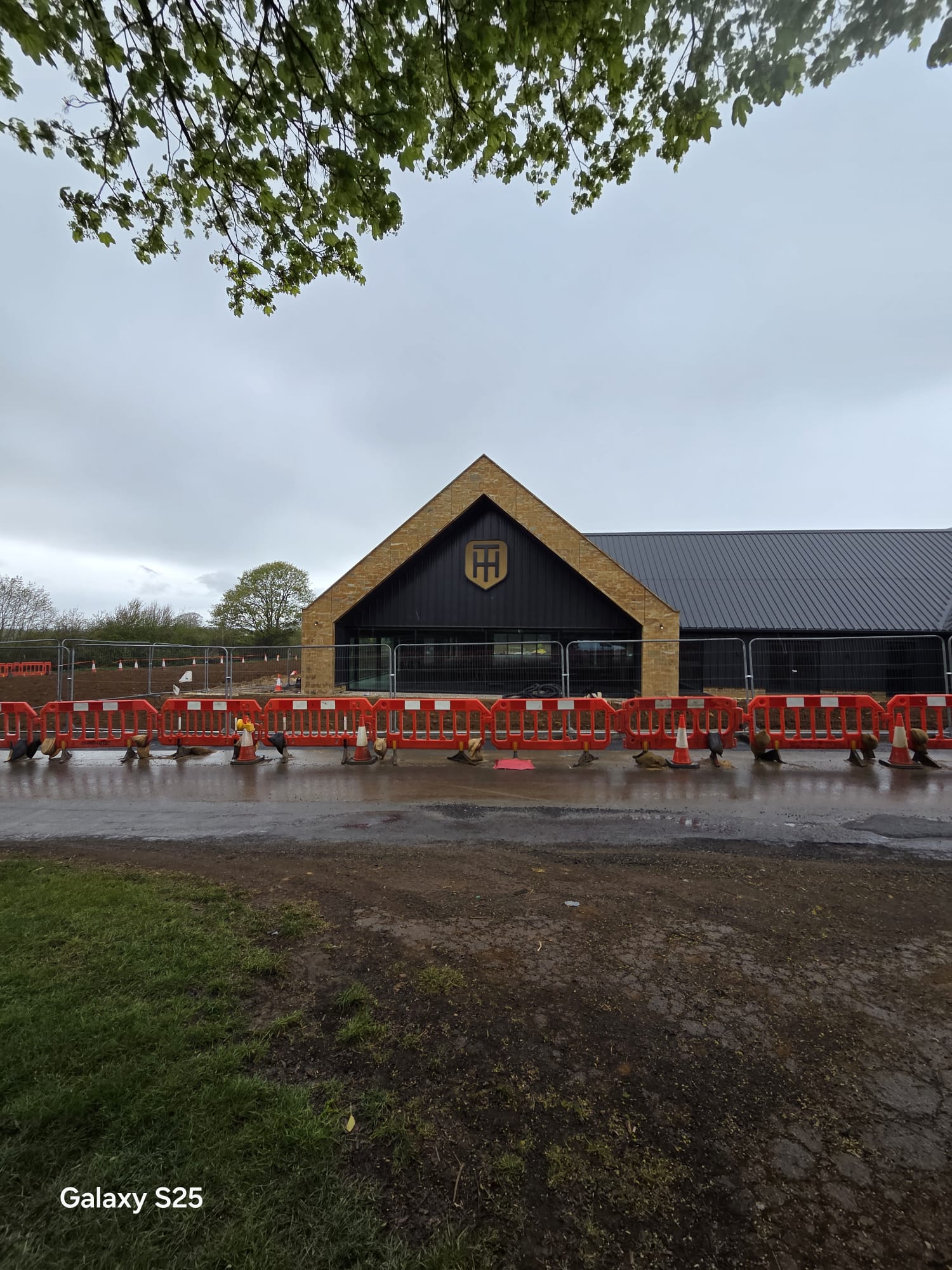
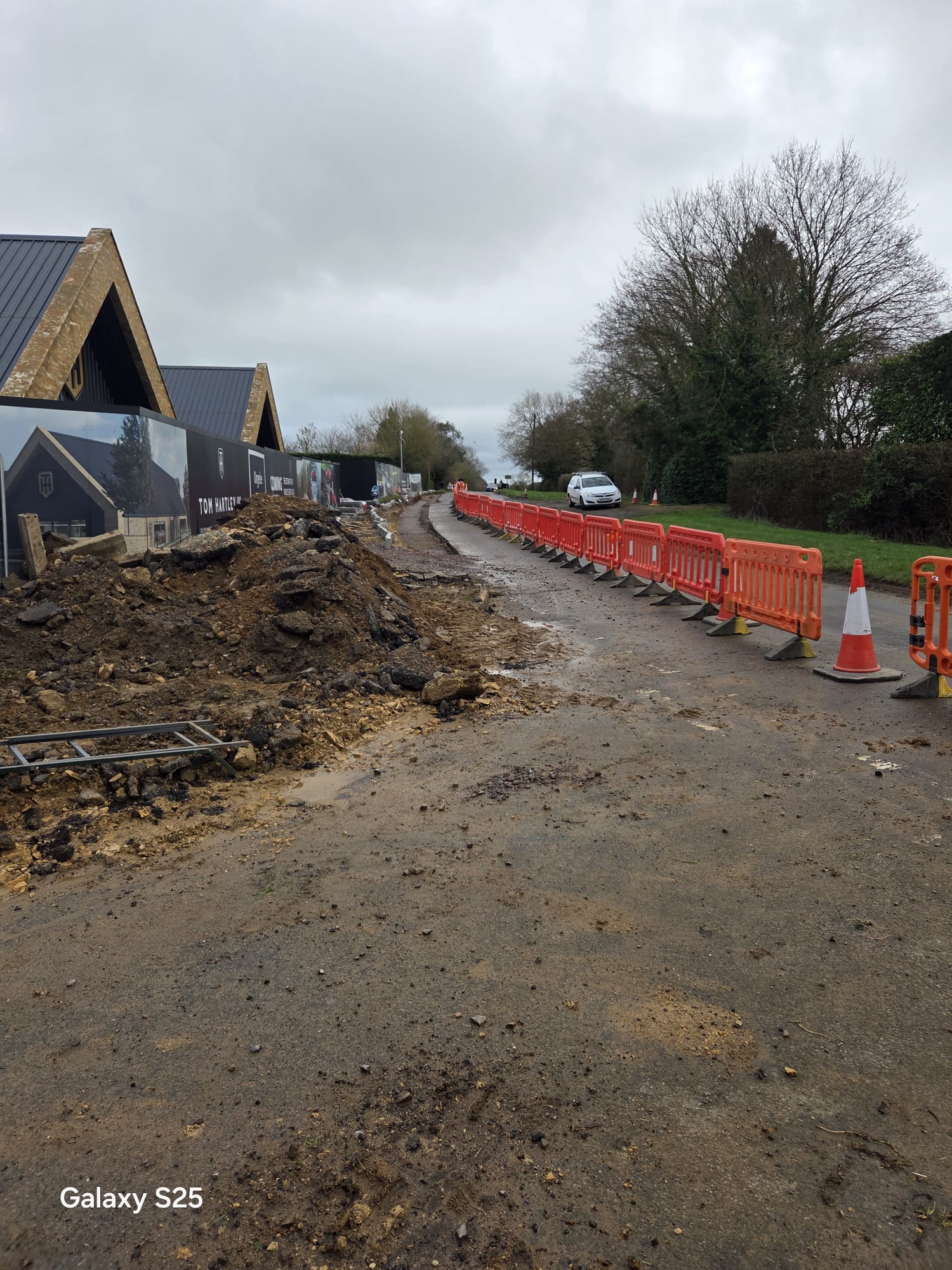
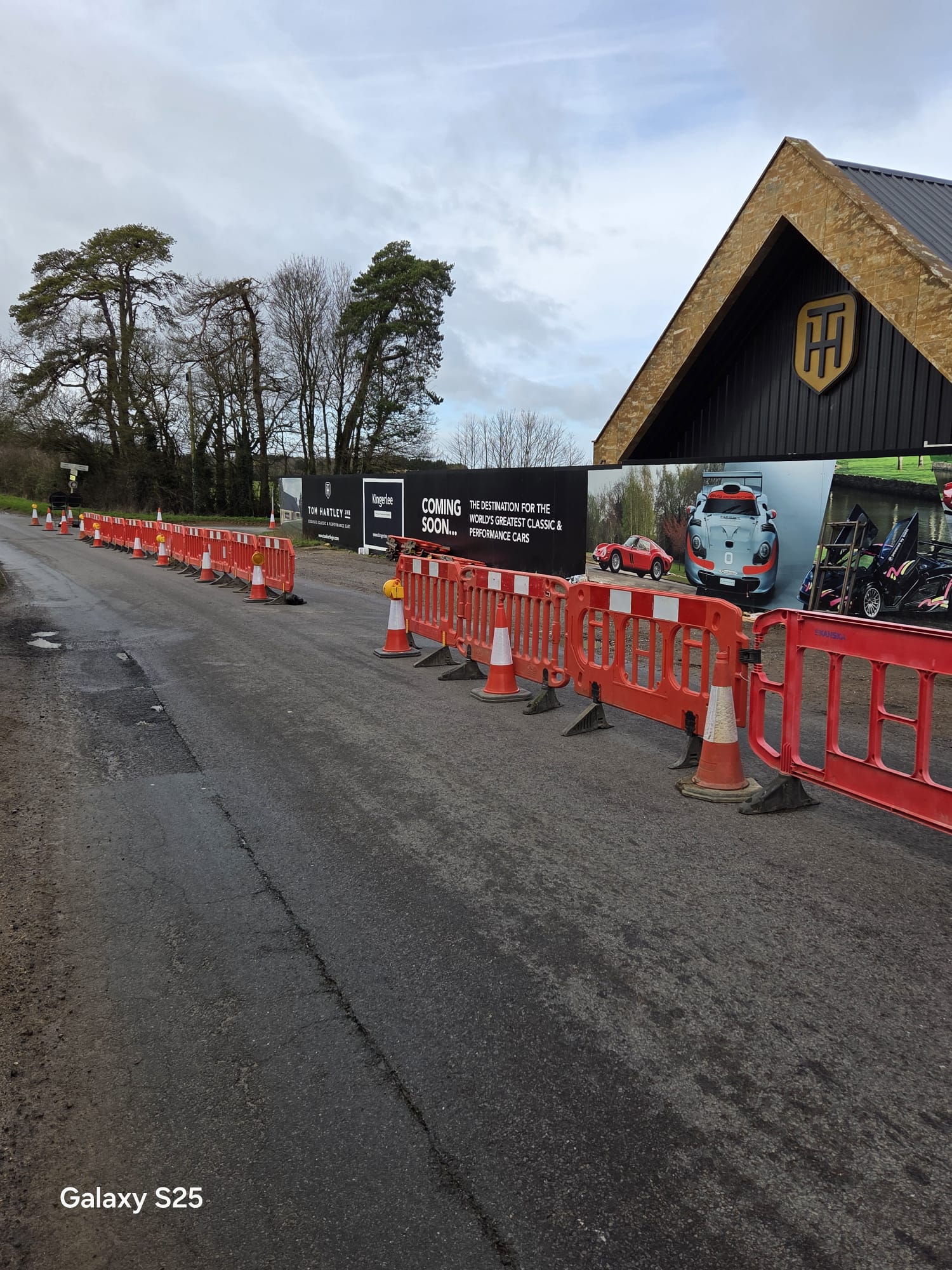
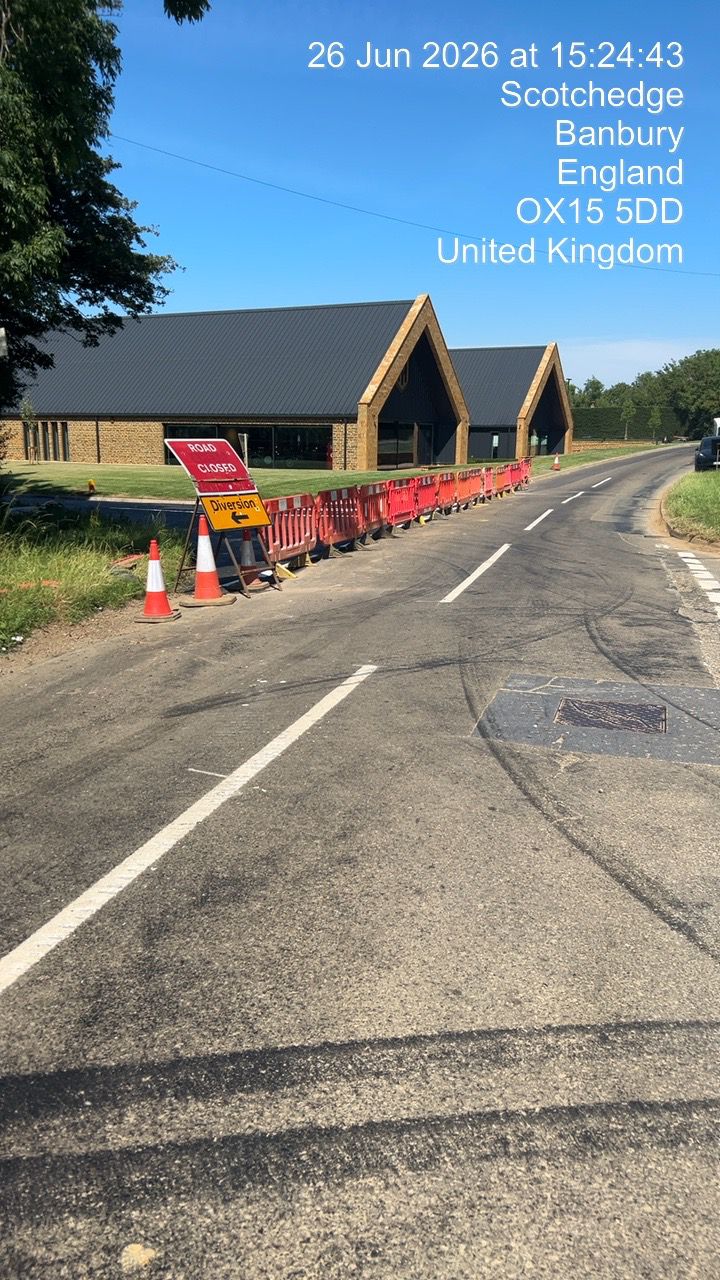
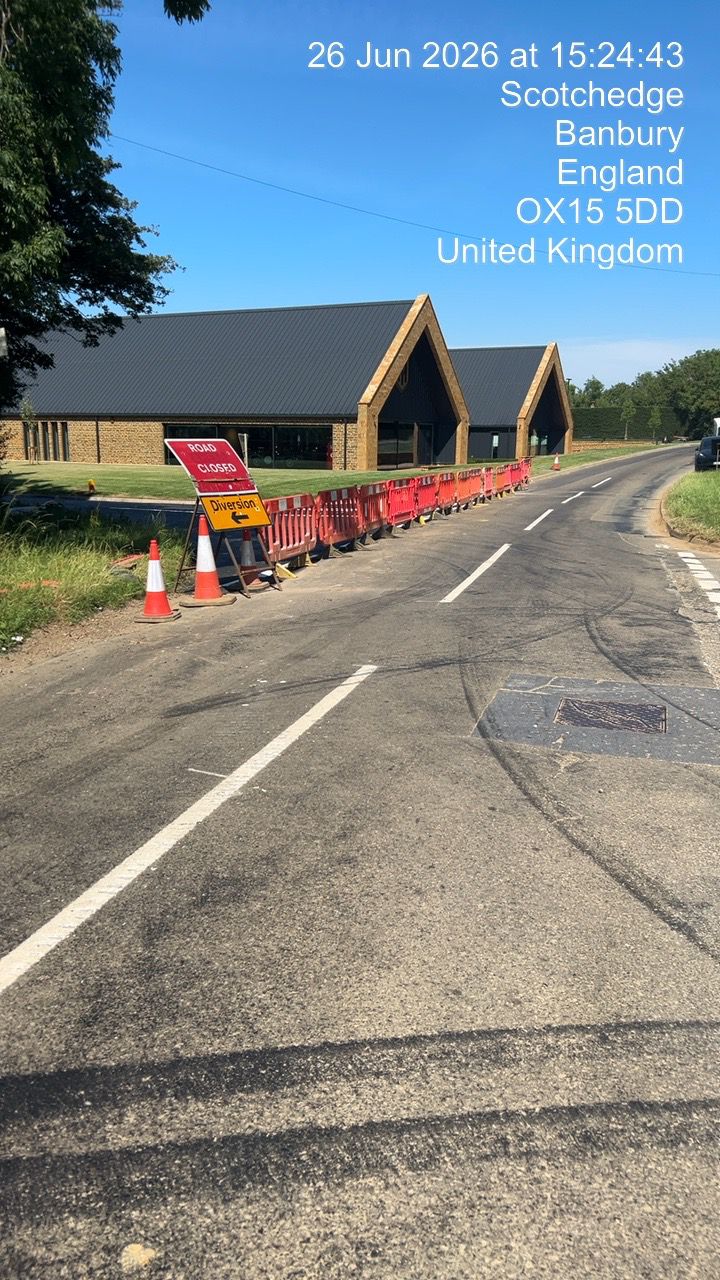
Continuous line of red traffic management barriers segregating a construction site from the carriageway
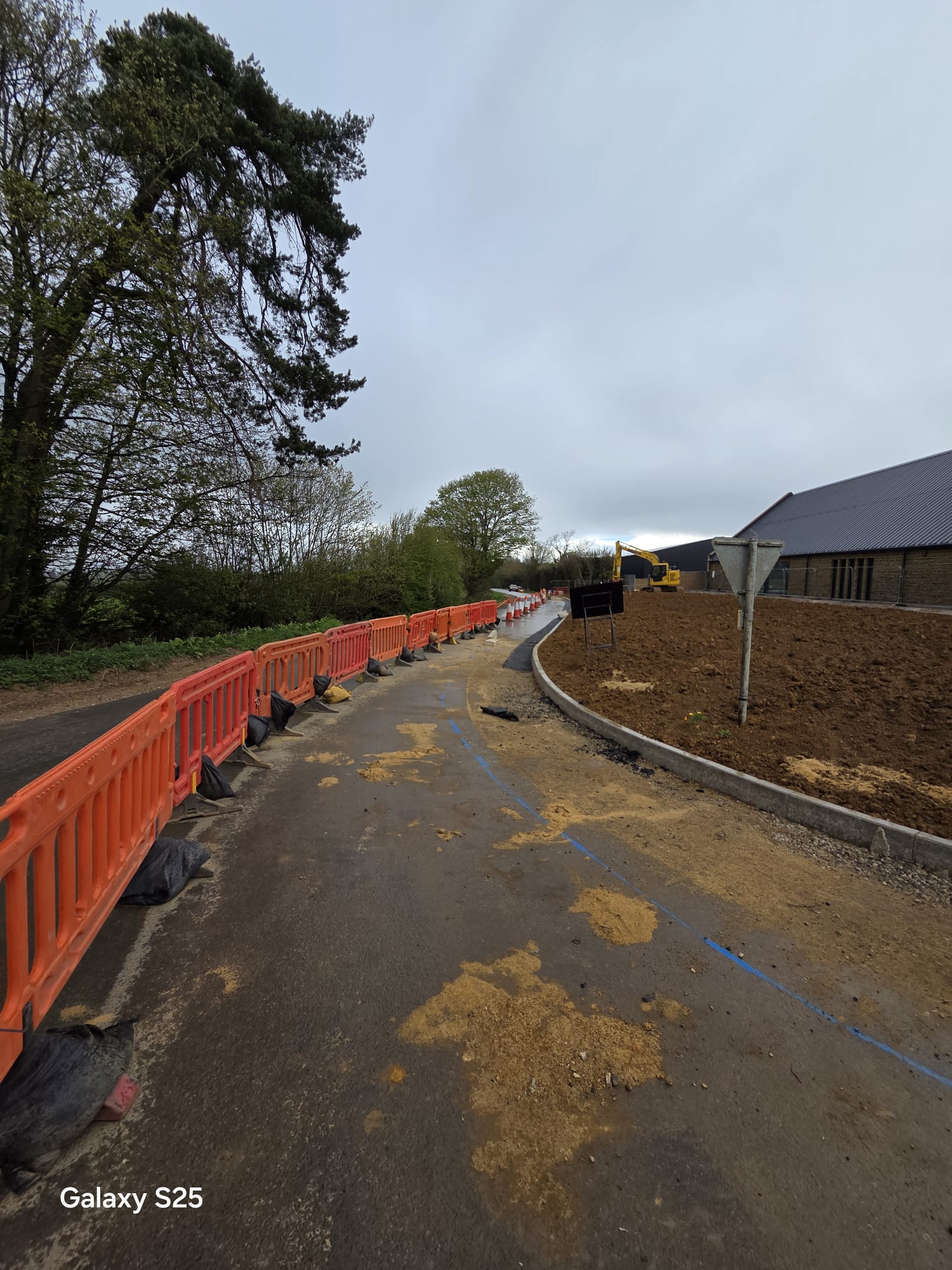
Barrier run guiding traffic past plant working on a construction site access road
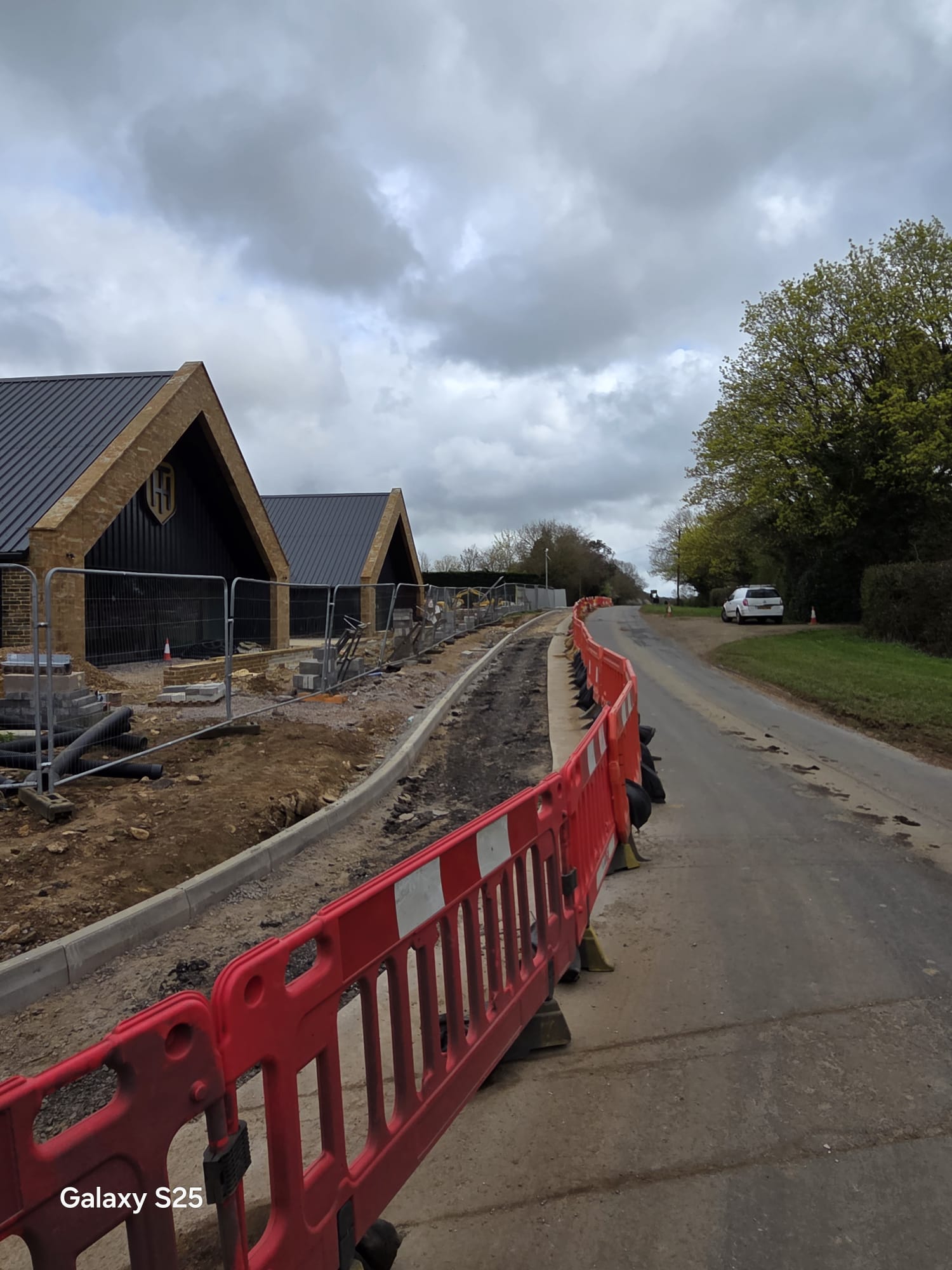
Red barriers separating a live carriageway from construction groundworks on a narrow road
Barriers, cones and site fencing protecting an excavator working next to the highway
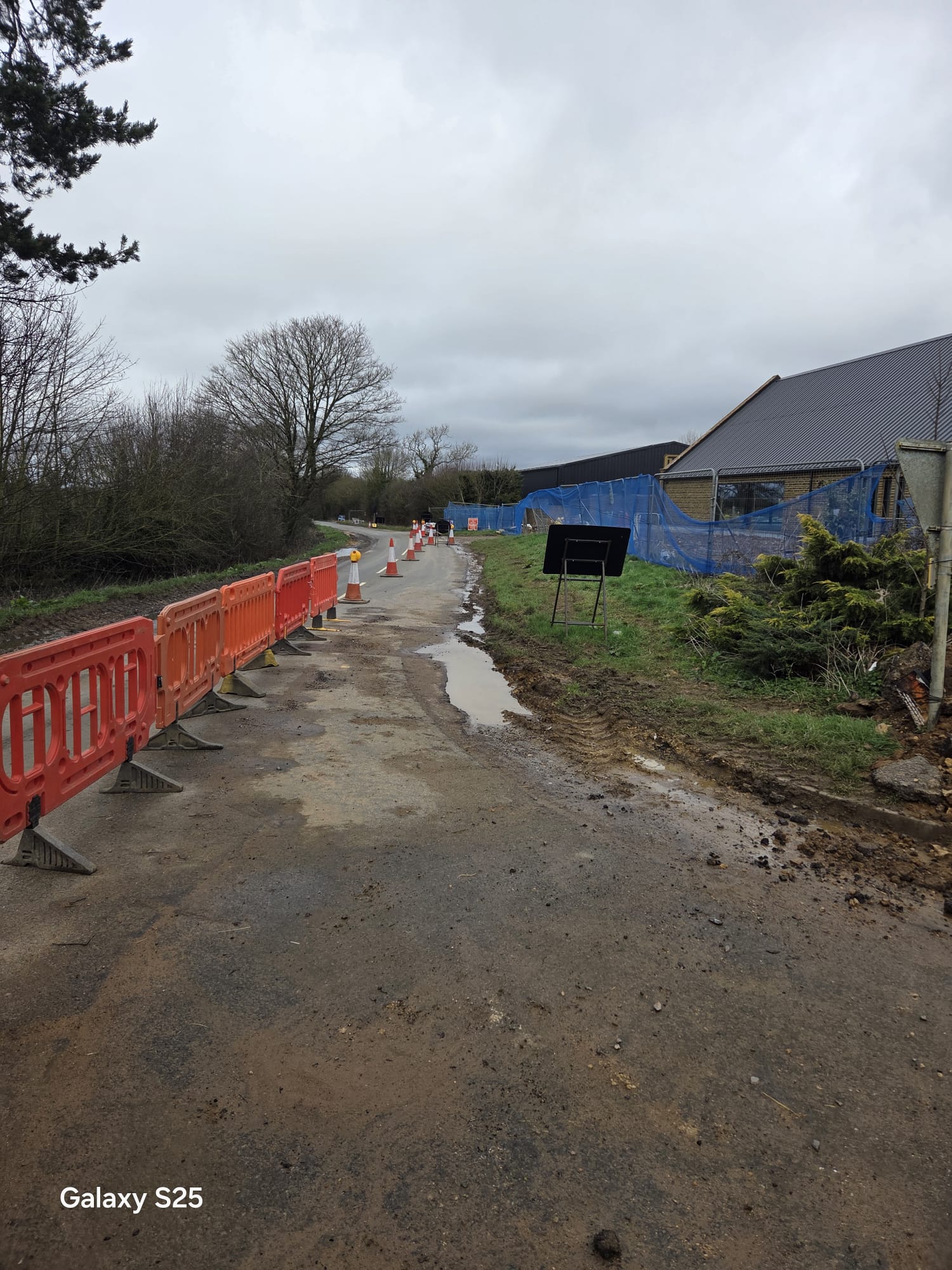
Barrier line and site fencing guarding an unmade road edge on a construction traffic management scheme
Excavated ground behind traffic management barriers and cones on a construction site access
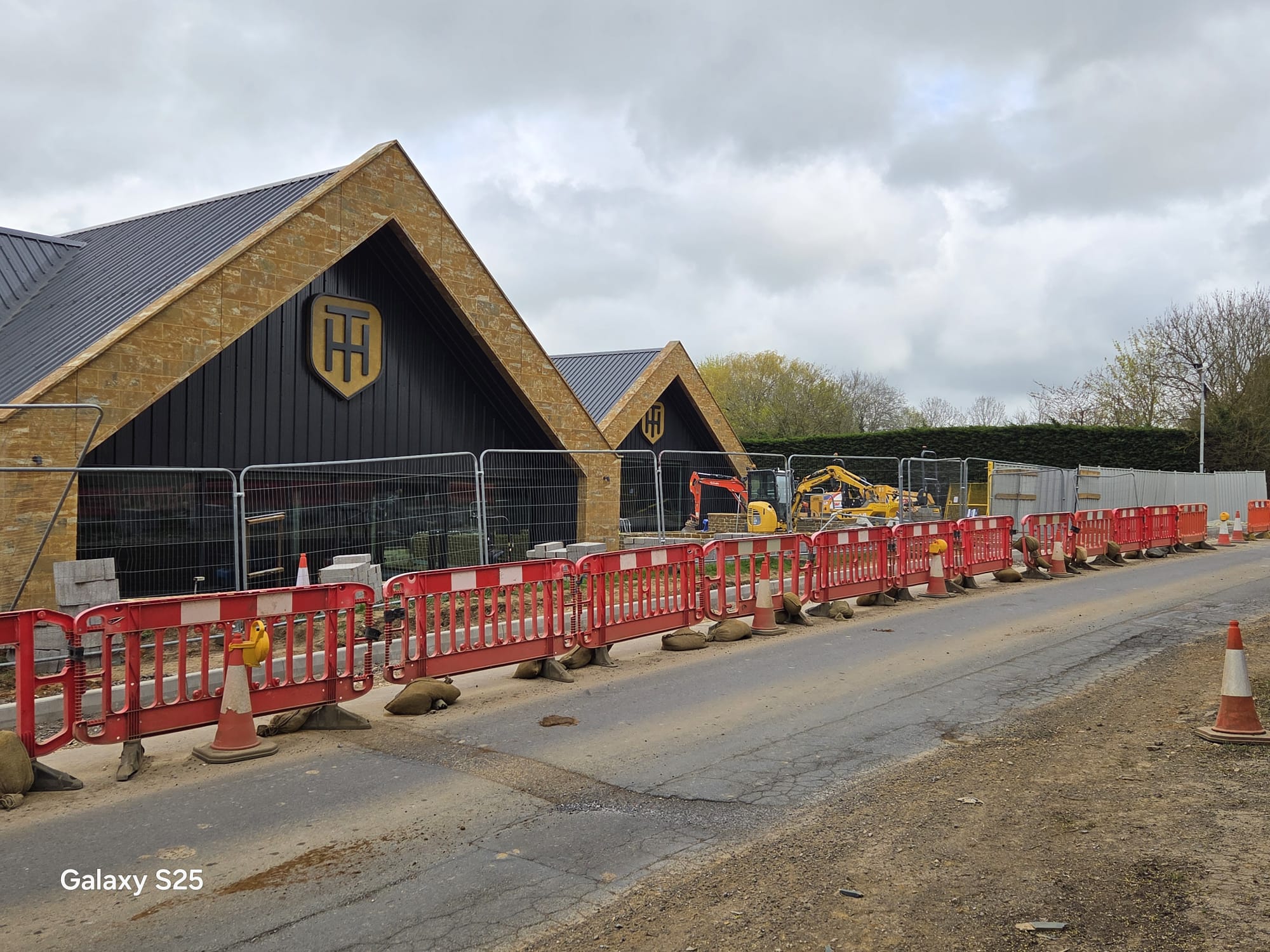
Barriers and cones set out along a public road in front of construction hoarding
Barrier line and cones protecting construction works alongside a rural carriageway
Barriers and cones set out along a rural road serving a new commercial development
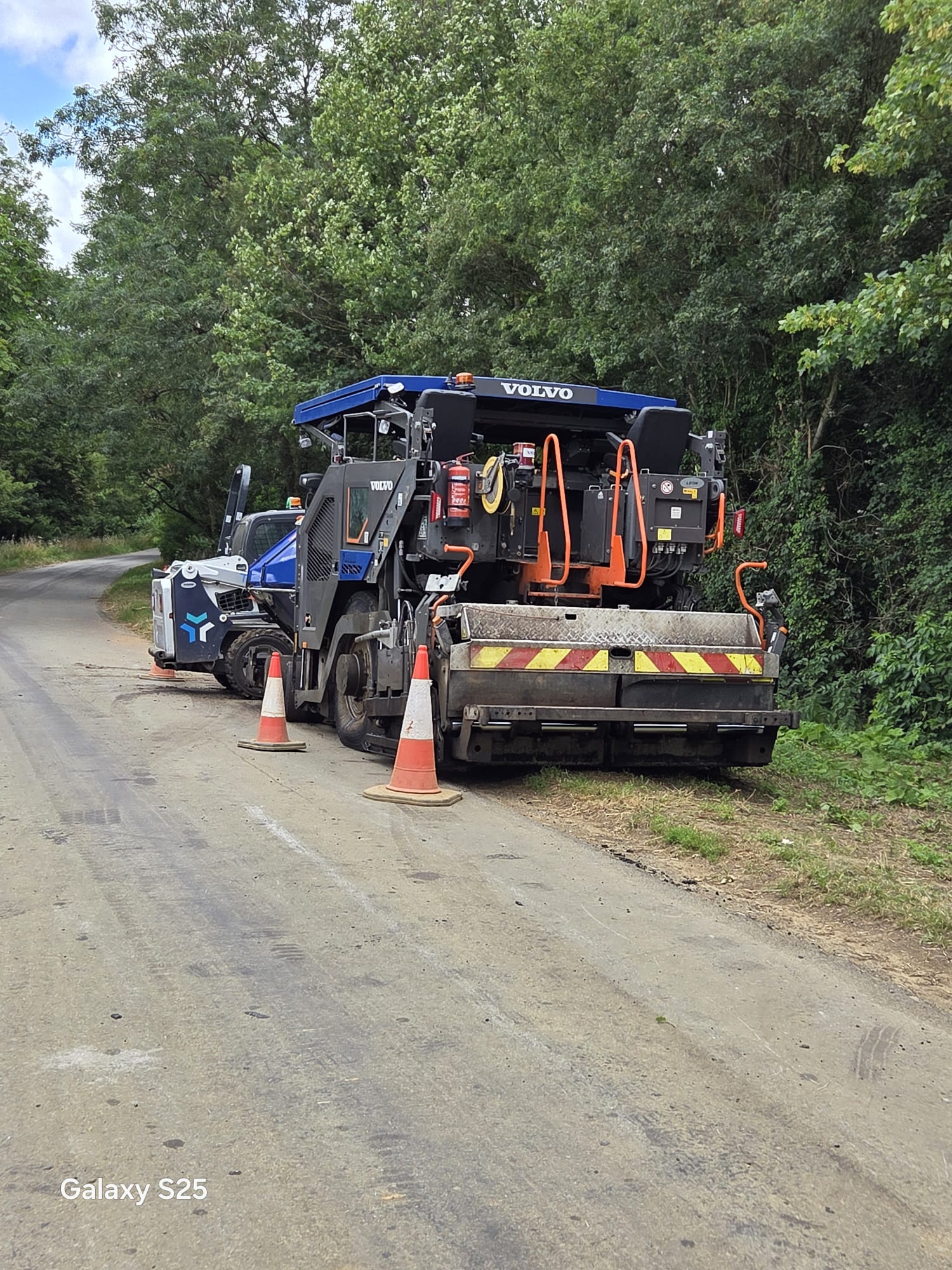
Asphalt paver and cones on a rural road resurfacing scheme managed under traffic management

More photography from live schemes is on our our work gallery.

Standards this work is delivered to

  • Sector Scheme 12 — 12A, 12B, 12C & 12D
  • Chapter 8 (Traffic Signs Manual)
  • New Roads & Street Works Act (NRSWA)
  • Lantra/NRSWA cards, T1/T2/T3 tickets
  • £10m public liability & £10m employers' liability insurance

Accreditations held

  • National Highway Sector Schemes
  • Constructionline Gold
  • BM Trada
  • CHAS
  • Acclaim
  • Achilles UVDB
  • Avetta
  • Builder's Profile
  • SafeContractor
  • ISO 9001

Certificates are issued for your pre-qualification pack on request. We work direct for end clients and as a subcontractor to principal contractors.

Straight answers

Traffic Managementquestions we are asked

How much does traffic management cost?

Cost is driven by road type and speed limit, the arrangement required, how many operatives must be on site and for how long, equipment on hire, and whether design, permits or a TTRO are needed. A short footway closure and a dual carriageway lane closure are different orders of magnitude, so we price the specific scheme rather than quoting a headline day rate. Send the road, the duration and the works and you get a written estimate you can put in a tender.

How quickly can you get traffic management on site in Oxfordshire?

We run 24/7 cover including emergency rapid-response call-outs, and Oxfordshire is our local heartland, so mobilisation there is fastest. The honest constraint is usually not our crews but the authority notice period for permits and TTROs. Tell us the location, road type and duration and we will confirm in writing what can be mobilised and when rather than promising a blanket response figure.

Do I need a permit or a TTRO for my works?

It depends on the road, the authority and what you are doing. Most works in the highway need a permit or notice under the New Roads and Street Works Act; anything that changes the legal use of the road, such as a full closure, a suspension of parking or a temporary speed restriction, generally needs a Temporary Traffic Regulation Order. We assess it as part of the enquiry and handle the applications end to end.

How long does traffic management approval take?

Notice periods vary by authority and by the type of works, and TTROs typically require the longest lead time because of statutory advertising and consultation. Emergency works follow a different route with retrospective notification. The practical answer is to involve us as early as you have a programme, because approval lead time is almost always the longest item in the chain.

Are your operatives qualified and are you Sector Scheme 12 registered?

Yes. We hold Sector Scheme 12 registration across 12A, 12B, 12C and 12D and work to Chapter 8 of the Traffic Signs Manual and NRSWA. Operatives hold Lantra and NRSWA cards with T1, T2 and T3 tickets, and supervisors hold the relevant qualifications for the schemes they run.

What insurance do you carry?

£10 million public liability and £10 million employers' liability. The public liability cover extends to highway works, so there is no separate policy for your commercial team to chase before you can place the order.

Can you cover night works and emergencies out of hours?

Yes. Night working, weekend windows and out-of-hours shifts are routine, and we operate 24/7 rapid-response call-outs for incidents where a road or site needs securing immediately. If your works are urgent, say so in the enquiry and it is prioritised.

Do you only work in Oxfordshire?

Oxfordshire is our base, but coverage is genuinely nationwide: Oxford, London and all boroughs, the South East, Gatwick, the South West, Wales, the Midlands, the North and Scotland. It is one contract and one point of contact whichever authority area the works fall in.

Will you work under our principal contractor and site rules?

Yes. Working as a subcontractor to main and principal contractors is business as usual. We align with your site induction, RAMS process, permit-to-work system and reporting formats, and our accreditations and insurance details go straight into your pre-qualification pack.

What happens if the works overrun or the scheme has to change?

Tell us as early as you know. Extensions to permits and orders have their own process and lead times, and a changed arrangement may need a revised drawing and a fresh authority conversation. Because design, approval and delivery all sit with us, a change is one call and one revised scheme rather than a negotiation between three suppliers.

Related services

  • Road & Lane Closures

    Full road closures, lane closures and contraflows in Oxfordshire and nationwide. Signed diversion routes, TTRO and permit handling, ticketed crews, 24/7 cover, £10m insurance.

  • CAD Drawings & TTM Design

    Scheme-specific CAD drawings and temporary traffic management design, taken through highway authority approval. Chapter 8 and Sector Scheme 12 compliant. Oxfordshire base, UK-wide.

  • Permits & TTROs

    Permit applications, Temporary Traffic Regulation Orders and local authority liaison handled end to end. Oxfordshire base, nationwide coverage, 25 years of authority experience.

  • Traffic Light Hire

    Portable and temporary traffic light hire in Oxfordshire and nationwide. Supplied, installed and maintained for the full hire period, with permits handled and 24/7 fault response.

Where we deliver it

Based in Oxfordshire and working nationwide. See the full service areas list, browse all traffic management services, read about the company, or return to the homepage.

  • Oxfordshire
  • Oxford
  • Banbury
  • Bicester
  • Witney
  • Abingdon-on-Thames
  • Didcot
  • Kidlington
  • London
  • South East
  • Gatwick
  • South West
  • Wales
  • Midlands
  • North
  • Scotland

Tell us the works.We will tell you the scheme,the sequence and the cost.

Send the road, the duration and the start date. You get a written estimate covering design, approval, equipment and crews from one Oxfordshire-based contractor working nationwide, 24 hours a day.

25 years · Sector Scheme 12A–12D · £10m public liability · 24/7 cover

Send the details

Road type, duration and start date is enough to price it. We reply to every enquiry.