24/7 cover · Nationwide from Oxfordshire

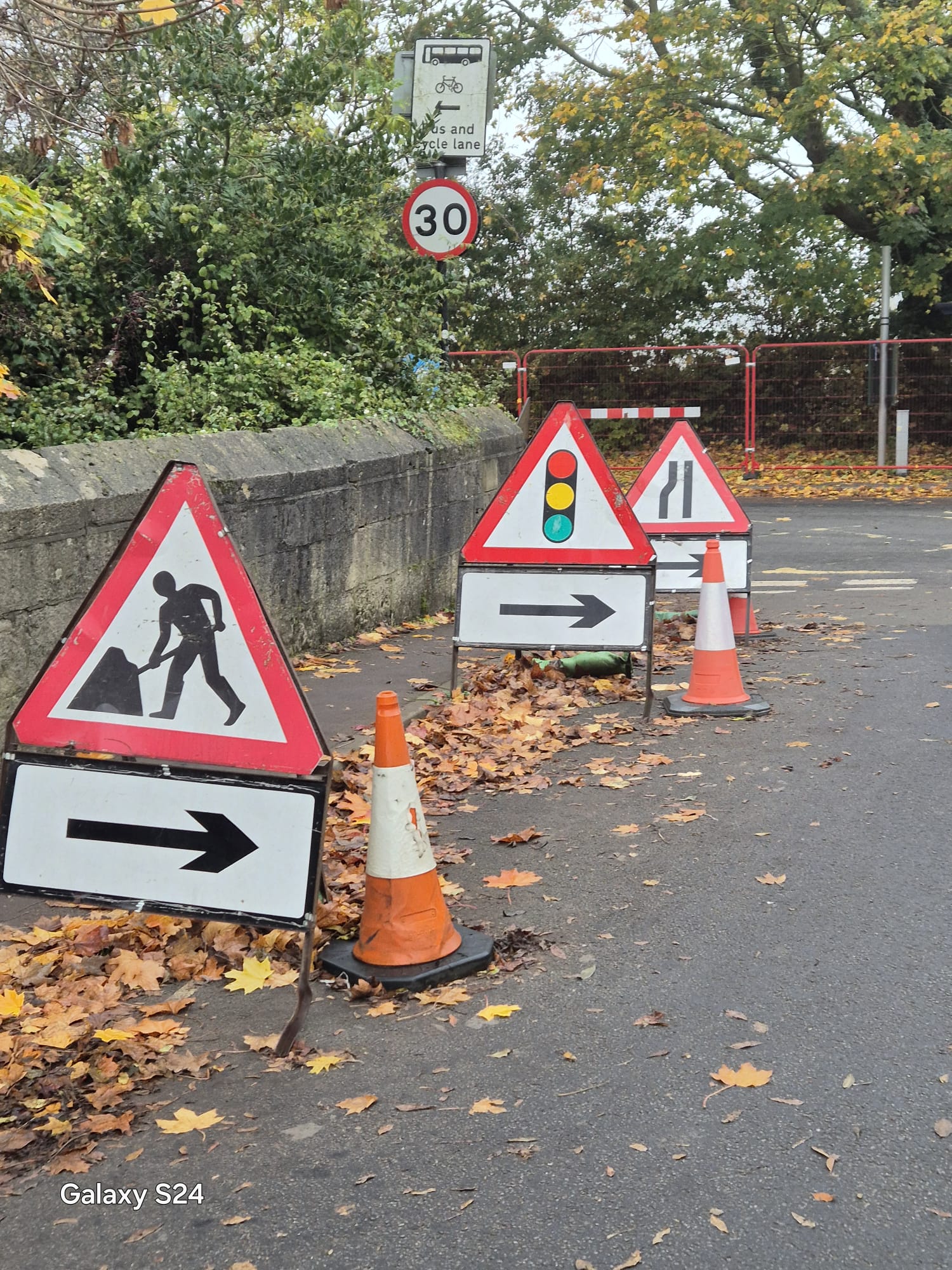
Road works, traffic signals ahead, road narrows and arrow signs set out on cones at a work site approach

Traffic light hire · supplied, installed, maintained

Traffic Light Hire in Oxfordshireand nationwide —installed and maintained, not dropped off.

Hiring signals is easy. Keeping them working, legal and correctly positioned for eight weeks is the part that costs people money. We supply, install, maintain and remove them, and answer the phone when they fault at 2am.

Maintained for the full hire period · 24/7 fault call-out · around 150 vehicles for delivery and service · Sector Scheme 12A–12D · Chapter 8 compliant · £10m public liability.

25

Years in traffic management

~300

Operatives & staff

~150

Lorries, vans & cars

£10m

Public liability cover

24/7

Cover, including call-outs

The service

Portable and temporary signals, with the installation and upkeep included

Temporary traffic signals control traffic through a restricted section of road when the works occupy part of the carriageway. Portable signal heads on stands are the usual arrangement for shuttle working over a single lane; larger temporary installations can control junctions or multi-arm layouts where the permanent signals have to be taken out of service.

We supply the equipment, position it to a designed arrangement, commission the timings, and maintain it for the whole hire period. That includes battery or power checks, fault attendance, resetting heads that get knocked or moved, and adjusting timings when the flows turn out different from the assumption.

It suits utility street works, resurfacing and patching, drainage and gully works, footway and carriageway reconstruction, structures repairs, tree works and any site access that needs controlled shuttle working. Clients include utilities, civils and groundworks contractors, local authorities and principal contractors on long-duration sites.

Professional help matters because signals are only as good as their siting and timing. A correctly designed installation clears the section safely and keeps queues short; a badly sited one either causes conflicts within the single lane or holds traffic so long that the authority restricts your hours. Signals also have their own approval requirements, and on many road types they cannot simply be switched on because they arrived.

What it costs to get wrong

Dry-hired signals become your problem at the worst possible hour

The typical dry-hire experience: the equipment arrives on a pallet, somebody on site sets it up approximately, and it works until it does not. When a head fails, a battery goes flat overnight or a set is knocked over by a passing vehicle, the single lane is left uncontrolled — which on a live road is a serious situation, not an inconvenience.

Timing problems cost differently. Signals set with the wrong cycle for the section length or the actual flow create queues that back into junctions. That produces complaints, authority attention, and often a restriction on when you may work — which removes shifts from your programme without anybody sending you an invoice.

Then there is the compliance side. Signals used without the required approval or notification, positioned without regard to sight lines, side roads or accesses within the controlled section, or left unmaintained, are all findings an inspector can act on. The cost is usually the works being stopped until it is fixed.

Mistakes we are called in to unpick

  • Dry-hiring signals with no maintenance arrangement, so a fault at night leaves a single lane uncontrolled.
  • Siting heads without checking sight lines, so approaching drivers see the signal too late to stop comfortably.
  • Ignoring side roads and private accesses within the controlled section, so vehicles emerge between released flows.
  • Leaving default timings in place regardless of section length or actual traffic flow, producing avoidable queues.
  • Failing to plan pedestrian provision alongside the signals, so people walk through the works to get past.

Our process

How the scheme gets fromenquiry to signed-off completion

  1. Step 1

    Assessment and signal selection

    We assess the section length, sight lines, gradient, flows, side roads and accesses, and pedestrian needs, then confirm whether portable shuttle signals, a multi-way arrangement or manual control is the right answer.

  2. Step 2

    Arrangement design and approval

    The installation is drawn with head positions, stop lines, signing and safety zones, and taken through the highway authority alongside the permit or order where required — so the signals you install are the ones that were accepted.

  3. Step 3

    Delivery and installation

    Equipment is delivered and installed by our own operatives to the drawing, with correct advance signing, cones and safety zones, rather than left on site for your team to position.

  4. Step 4

    Commissioning and timing set-up

    Timings are set for the section length and the observed flow, with vehicle detection configured where used, then checked through a full cycle in live traffic before the working space is handed over.

  5. Step 5

    Maintenance for the full hire period

    Power and battery checks, head resetting, fault attendance and timing adjustments are part of the hire. We run 24/7 call-out, so an overnight fault is attended rather than discovered.

  6. Step 6

    Collection and permit close-out

    At the end of the hire we remove the signals and all associated signing, confirm the road is back to its permanent arrangement, and close out the permit with records issued to you.

What you get

Specific outcomes,not vague reassurance

Signals that stay working
Maintenance, power checks and 24/7 fault attendance are included, so a failure is an incident we deal with rather than a hazard your site inherits.
Queues kept short
Timings set to the real section length and flow, and adjusted when reality differs from the assumption — which is what keeps the authority off your working hours.
Correctly sited from day one
Head positions, stop lines, sight lines and safety zones come from a drawing that the highway authority has accepted.
No site labour tied up
Delivery, installation, commissioning, servicing and collection are all ours, so your operatives stay on the works they are there for.
Long hires without drift
Over weeks, signals get knocked and moved. Regular inspection and resetting keeps the installation as designed rather than as it has ended up.
One contractor for the whole scheme
Signals, signage, barriers, permits and crews on one order, with £10m public liability and £10m employers' liability behind it.

In detail

Signal types, timings, detection and the situations each suits

Signals look interchangeable and are not. Section length, flow, gradient, sight lines and the presence of accesses all influence the equipment and the settings, and the wrong combination is what produces queues or conflicts.

Portable shuttle signals

The standard two-way arrangement for single-lane working past a set of works: one head at each end of the section, controlling traffic alternately. Straightforward to install and, on a suitable section, the most economical way to keep a road open.

The controlling factors are section length, sight lines to each head, and the flow. Long sections increase cycle times, which increases queues, and beyond a certain point manual stop-go or convoy working becomes the better answer.

Multi-way and junction arrangements

Where works affect a junction or a side road falls within the controlled section, a three or four-way arrangement controls each approach rather than leaving one to guess. These need more careful design and commissioning because every approach interacts.

Where permanent junction signals must be taken out of service, the temporary arrangement has to reproduce enough of their function to keep the junction safe, which is a design exercise rather than an equipment order.

Detection, timings and modes

Vehicle detection lets the signals respond to actual demand rather than running fixed cycles, which reduces the time traffic spends stopped for an empty section. Fixed-time operation still suits some locations, particularly where detection would be unreliable.

All-red periods, minimum green times and clearance times are set from the section length so a vehicle that entered on green has cleared before the opposing flow is released. That calculation is the difference between a safe installation and a conflict inside the single lane.

Power, resilience and monitoring

Portable signals are typically battery-powered, so charge state and replacement intervals matter, especially on long hires in winter when daylight and temperature both work against battery life. We check and swap as part of the hire.

Resilience planning covers what happens on a fault: the fail-safe behaviour, how quickly we can attend, and whether the location warrants manual control as a fallback during peak periods.

Pedestrians, cyclists and accesses

Signals control vehicles, not people. Where the works occupy a footway, a separate pedestrian route with barriers, tapping rails and defined crossing points is required alongside the signals, and cyclists need either a maintained route or a signed merge.

Private accesses and side roads within the controlled section need explicit treatment, whether that is a signal head, a give-way arrangement or marshalling during busy periods.

Duration, hire terms and when signals are the wrong tool

Hires run from a single day to many months. Longer hires justify more attention to inspection frequency, sign cleaning, battery management and periodic timing reviews as seasonal flows change.

We will also tell you when signals are not the answer: very long sections, poor visibility, frequent plant crossings, steep gradients or heavy peak flows are usually better served by stop-go boards or convoy working, sometimes as a hybrid with signals off-peak.

Standards this work is delivered to

  • Sector Scheme 12 — 12A, 12B, 12C & 12D
  • Chapter 8 (Traffic Signs Manual)
  • New Roads & Street Works Act (NRSWA)
  • Lantra/NRSWA cards, T1/T2/T3 tickets
  • £10m public liability & £10m employers' liability insurance

Accreditations held

  • National Highway Sector Schemes
  • Constructionline Gold
  • BM Trada
  • CHAS
  • Acclaim
  • Achilles UVDB
  • Avetta
  • Builder's Profile
  • SafeContractor
  • ISO 9001

Certificates are issued for your pre-qualification pack on request. We work direct for end clients and as a subcontractor to principal contractors.

Straight answers

Traffic Light Hirequestions we are asked

How much does traffic light hire cost?

Cost depends on the type of installation, the number of heads, the hire duration and the level of maintenance and attendance the location needs, plus any authority permit costs. A short two-way shuttle hire is inexpensive; a multi-way junction arrangement maintained for months is a larger commitment. We quote the specific installation in writing.

Is installation included or do I set them up myself?

Included. We deliver, install to an approved drawing, commission the timings and check them in live traffic. Signals dropped off for site staff to position are exactly how mis-sited installations and uncontrolled sections happen.

How quickly can signals be on site?

The equipment and crew are usually the quick part; the constraint is the authority permit or notice period for the works. Tell us the location and dates and we will confirm what is achievable in writing. We also run 24/7 cover for urgent situations.

What happens if the lights fail overnight?

You call us and we attend. Maintenance and fault response are part of the hire, with 24/7 call-out, because an uncontrolled single lane on a live road is not something that can wait for morning.

Do you handle the permit for signals?

Yes. We handle authority liaison end to end, including permit applications and Temporary Traffic Regulation Orders where the arrangement requires one, and we take the drawing through highway authority approval.

How long can I hire signals for?

From a single day to many months. Long hires include the ongoing inspection, resetting, battery management and timing reviews needed to keep the installation as designed rather than as it has drifted.

Will the signals cause queues?

Any single-lane arrangement introduces delay; the objective is keeping it proportionate. We set timings from the actual section length and observed flow, use vehicle detection where it helps, and revisit the settings if queues develop. Where the section is simply too long or too busy for signals, we say so and recommend stop-go or convoy working instead.

Can you control a junction with temporary signals?

Yes. Three and four-way arrangements are available for junctions and for sections containing side roads, including situations where permanent signals must be taken out of service. These need more design and commissioning attention, which we build into the scheme.

Do you provide pedestrian provision with the signals?

Where the works affect the footway, yes, and it should be specified together. Signals control vehicles only, so a compliant signed and separated pedestrian route with tapping rails and defined crossing points is designed alongside the installation.

Which areas do you supply signals to?

Oxfordshire and Oxford as our base area, plus London and all boroughs, the South East, Gatwick, the South West, Wales, the Midlands, the North and Scotland. With around 150 lorries, vans and cars, delivery and service across the network is part of the normal operation.

Related services

  • Convoy, Stop-Go & Pedestrian Management

    Convoy working, stop-go boards and compliant pedestrian management in Oxfordshire and nationwide. Ticketed operatives, Chapter 8 routes, 24/7 cover, £10m public liability.

  • Traffic Management

    Temporary traffic management in Oxfordshire and nationwide: TTM design, permits, signals, signage and ticketed crews from one contractor. 25 years, 24/7 cover, £10m insurance.

  • Signage

    Chapter 8 compliant advance warning, diversion and information signage supplied, installed and maintained across Oxfordshire and nationwide. 24/7 replacement cover, £10m insurance.

  • Low-Speed Traffic Management

    Urban and residential traffic management in Oxford, Oxfordshire and nationwide. Footway and lane closures, signals, pedestrian routes, permits handled. 25 years, £10m insurance.

Where we deliver it

Based in Oxfordshire and working nationwide. See the full service areas list, browse all traffic management services, read about the company, or return to the homepage.

  • Oxfordshire
  • Oxford
  • Banbury
  • Bicester
  • Witney
  • Abingdon-on-Thames
  • Didcot
  • Kidlington
  • London
  • South East
  • Gatwick
  • South West
  • Wales
  • Midlands
  • North
  • Scotland

Tell us the section.We will supply the signalsand keep them running.

Send the road, the section length and the hire dates. You get a written estimate covering the signals, the installation, the permit and the maintenance for the whole hire period.

25 years · Sector Scheme 12A–12D · £10m public liability · 24/7 cover

Send the details

Road type, duration and start date is enough to price it. We reply to every enquiry.