24/7 cover · Nationwide from Oxfordshire

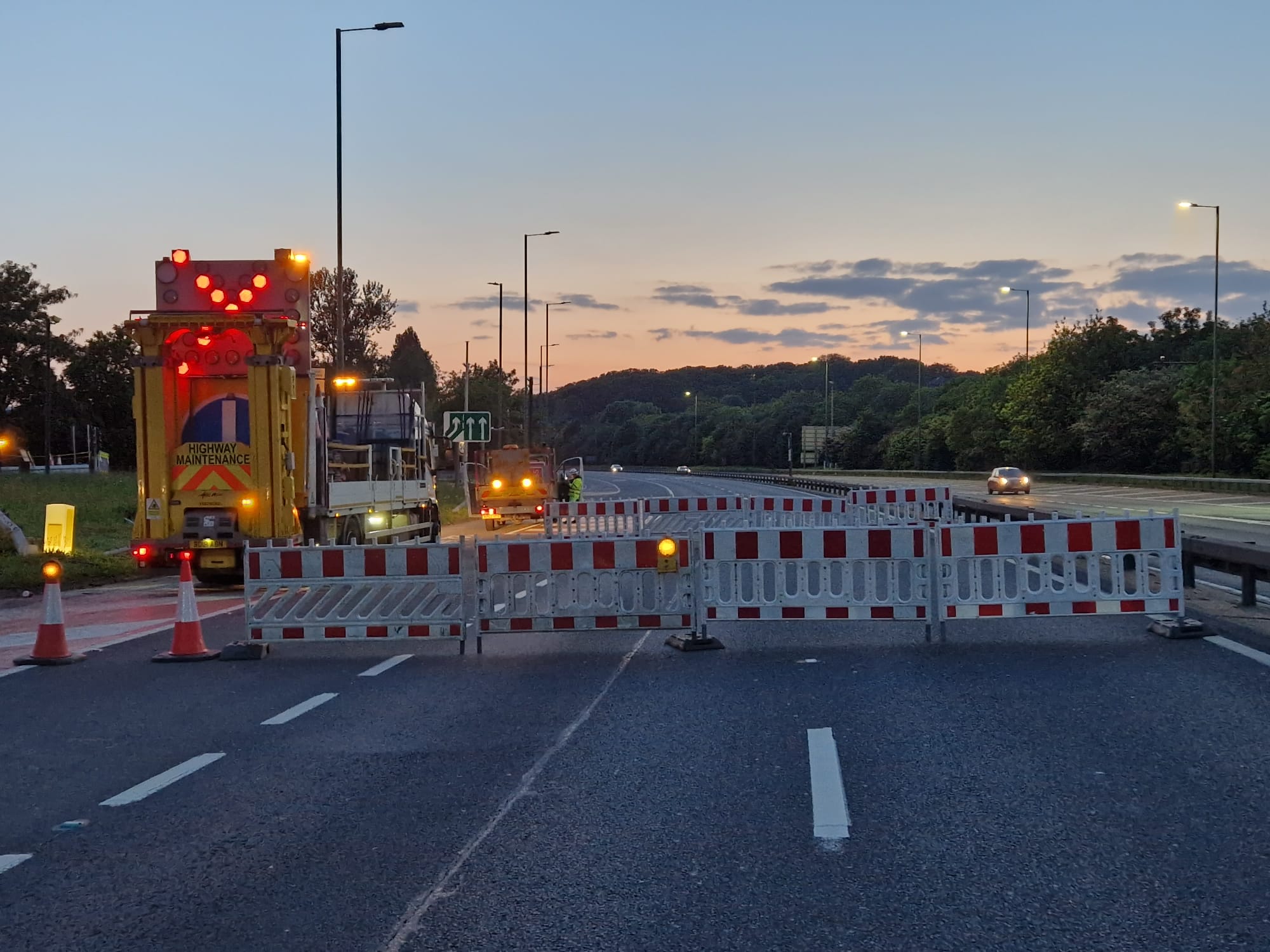
Motorway lane closure with barriers and a highway maintenance vehicle

High-speed TTM · Sector Scheme 12D

High-Speed Traffic Managementon dual carriageways,delivered by 12D-registered crews.

On fast roads the margin for error is measured in seconds. You get a designed scheme, correct safety zones and taper lengths, and operatives ticketed for the road type — installed in the approved window and maintained until the works are done.

Sector Scheme 12 registered across 12A–12D · 25 years · around 150 vehicles for rolling installations · £10m public liability · 24/7 including night possessions.

25

Years in traffic management

~300

Operatives & staff

~150

Lorries, vans & cars

£10m

Public liability cover

24/7

Cover, including call-outs

The service

Traffic management for dual carriageways and other high-speed roads

High-speed traffic management covers works on roads where traffic approaches at speeds that leave no room for improvisation: dual carriageways, high-speed single carriageways and slip roads. Everything grows — the advance signing distance, the lead-in taper, the longitudinal safety zone, the works clearance — and the installation itself becomes a planned operation rather than a drop-off.

We are registered under Sector Scheme 12 across 12A, 12B, 12C and 12D, which is the competency framework that covers high-speed work, and our crews hold the tickets for the roads they work on. Schemes are designed in-house, taken through the highway authority for approval, and installed in the sequence the design sets out.

It is the right service for structures and bridge works, resurfacing and surface treatments, drainage and gully works, barrier and fence repairs, lighting and sign gantry works, survey and inspection runs, and utility crossings on fast roads. Clients are typically civils contractors, highways frameworks, utilities and local authorities responsible for high-speed sections.

Professional help is not optional here. A lane closure installed with the wrong taper length or without the correct safety zone does not fail gradually; it fails at speed, once. The value of a 12D-registered contractor is that the arrangement, the vehicles, the sequence and the competencies all match what the road actually demands.

What it costs to get wrong

On a fast road the consequences of a shortcut arrive at seventy miles an hour

The most common cause of serious harm in high-speed traffic management is not the works — it is the installation and removal, when operatives are placing cones and signs on a live carriageway. Doing that without the right vehicles, the right sequence and the right number of trained people is the single highest-risk decision on the whole job.

The commercial consequences are also sharper. High-speed works are usually delivered in tightly defined night or weekend windows, often with a charge or penalty regime attached. Losing a window to an arrangement the authority will not accept, or to a scheme that cannot be installed in the time allowed, means the whole possession is repeated.

There is also the incursion risk that persists all the way through the works. A driver misreading a taper at speed enters the working space with almost no warning. That is why safety zones exist, why they are dimensioned by speed limit rather than by convenience, and why incursion prevention and warning systems are worth specifying on exposed schemes.

Mistakes we are called in to unpick

  • Treating a dual carriageway lane closure as a scaled-up urban scheme, with sign spacing and taper lengths borrowed from a 30mph drawing.
  • Under-resourcing the installation, so the crew is on the carriageway far longer than the sequence assumed.
  • Planning works to a possession window without checking how much of it the installation and removal will consume.
  • Using crews without the competencies for the road type because they were available.
  • Omitting incursion prevention or warning systems on schemes where the working space sits close to a fast running lane.

Our process

How the scheme gets fromenquiry to signed-off completion

  1. Step 1

    Risk and road-type assessment

    We establish the speed limit, layout, flows, sight lines and hard shoulder or verge availability, and identify whether the works can be done under a lane closure, a contraflow, a lane shift or a full carriageway closure with a diversion.

  2. Step 2

    Design to high-speed dimensions

    CAD drawings set out advance signing distances, lead-in tapers, longitudinal and lateral safety zones, works clearance, sign sizes for the approach speed, and any temporary speed restriction required — all sized for the actual road, not a generic template.

  3. Step 3

    Approval, permits and possession booking

    We take the design through the highway authority, handle permits and any Temporary Traffic Regulation Order for speed restrictions or closures, and align the scheme with the possession or window your client has granted.

  4. Step 4

    Planned installation sequence

    Installation is a defined operation: vehicle order, rolling or static protection, the order signs and cones go in, and how the crew is protected while doing it. Operatives hold the 12D-relevant competencies for the road type.

  5. Step 5

    Inspection, maintenance and incursion response

    Through the works we inspect and reset the arrangement, replace displaced cones and damaged signs, respond to incursions, and record it. Where specified we add incursion prevention and warning systems and dynamic speed signage.

  6. Step 6

    Removal within the window and reporting

    Removal is sequenced as carefully as installation, so the road is handed back within the approved window. You receive the drawing, the approval, inspection records and any incident reports for your file.

What you get

Specific outcomes,not vague reassurance

Competency matched to the road
Sector Scheme 12 registration across 12A–12D and crews ticketed for high-speed work — the difference between a compliant scheme and an indefensible one.
Windows used, not consumed
Installation and removal are planned and resourced so the possession is spent on your works rather than on setting up and taking down.
Exposure minimised for everyone
Correct safety zones plus a planned installation sequence reduce the time operatives spend on a live carriageway and the chance of an incursion reaching the working space.
Fleet and manpower to install at scale
Around 150 lorries, vans and cars and around 300 operatives and staff means a long lane closure is a resourcing exercise, not a two-night improvisation.
Approval handled with the authority
Drawings, permits and temporary speed restrictions taken through the highway authority, so the arrangement you install is the one that was accepted.
Records that stand up
Design, approval, inspection and incident records issued to you, backed by £10m public liability and £10m employers' liability cover.

In detail

Arrangements, equipment and competencies for high-speed schemes

High-speed traffic management is a technical discipline with prescribed dimensions and a small set of proven arrangements. What varies is the road, the works and the window — and how carefully the installation is planned.

Lane closures and lane shifts

The standard arrangement on dual carriageways: one or more lanes taken out of use behind a lead-in taper, with a longitudinal safety zone between the traffic and the working space. Sign sizes, spacing and taper lengths are all functions of the permitted speed.

Lane shifts move traffic laterally to open up a working width without a full closure, and are often the answer for structures and central reserve works. They require careful taper design at entry and exit and clear delineation through the shifted section.

Contraflows and crossovers

Where a whole carriageway must be taken out, traffic can be crossed over to run two-way on the other carriageway. This needs designed crossover points, positive separation, appropriate temporary speed restrictions and careful signing so drivers understand the layout ahead of time.

Contraflows are longer-duration arrangements by nature, so the maintenance regime, night-time conspicuity and inspection frequency matter as much as the initial installation.

Temporary speed restrictions and delineation

Reducing approach speed is often the most effective single measure available, and where a legal restriction is required it needs an order rather than just a sign. We handle the application alongside the scheme design.

Delineation on fast roads relies on correctly spaced cones or cylinders, reflective sign faces sized for the approach speed, and lamps where required, all maintained through the works so the arrangement reads the same at 3am in the rain as it did at handover.

Mobile and short-duration high-speed works

Surveys, inspections, gully cleansing, lining and cable work often move along the road, which suits mobile arrangements with vehicle-mounted signage and rolling protection rather than a static closure.

These operations depend on vehicle discipline, communication between vehicles and a clear plan for how the convoy re-forms after junctions and slip roads.

Incursion prevention, warning and monitoring

On exposed schemes we can add incursion prevention and warning systems that alert the workforce when a vehicle enters the safety zone, along with dynamic speed signage that shows drivers their actual approach speed.

These are risk-reduction measures rather than substitutes for correct geometry. We specify them where the working space is close to a fast running lane or where the location has a history of incursions.

Competencies, plant and paperwork

Operatives hold Lantra and NRSWA cards with T1, T2 and T3 tickets, supervisors hold the relevant qualifications, and schemes are delivered under Sector Scheme 12 registration covering 12A, 12B, 12C and 12D. Chapter 8 of the Traffic Signs Manual and NRSWA requirements apply throughout.

For pre-qualification we hold Constructionline, CHAS, SafeContractor, Achilles UVDB, Acclaim, BM Trada and ISO 9001, with £10 million public liability and £10 million employers' liability cover. Certificates are issued on request.

On site

High-Speed Traffic Management we have installed

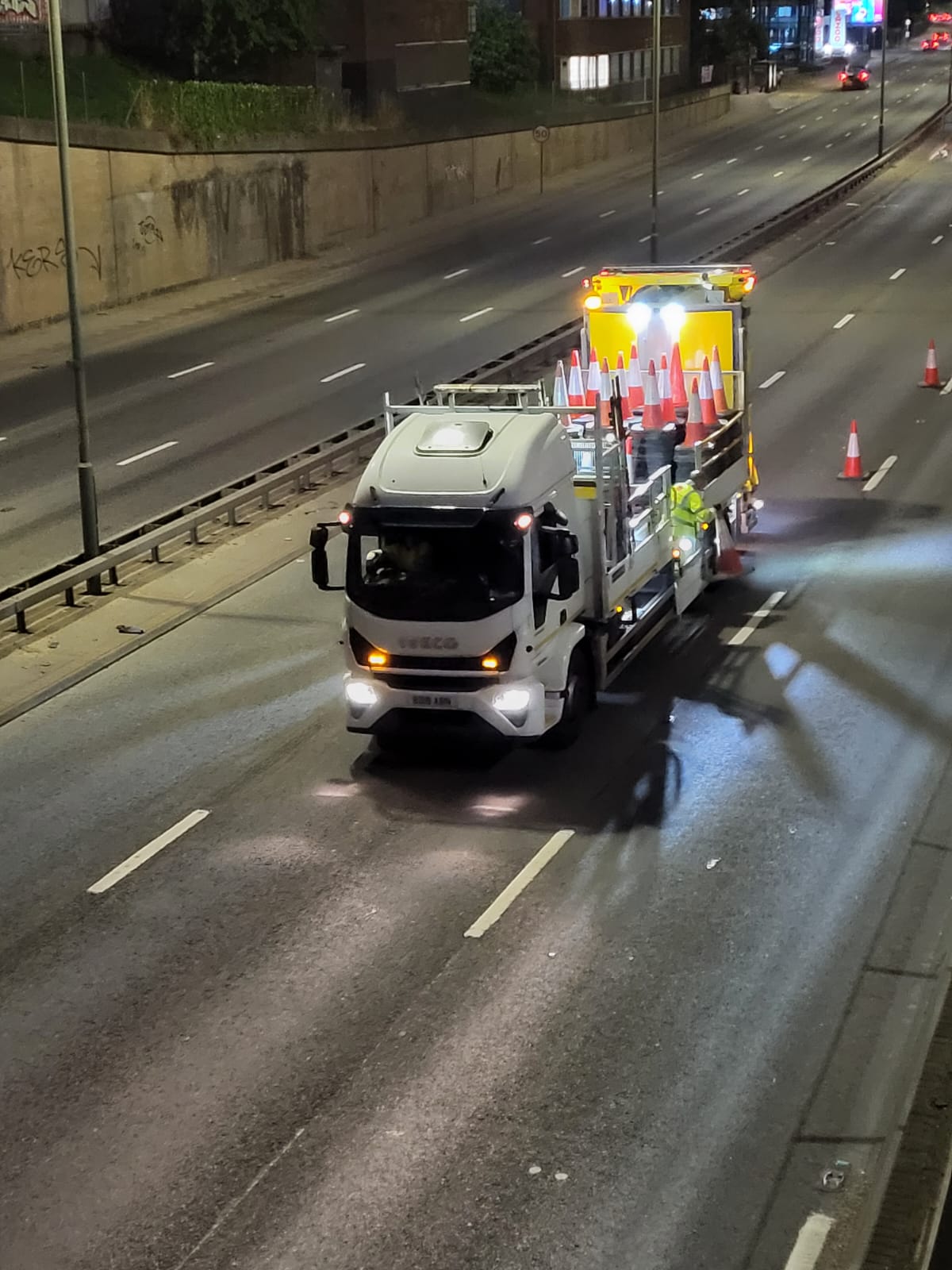
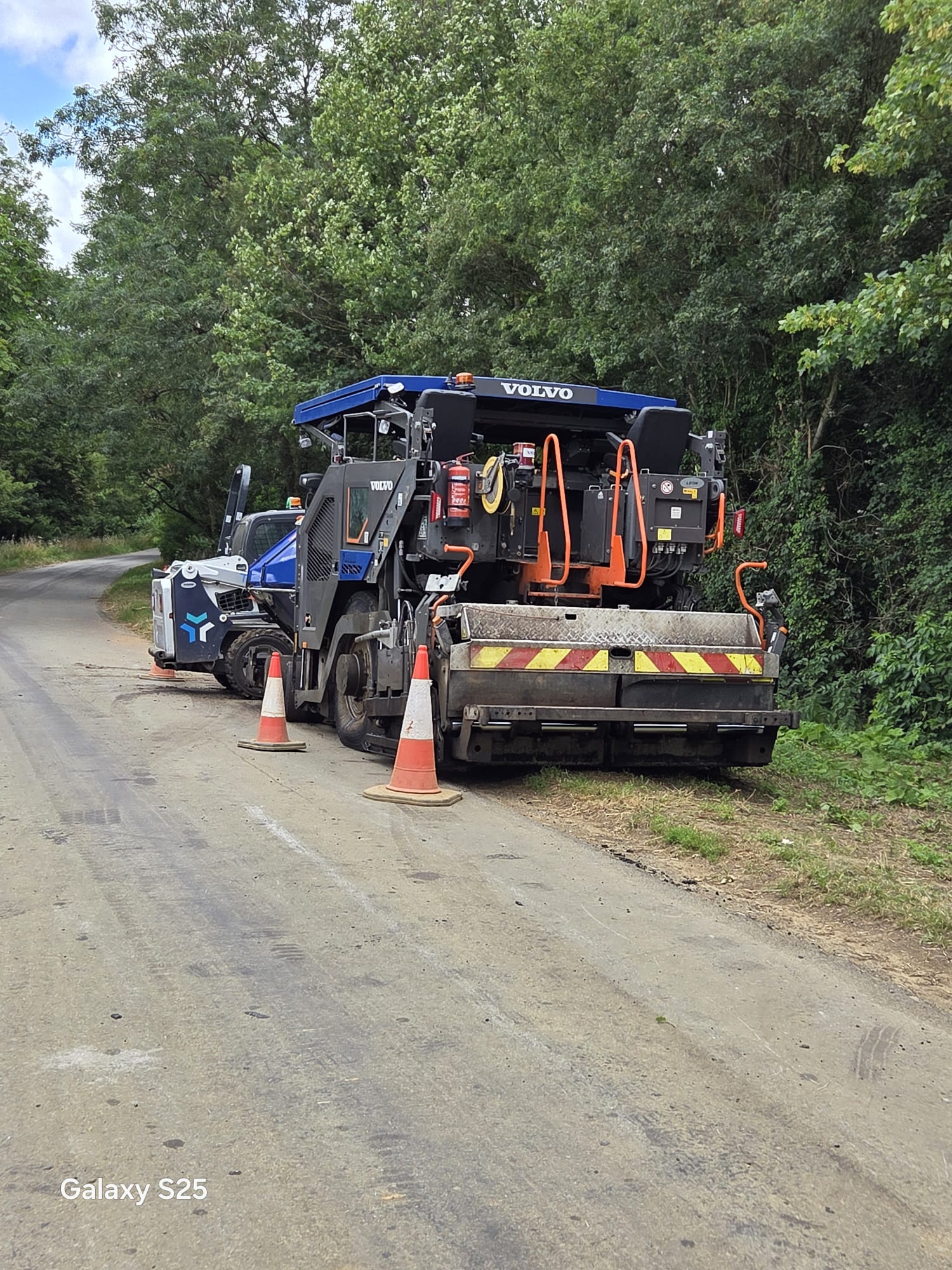
Cone-laden highway maintenance vehicle on a multi-lane road during a night-time lane closure
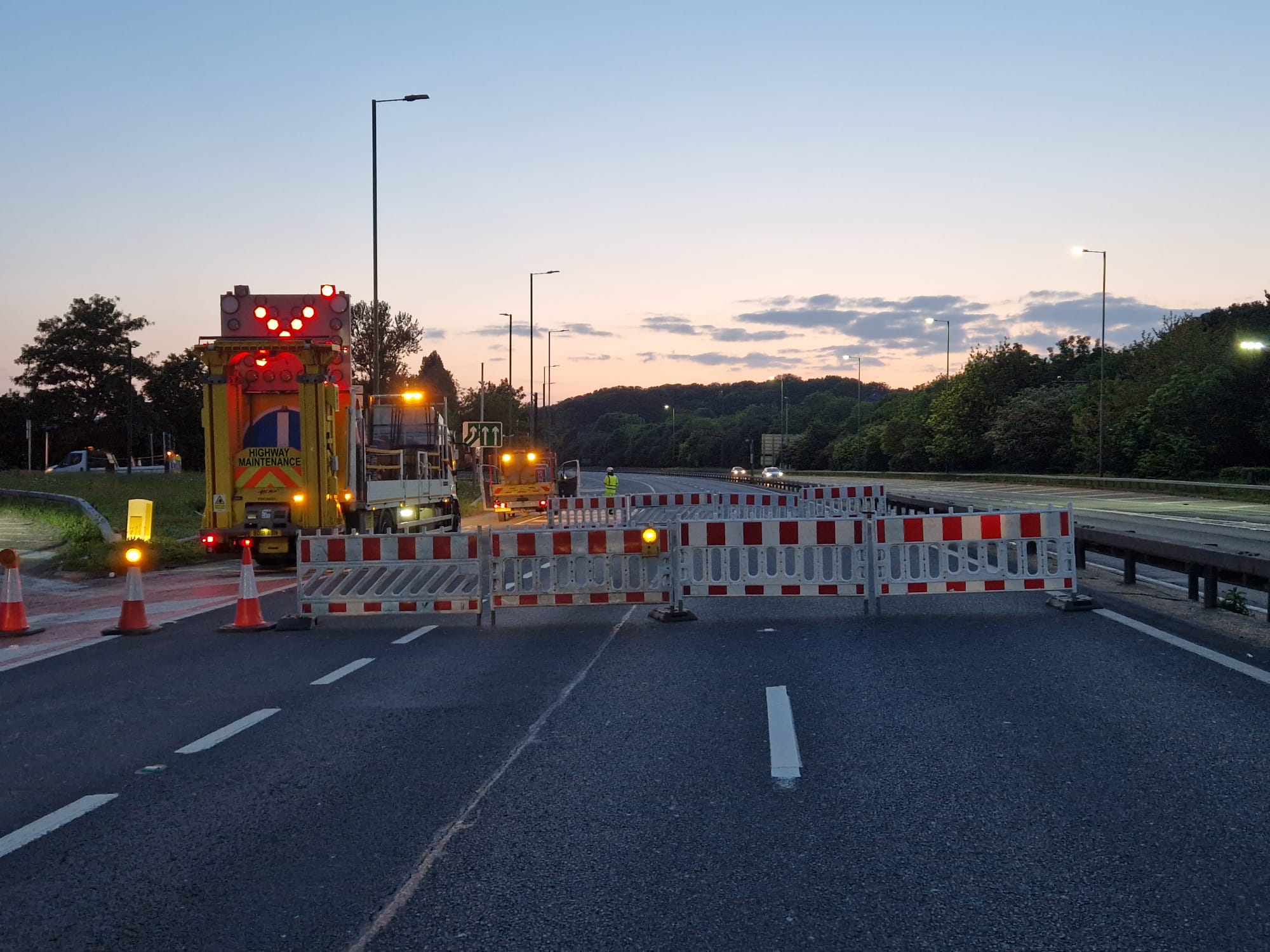
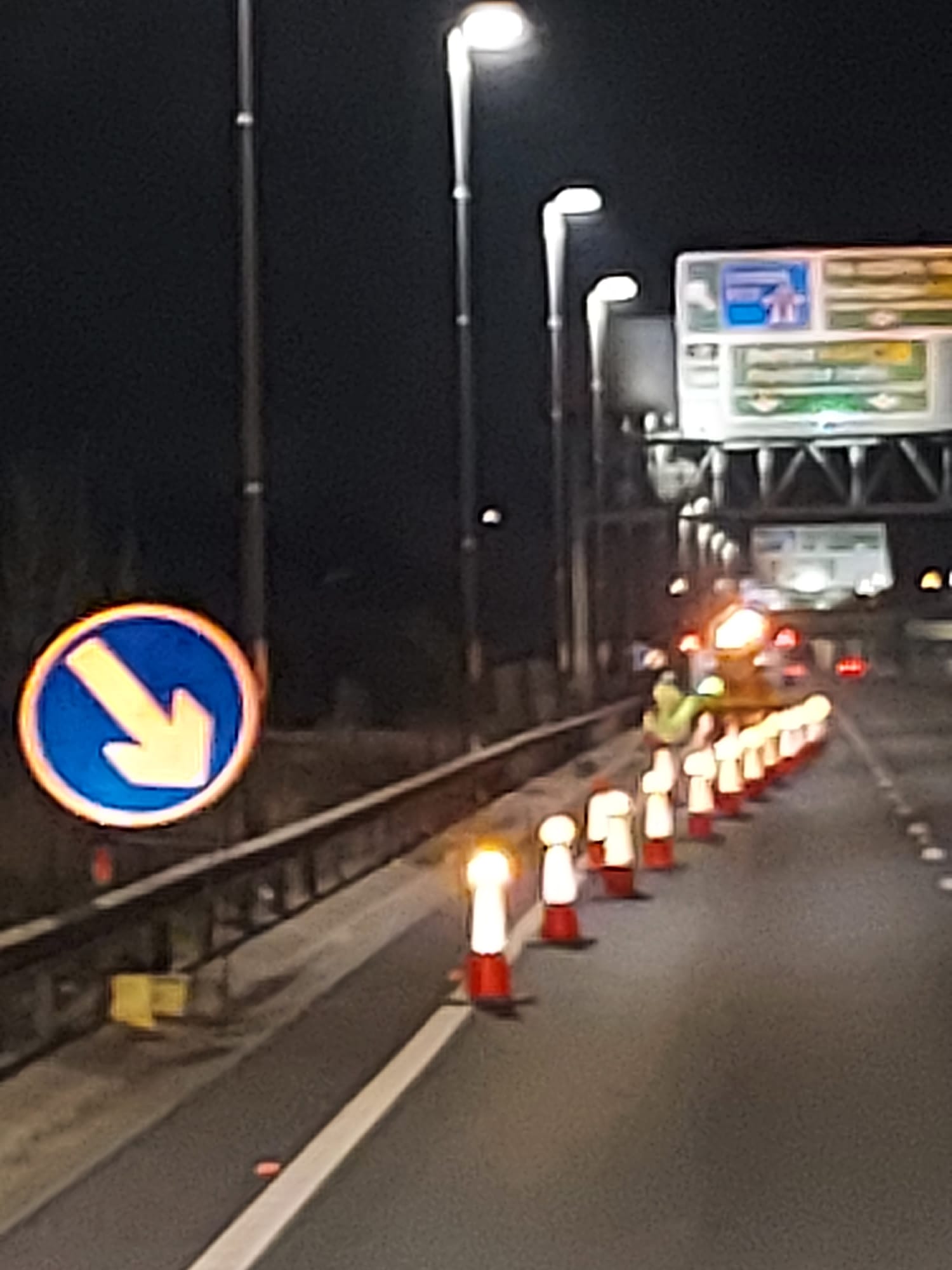
Barriers and works vehicle closing a motorway lane at night
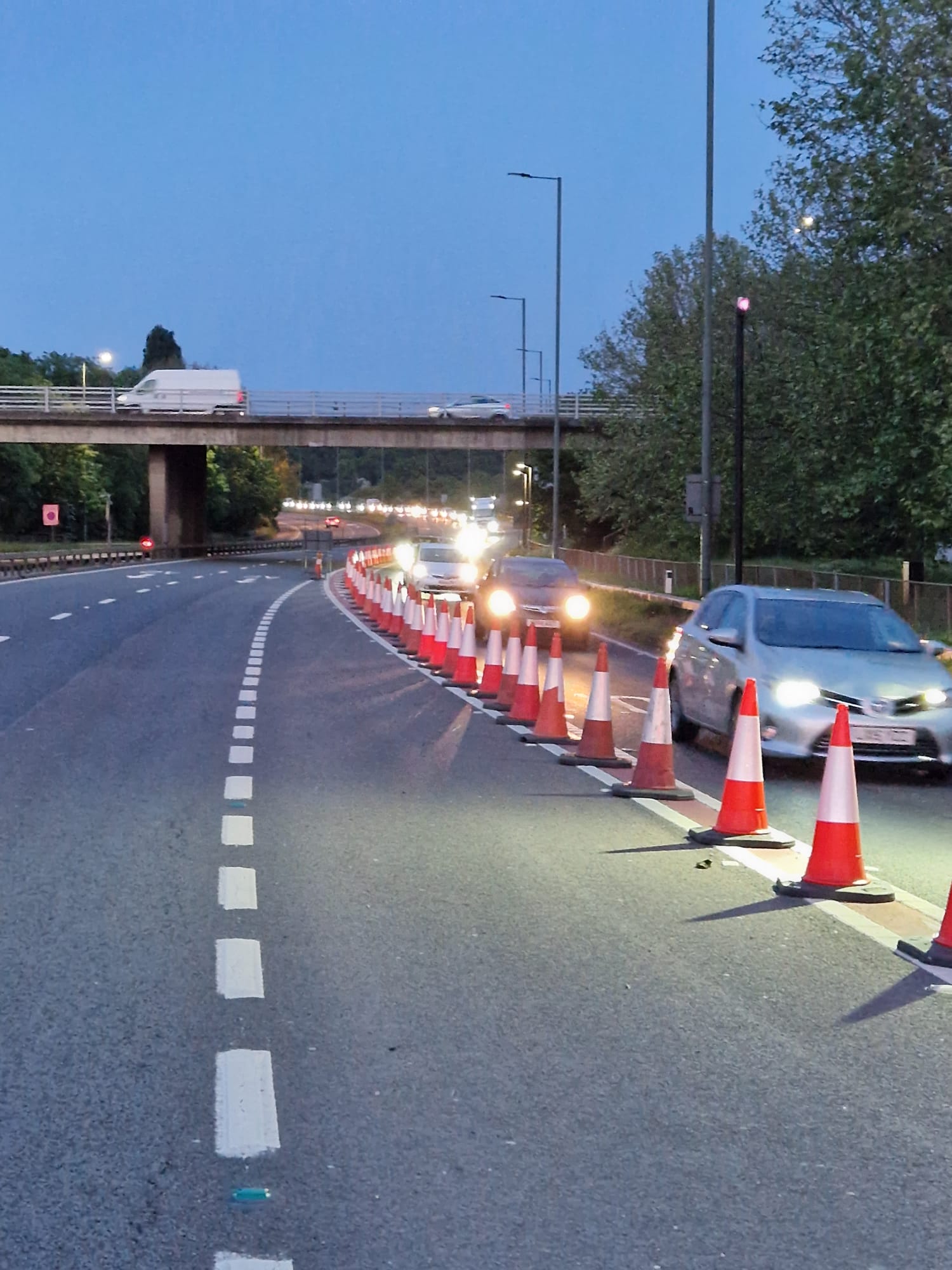
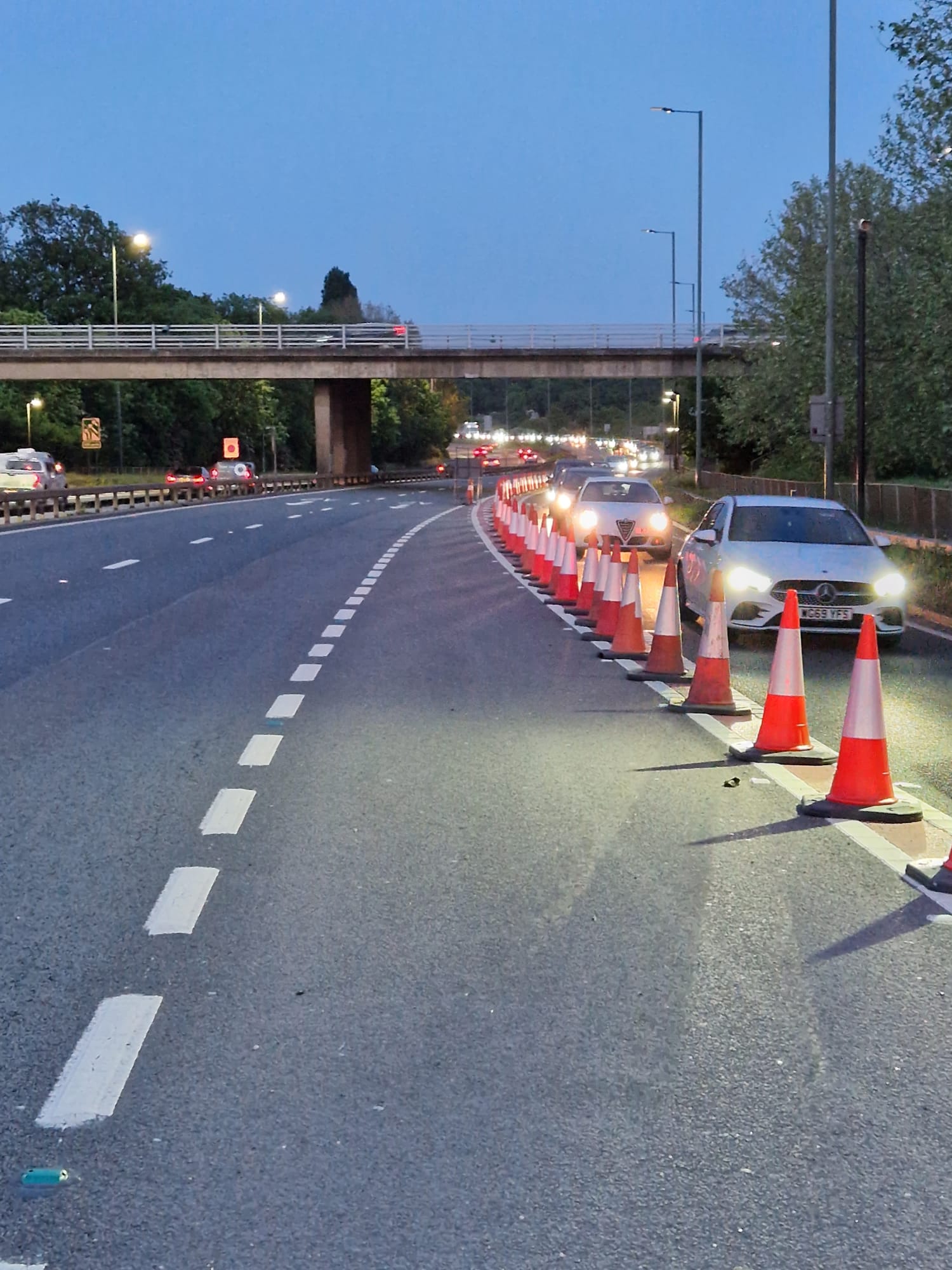
Coned taper forming a lane closure on a dual carriageway at dusk
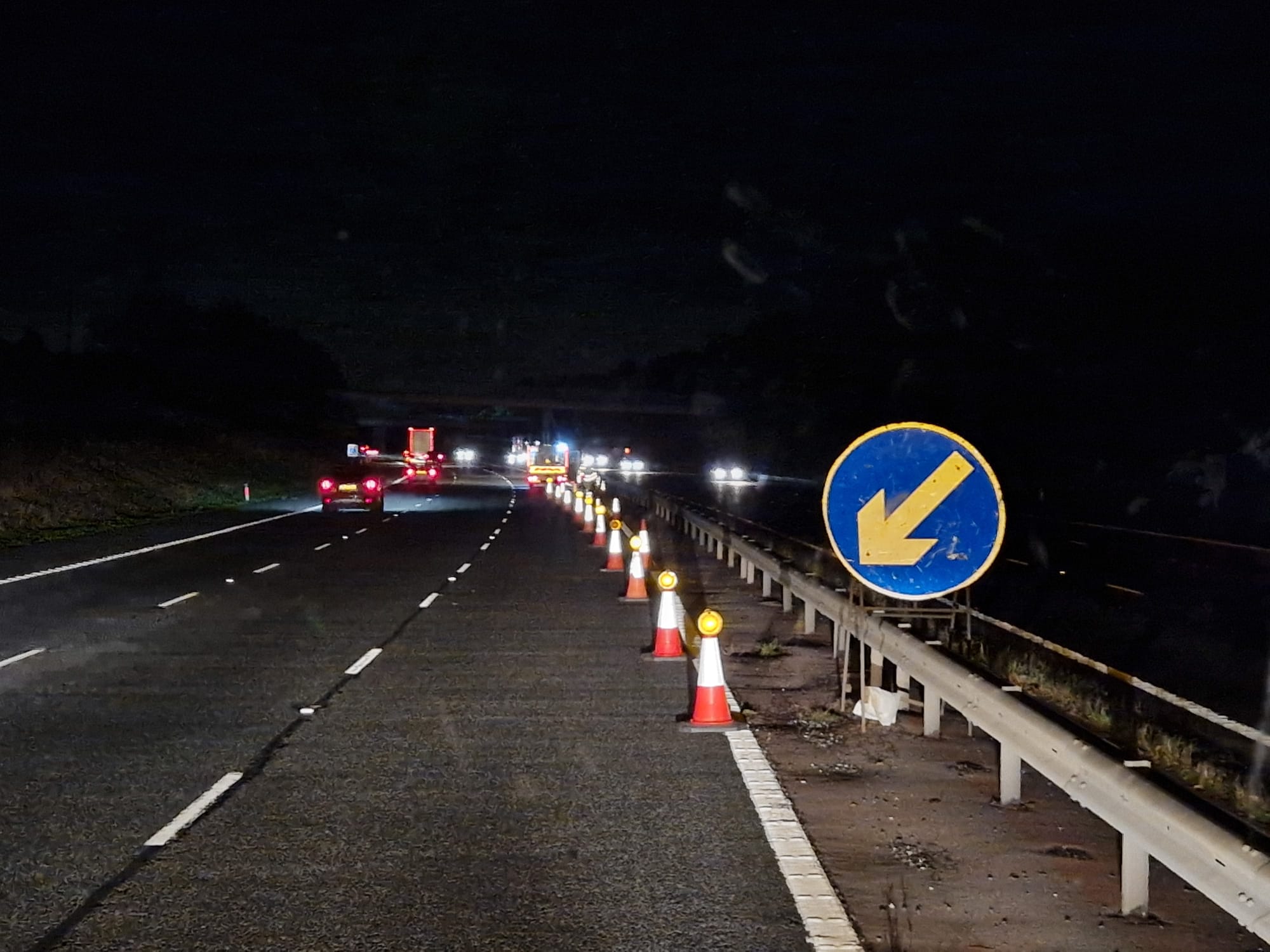
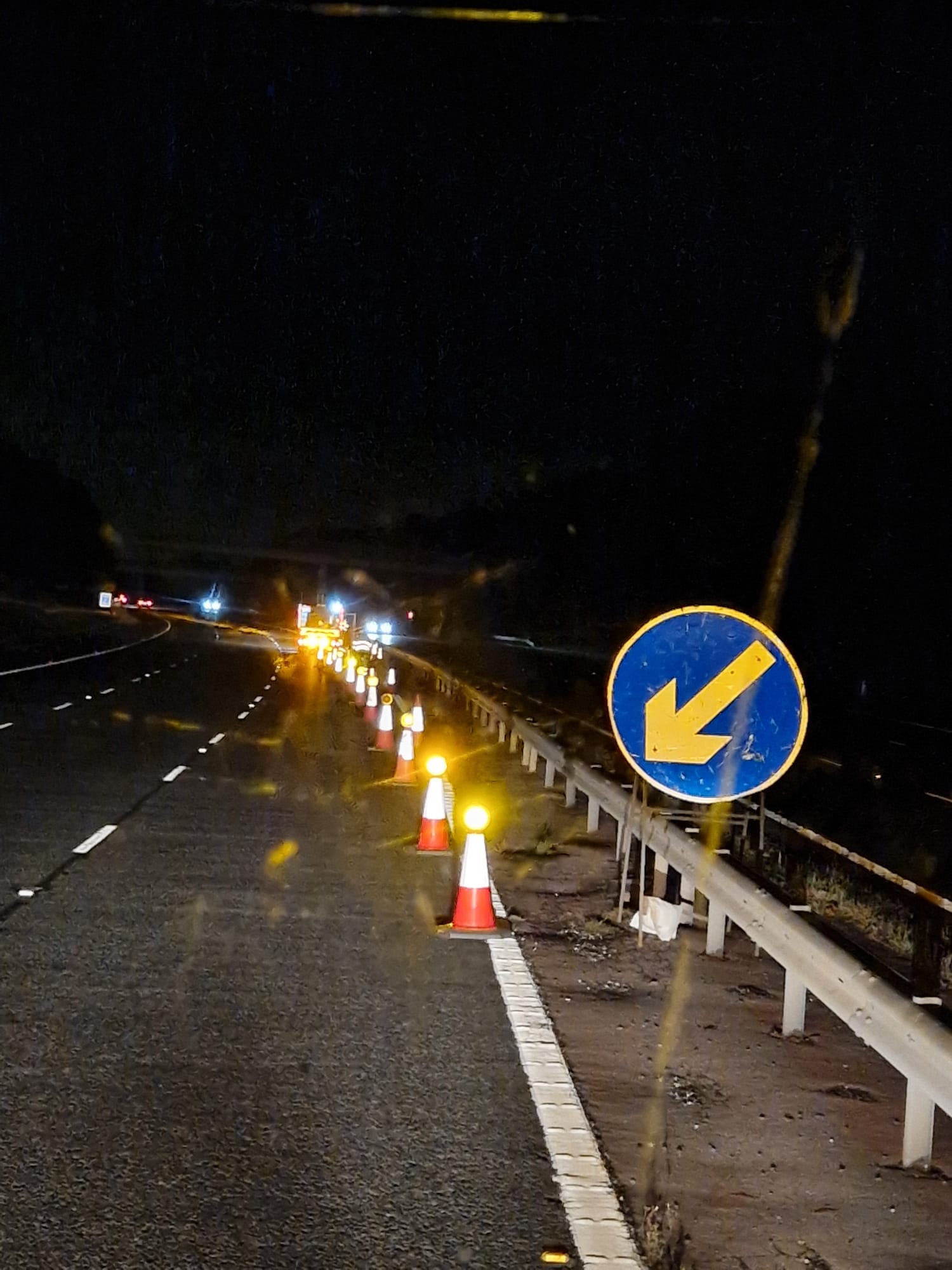
Illuminated cone taper leading to a lane shift arrow sign at night
Lane closure arrow sign and cones beneath a motorway gantry at night
Motorway lane closure with barriers and a highway maintenance vehicle
Driver's view of a high-speed lane closure marked by an arrow sign and lit cones
Curved cone line separating traffic from a work zone on a dual carriageway

More photography from live schemes is on our our work gallery.

Standards this work is delivered to

  • Sector Scheme 12 — 12A, 12B, 12C & 12D
  • Chapter 8 (Traffic Signs Manual)
  • New Roads & Street Works Act (NRSWA)
  • Lantra/NRSWA cards, T1/T2/T3 tickets
  • £10m public liability & £10m employers' liability insurance

Accreditations held

  • National Highway Sector Schemes
  • Constructionline Gold
  • BM Trada
  • CHAS
  • Acclaim
  • Achilles UVDB
  • Avetta
  • Builder's Profile
  • SafeContractor
  • ISO 9001

Certificates are issued for your pre-qualification pack on request. We work direct for end clients and as a subcontractor to principal contractors.

Straight answers

High-Speed Traffic Managementquestions we are asked

How much does high-speed traffic management cost?

It is driven by the length of the arrangement, the number of signs and cones required at high-speed spacing, the crew and vehicles needed to install and remove it safely, the duration, and whether a temporary speed restriction or order is required. High-speed schemes cost more per metre than urban ones because the geometry and the resourcing demand it. We price the specific scheme in writing.

What does Sector Scheme 12D registration mean for my job?

Sector Scheme 12 is the quality and competency framework for temporary traffic management, with 12D covering high-speed roads. Registration means our systems and our people have been assessed against it. For your job it means the crews are competent for the road type and the paperwork will satisfy a client or authority audit.

How long does it take to install a dual carriageway lane closure?

It depends on the length and the arrangement, but the important point is that installation and removal both consume part of your possession window. We plan the sequence and resource it so the window is spent on your works, and we tell you at design stage how much of it the traffic management will take.

Can you work in night possessions and weekend windows?

Yes, and most high-speed work is delivered that way because flows are lower. Night works and out-of-hours shifts are routine, and we run 24/7 cover including emergency rapid-response call-outs.

Do you handle temporary speed limits?

Yes. Where a legal temporary speed restriction is required we handle the order and the authority liaison alongside the scheme design, so the restriction is enforceable rather than advisory.

How do you protect the workforce from incursions?

First through geometry: correct advance signing, taper lengths and longitudinal safety zones for the permitted speed. Then through delineation and conspicuity that hold up at night and in poor weather. Where the risk justifies it we add incursion prevention and warning systems and dynamic speed signage, and we record and report incursions so recurring problem locations get a changed arrangement rather than a repeated one.

What is the longest scheme you can resource?

With around 300 operatives and staff and roughly 150 lorries, vans and cars, long and multi-phase high-speed schemes can be resourced without stripping crews from another client. The practical limits are the authority approval and the possession windows available, which we work through with you at planning stage.

Do you provide the design as well as the crews?

Yes. CAD drawings and TTM design are produced in-house and taken through highway authority approval. Because the designers and the operational team are in the same business, the approved drawing is one the crew can build at the correct dimensions on the actual road.

How quickly can you respond to an emergency on a high-speed road?

We operate 24/7 rapid-response call-outs for situations where a road or site needs securing immediately. Response depends on location and the scheme required, so we confirm what we can mobilise and when rather than publishing a blanket figure we cannot honour on every road in the country.

Which areas do you cover for high-speed work?

Our base is Oxfordshire and we work nationwide: the South East, London, Gatwick, the South West and the M4 and M5 corridors, Wales, the Midlands, the North and Scotland — under one contract and one point of contact.

Related services

  • Traffic Management

    Temporary traffic management in Oxfordshire and nationwide: TTM design, permits, signals, signage and ticketed crews from one contractor. 25 years, 24/7 cover, £10m insurance.

  • Road & Lane Closures

    Full road closures, lane closures and contraflows in Oxfordshire and nationwide. Signed diversion routes, TTRO and permit handling, ticketed crews, 24/7 cover, £10m insurance.

  • Site Safety & Professional Services

    Traffic management coordination, incursion prevention and warning systems, dynamic speed signage and site safety support across Oxfordshire and nationwide. 25 years, £10m insurance.

  • Night Works & Emergency Response

    Out-of-hours and night traffic management plus 24/7 emergency rapid-response call-outs. Oxfordshire base, nationwide cover, ticketed crews, Sector Scheme 12A–12D, £10m insurance.

Where we deliver it

Based in Oxfordshire and working nationwide. See the full service areas list, browse all traffic management services, read about the company, or return to the homepage.

  • Oxfordshire
  • Oxford
  • Banbury
  • Bicester
  • Witney
  • Abingdon-on-Thames
  • Didcot
  • Kidlington
  • London
  • South East
  • Gatwick
  • South West
  • Wales
  • Midlands
  • North
  • Scotland

Send us the window.We will design the schemethat fits inside it.

Give us the road, the speed limit, the works and the possession dates. You get a written estimate covering design, approval, installation, maintenance and removal by 12D-registered crews.

25 years · Sector Scheme 12A–12D · £10m public liability · 24/7 cover

Send the details

Road type, duration and start date is enough to price it. We reply to every enquiry.