24/7 cover · Nationwide from Oxfordshire

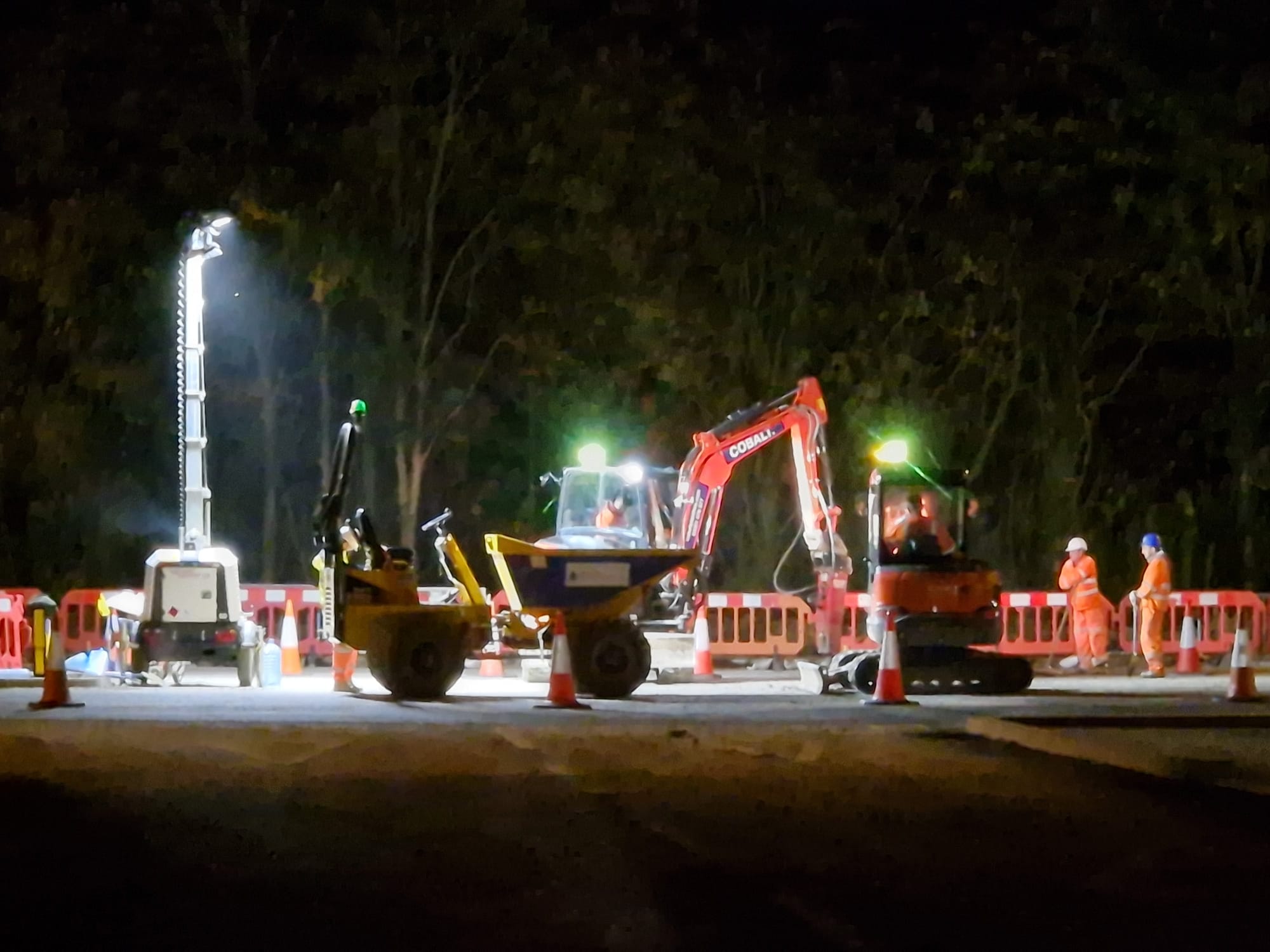
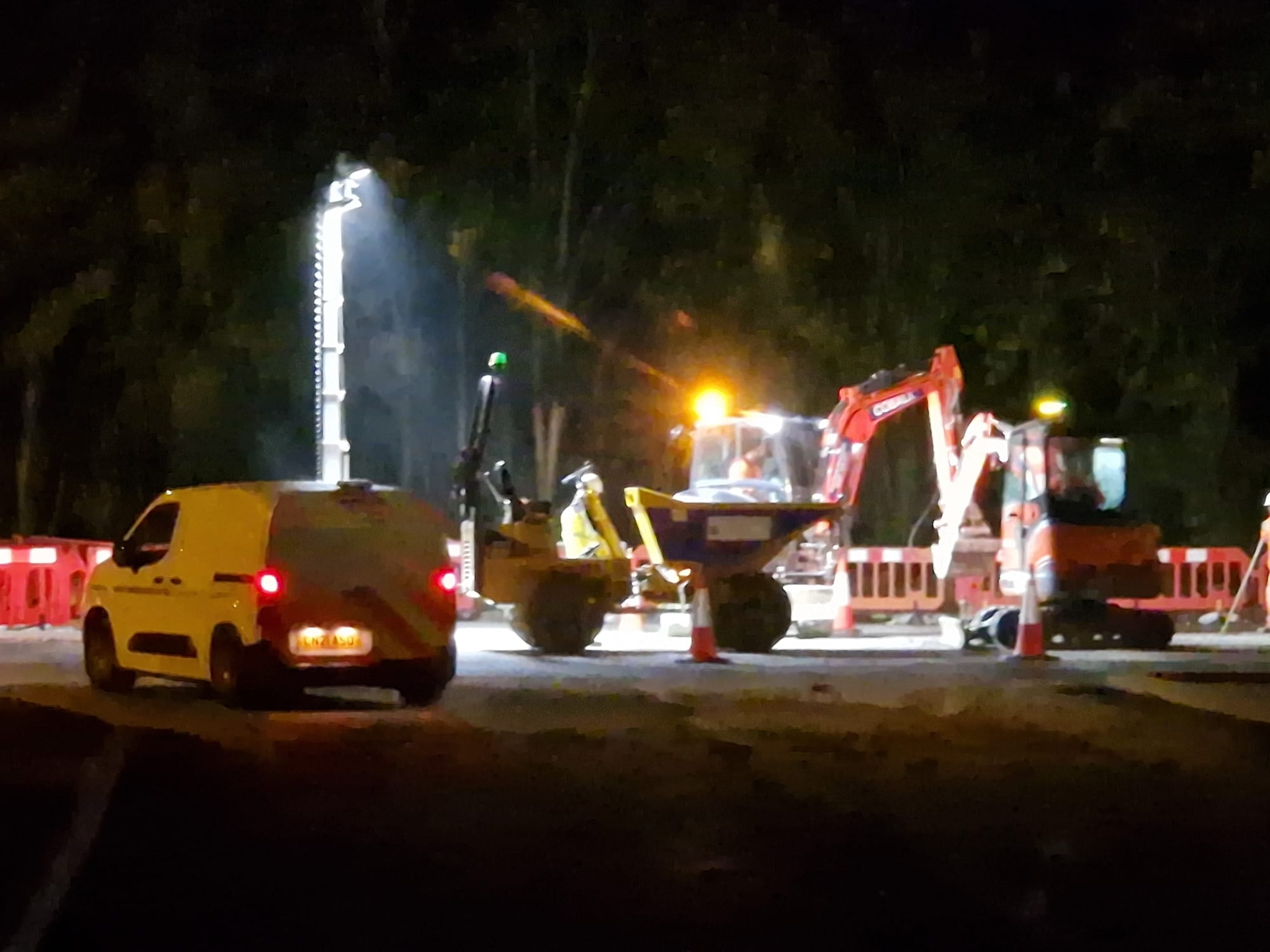
Floodlit night works excavation with plant and works vehicle in attendance

Night works & 24/7 emergency response

Night Works and 24/7 EmergencyTraffic Management,mobilised when it cannot wait.

Some works can only happen when the road is quiet, and some cannot wait until morning. You get night-shift schemes designed for low light and low flows, and rapid-response call-outs to secure a road or site now.

24/7 cover including emergency rapid-response call-outs · around 300 operatives and 150 vehicles · 25 years · Sector Scheme 12A–12D · £10m public liability.

25

Years in traffic management

~300

Operatives & staff

~150

Lorries, vans & cars

£10m

Public liability cover

24/7

Cover, including call-outs

The service

Out-of-hours schemes and rapid-response call-outs, from one 24-hour operation

Night working exists because some works are impossible in daytime traffic. Resurfacing a busy corridor, lane closures on dual carriageways, town centre street works, rail-adjacent compounds and utility connections under main roads are all routinely delivered at night, when flows are low enough for a closure to be acceptable and a window to be granted.

Emergency response is the other half of this service. Burst mains, collapsed carriageways, damaged barriers, road traffic collisions, storm debris, structural strikes and failed signals all create situations where a road or a site has to be made safe immediately. We run 24/7 cover with rapid-response call-outs for exactly that.

It suits utilities with statutory response obligations, civils contractors working to fixed possession windows, local authorities managing their own network incidents, and principal contractors who need a traffic management partner reachable at 2am rather than a voicemail until Monday.

Professional help matters because darkness removes the margin that daylight provides. Conspicuity, lighting, reflectivity, sign placement and crew visibility all have to be designed rather than assumed, and an emergency arrangement installed in a hurry still has to be a compliant arrangement — the rules do not relax because the call came in late.

What it costs to get wrong

At night, small errors stop being small

A sign that reads adequately in daylight can be invisible at night if it is dirty, unlit, badly angled or wrongly positioned. Drivers approaching an unlit taper at speed have far less time to interpret what they are seeing, and fatigue is working against them and against your crew at the same time.

Commercially, night windows are unforgiving. They are typically short, often carry a charge or penalty regime, and cannot be extended on the night. If the traffic management is not installed promptly and correctly, the productive part of the shift disappears — and the whole possession may have to be rebooked weeks later.

In an emergency, delay is the cost. An unsecured carriageway defect, an exposed excavation or a damaged safety barrier is a live hazard for every vehicle passing it, and the longer it sits without a compliant arrangement, the greater both the risk and the liability for whoever is responsible for that length of road.

Mistakes we are called in to unpick

  • Planning a night possession without allowing for how long installation and removal will actually take out of the window.
  • Relying on daytime signing standards at night, with no attention to lighting, cleanliness or reflectivity.
  • Having no out-of-hours route to a traffic management contractor, so an incident is managed by whoever happens to be on site.
  • Leaving an emergency arrangement in place unchanged for days rather than converting it into a properly designed scheme.
  • Booking back-to-back night shifts with no allowance for fatigue management or reset time between them.

Our process

How the scheme gets fromenquiry to signed-off completion

  1. Step 1

    Call or planned booking

    Planned night works are scoped like any other scheme. Emergencies start with a call: location, road type, what has happened and what needs securing. We confirm what can be mobilised and when rather than quoting a blanket response time.

  2. Step 2

    Immediate make-safe or window planning

    For emergencies the first objective is a compliant make-safe arrangement protecting the hazard and the public. For planned works we design the scheme to the possession window, including how much of it installation and removal will use.

  3. Step 3

    Design and approval

    Drawings and TTM design go through the highway authority for planned works. For emergency works the notification route differs, and we handle the retrospective permits and paperwork so the record is correct.

  4. Step 4

    Night-shift installation

    Ticketed operatives install the arrangement in the designed sequence with conspicuity built in: clean reflective sign faces, lamps where required, correct spacing for the approach speed, and lit working areas where the works demand it.

  5. Step 5

    Overnight monitoring and shift cover

    The arrangement is inspected and reset through the shift, faults and incursions are responded to, and where works run multiple nights we manage the nightly make-safe and reopening cycle.

  6. Step 6

    Reopening, conversion or completion

    Roads are handed back within the approved window. Where an emergency arrangement needs to remain, we convert it into a designed, permitted scheme rather than leaving temporary measures in place indefinitely.

What you get

Specific outcomes,not vague reassurance

Reachable at 2am
24/7 cover means an incident gets a traffic management response when it happens, not at the start of the next working day.
Windows spent on your works
Installation and removal are planned and resourced so the productive part of a short night possession is not eaten by set-up.
Conspicuity designed for darkness
Reflective, clean, correctly positioned signing, lamps where required and lit working areas — so the scheme reads properly at 3am in the rain.
Resourcing depth for repeat nights
Around 300 operatives and staff and roughly 150 vehicles means consecutive night shifts and multi-site programmes can be crewed properly.
Emergency arrangements that stand up
A rushed job is still a compliant job: correct arrangement, records taken, and the paperwork tidied up behind it.
One contractor from make-safe to permanent fix
The same team that secures the road overnight designs and permits the scheme for the repair works that follow.

In detail

What changes at night, and what an emergency call-out actually involves

Night working and emergency response share the same underlying discipline as any other scheme, applied under worse conditions and tighter time pressure. The detail below covers both.

Typical night-work applications

Resurfacing and surface treatments on busy corridors, dual carriageway lane closures and contraflow installations, structures and bridge works, utility connections crossing main roads, gantry and lighting works, and town centre street works where daytime closures would be refused.

Rail-adjacent works often need road-side compounds and access arrangements timed to possessions, which means the traffic management window is dictated by somebody else's programme and cannot slip.

Conspicuity, lighting and delineation

At night everything depends on being seen. That means clean reflective sign faces of the correct size for the approach speed, lamps where required, correct cone or cylinder spacing, and delineation that clearly communicates the layout ahead rather than just marking an edge.

Working areas themselves may need task lighting, positioned so it illuminates the work without dazzling approaching drivers. Crew visibility clothing and vehicle beacons are the last layer, not the first.

Possession windows and sequencing

A night window is a fixed quantity. We plan the installation sequence, the number of operatives and vehicles, and the removal sequence so the road is handed back on time even if the works themselves overrun their planned finish.

For multi-night schemes we plan the nightly cycle explicitly: what is made safe and left in place, what has to be removed, and how the arrangement is reinstated at the start of the next shift with the minimum lost time.

Emergency make-safe arrangements

The first objective on a call-out is protecting the hazard and the public with a compliant arrangement: advance warning, correct taper or closure, safe pedestrian provision and, where necessary, a signed diversion. That may mean a full closure until the situation can be assessed properly in daylight.

We record what was found, what was installed and when, which matters for the incident file, for the authority notification and for any subsequent claim or investigation.

Converting emergency measures into a designed scheme

Emergency works follow a different notification route from planned works, but the arrangement cannot remain an emergency arrangement indefinitely. Once the immediate risk is controlled we design the scheme properly, obtain the permit or order, and install the arrangement the repair works actually need.

Doing that with one contractor removes the usual gap: the crew that secured the site at 3am briefs the team that designs the scheme, so nothing about the site conditions gets lost in translation.

Competencies, welfare and fatigue

Night crews hold the same competencies as day crews: Lantra and NRSWA cards with T1, T2 and T3 tickets, under Sector Scheme 12 registration across 12A to 12D, working to Chapter 8 and NRSWA requirements.

Shift patterns, break provision and fatigue management are planned rather than left to chance, because a tired operative on a live carriageway at 4am is a risk to themselves and to the scheme.

On site

Night Works & Emergency Response we have installed

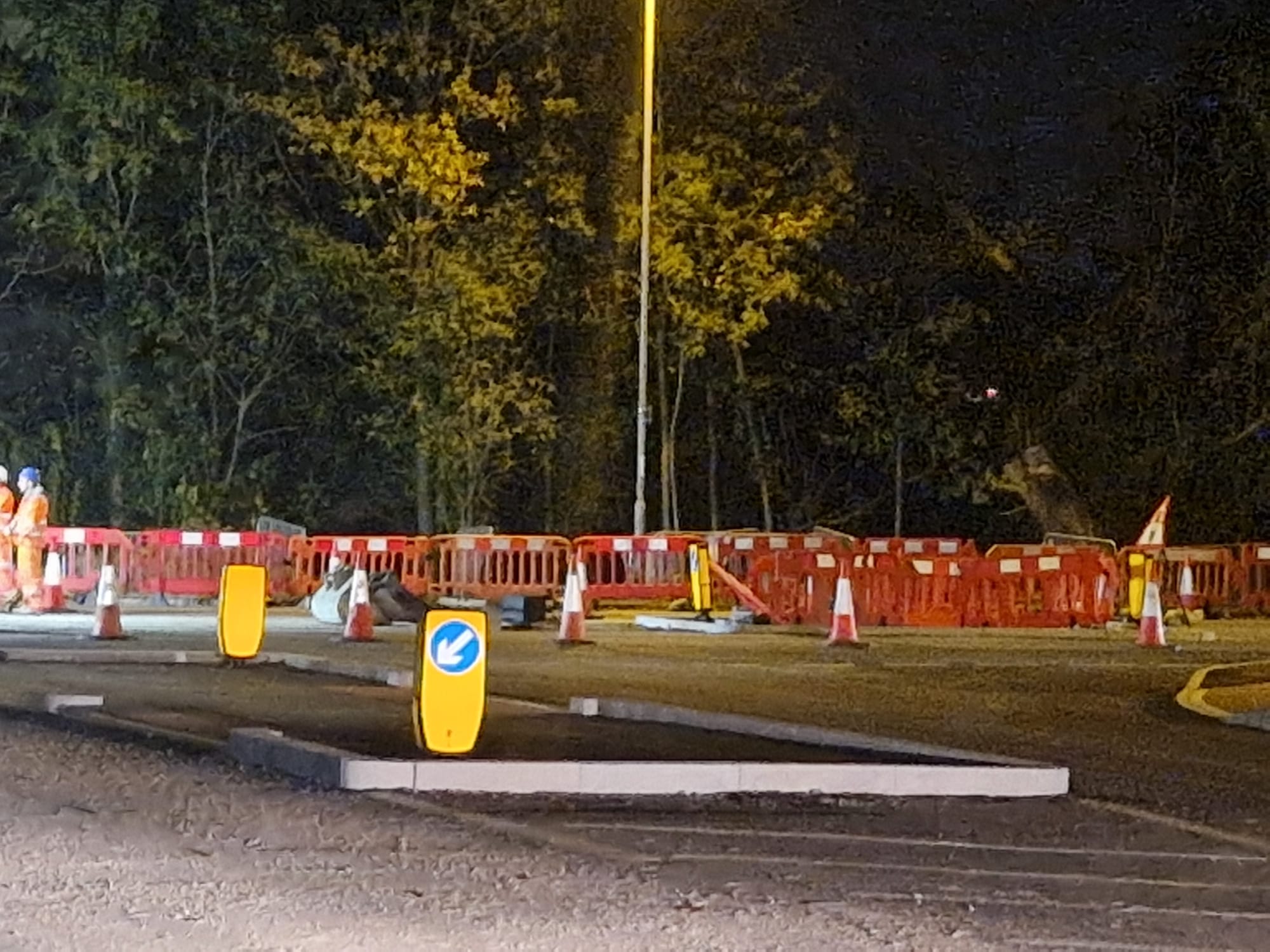
Night works site enclosed by barriers with a lit arrow bollard
Excavation work carried out under floodlights during out-of-hours night works
Floodlit night works excavation with plant and works vehicle in attendance
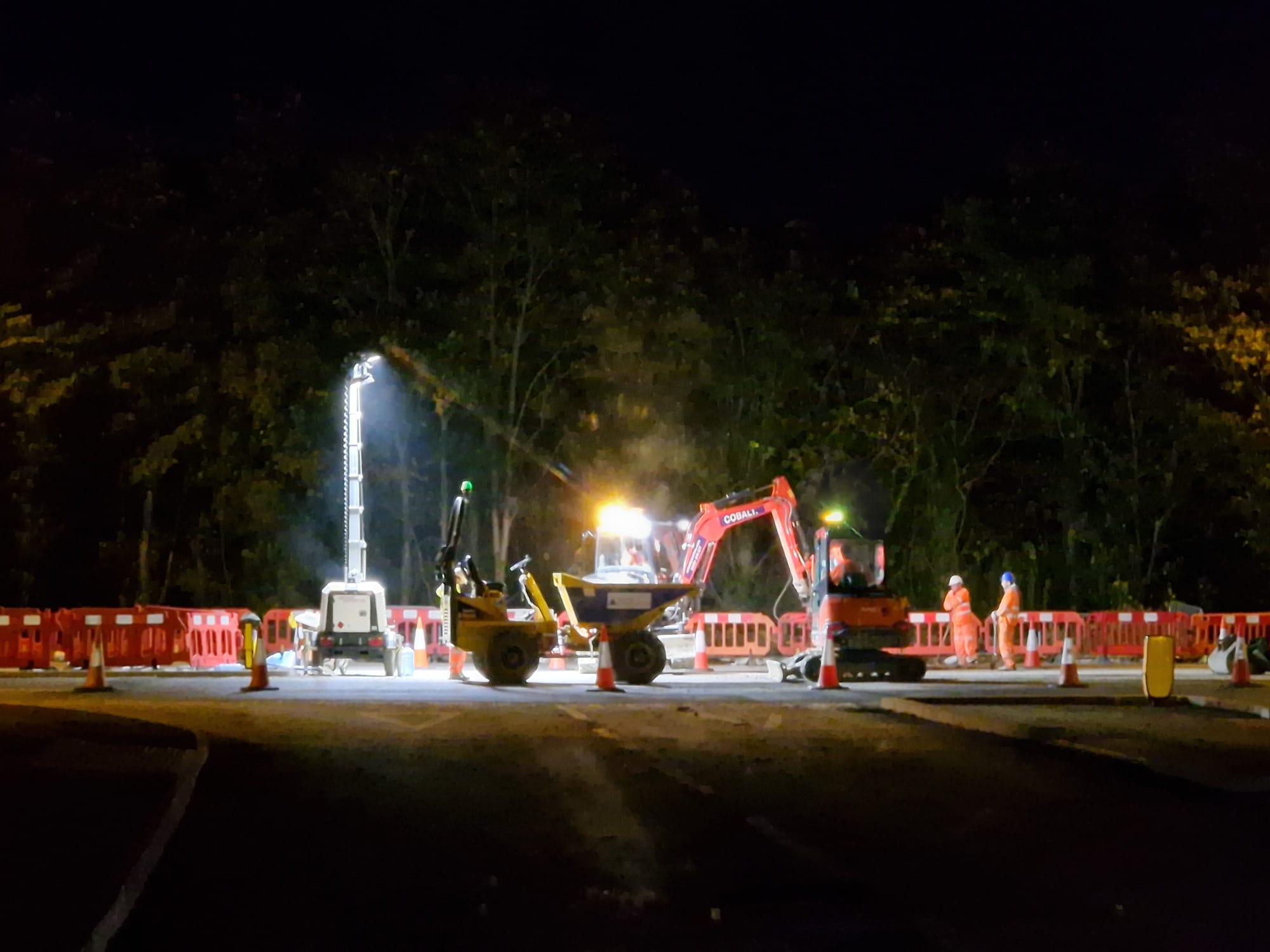
Barriered night works zone lit by high-powered lighting with machinery in use
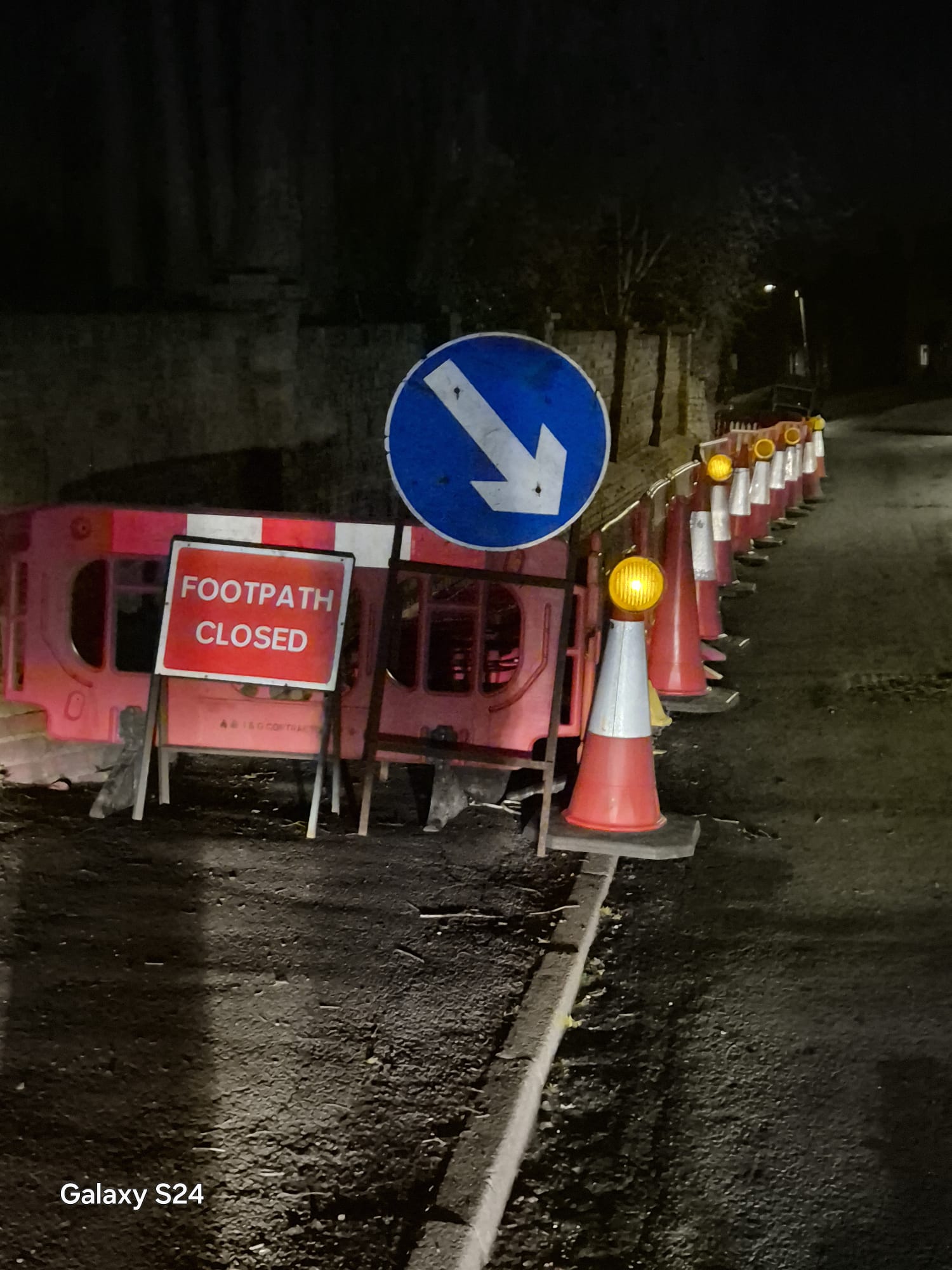
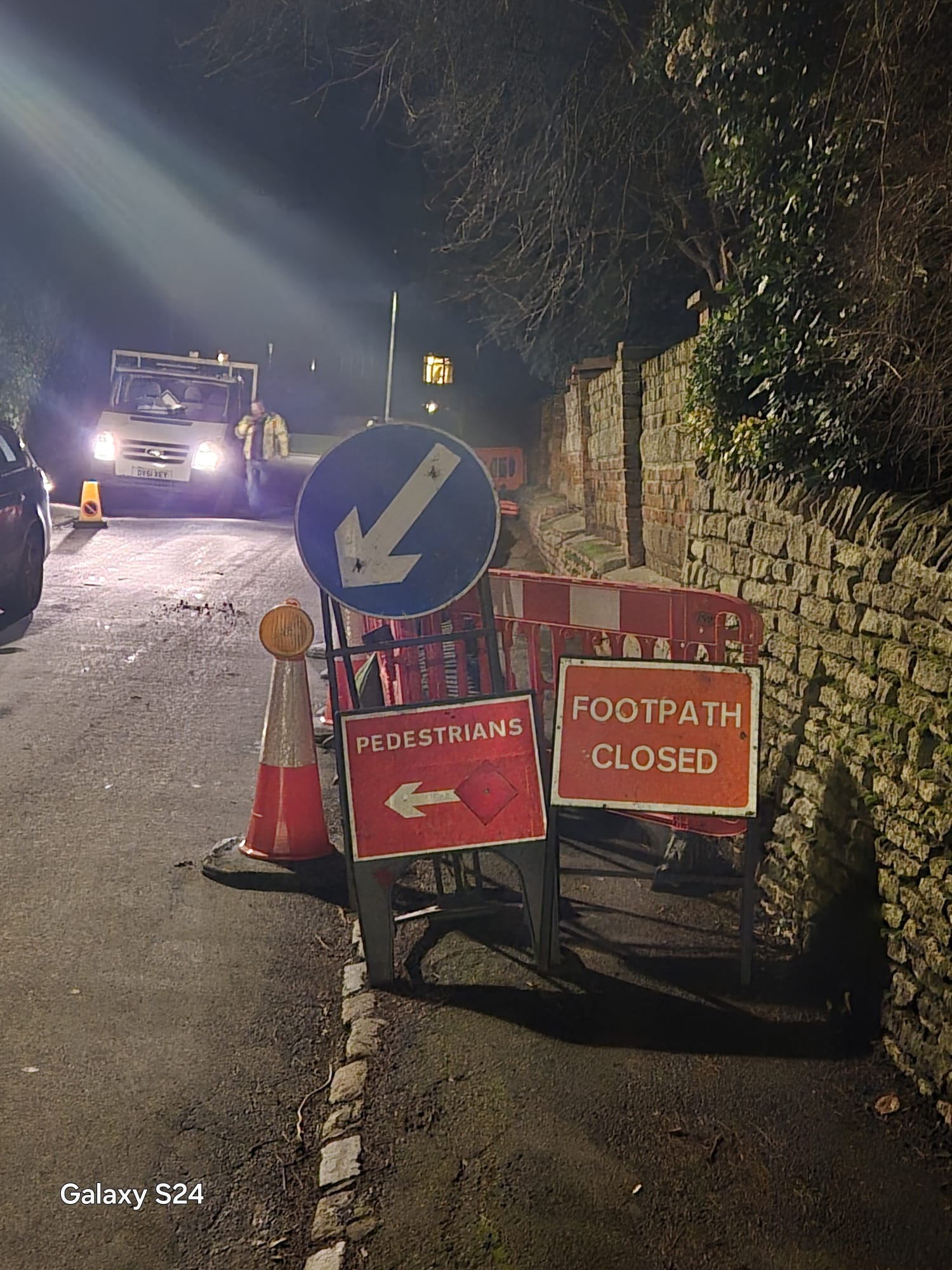
Footpath closed sign, keep-left arrow and lit cone taper on a night works scheme
Footpath closed and pedestrian diversion signage lit by works lighting at night
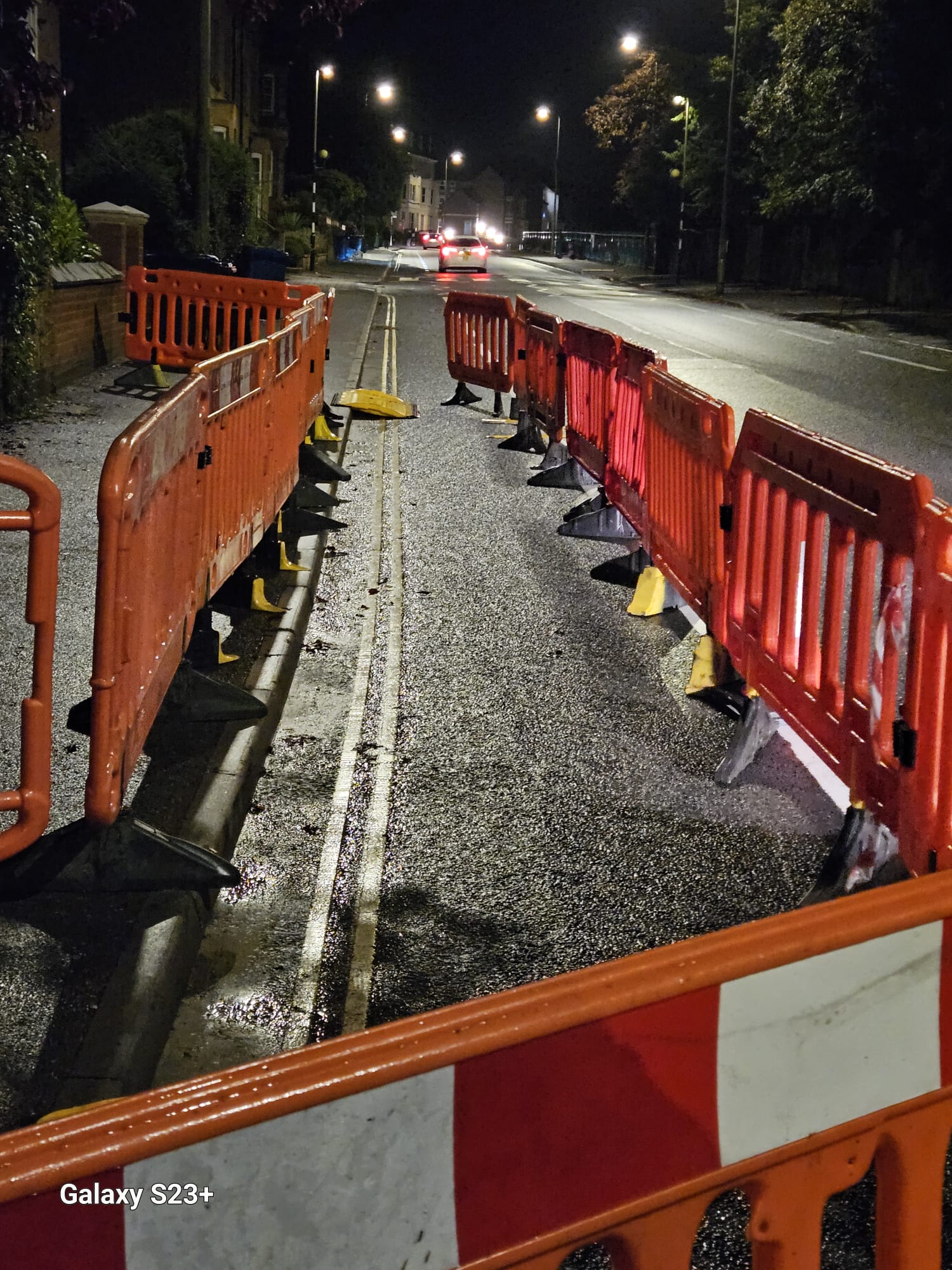
Barriers separating a night-time work zone from traffic on a wet road
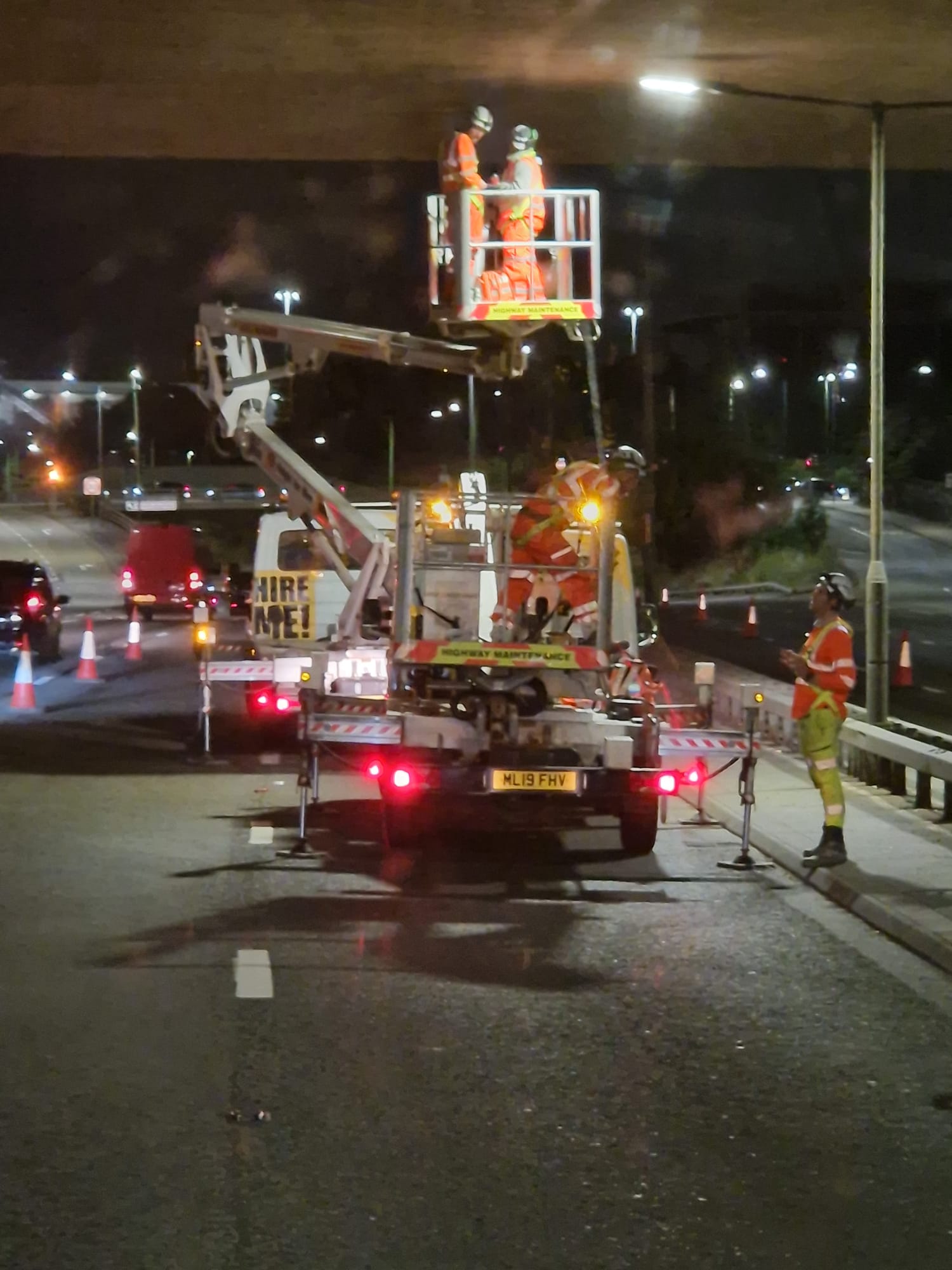
Cherry picker working beneath a bridge at night with traffic management in place

More photography from live schemes is on our our work gallery.

Standards this work is delivered to

  • Sector Scheme 12 — 12A, 12B, 12C & 12D
  • Chapter 8 (Traffic Signs Manual)
  • New Roads & Street Works Act (NRSWA)
  • Lantra/NRSWA cards, T1/T2/T3 tickets
  • £10m public liability & £10m employers' liability insurance

Accreditations held

  • National Highway Sector Schemes
  • Constructionline Gold
  • BM Trada
  • CHAS
  • Acclaim
  • Achilles UVDB
  • Avetta
  • Builder's Profile
  • SafeContractor
  • ISO 9001

Certificates are issued for your pre-qualification pack on request. We work direct for end clients and as a subcontractor to principal contractors.

Straight answers

Night Works & Emergency Responsequestions we are asked

How quickly can you respond to an emergency?

We run 24/7 rapid-response call-outs. Actual response depends on the location, the road type and the arrangement needed, so rather than publishing a single figure we cannot honour everywhere, we confirm on the call what we can mobilise and when. Oxfordshire and the surrounding area are fastest because that is our base.

What counts as an emergency call-out?

Anything where a road or site needs securing immediately: burst mains, carriageway collapse or defects, collision damage, damaged safety barriers, storm debris, structural strikes, failed signals or an unsecured excavation. If you are unsure whether it qualifies, call it in and we will tell you what is needed.

Does night work cost more than daytime traffic management?

Usually yes on a per-shift basis, because of the shift premium, the additional conspicuity and lighting requirements and the resourcing needed to install and remove within a fixed window. It is frequently cheaper overall, because works that would take many restricted daytime shifts can be completed in a handful of nights.

How much of my night window will traffic management take?

We tell you at design stage, because it is one of the most commonly underestimated numbers on a possession. The answer depends on the length of the arrangement, the road type and the crew and vehicles resourced. We plan the sequence so the window is spent on your works.

Do you handle the permits for emergency works?

Yes. Emergency works follow a different notification route from planned works, usually with retrospective notification, and we handle that alongside the physical response so the record with the authority is correct.

Can you keep a road closed for several consecutive nights?

Yes, subject to the approval granted. We plan the nightly cycle of installation, make-safe and reopening so the road is available to traffic during the day and the arrangement can be reinstated efficiently the following night.

Are your night crews as qualified as your day crews?

Identical requirements. Lantra and NRSWA cards with T1, T2 and T3 tickets, supervisors with the relevant qualifications, under Sector Scheme 12 registration across 12A to 12D, and delivery to Chapter 8 and NRSWA.

What insurance is in place for out-of-hours work?

The same cover as everything else we do: £10 million public liability and £10 million employers' liability, with the public liability extending to highway works.

Which areas do you cover for 24/7 response?

Oxfordshire and Oxford as our heartland, then London and all boroughs, the South East, Gatwick, the South West, Wales, the Midlands, the North and Scotland. Coverage is nationwide from one point of contact, with response times confirmed per location.

Can you take over an emergency arrangement someone else installed?

Yes, and it is a common request. We attend, assess whether the existing arrangement is compliant, correct it if it is not, and then design and permit the proper scheme for the repair works that follow.

Related services

  • Traffic Management

    Temporary traffic management in Oxfordshire and nationwide: TTM design, permits, signals, signage and ticketed crews from one contractor. 25 years, 24/7 cover, £10m insurance.

  • High-Speed Traffic Management

    Sector Scheme 12D high-speed traffic management on dual carriageways and fast roads. Lane closures, contraflows, ticketed crews, Oxfordshire base, nationwide cover, £10m insurance.

  • Road & Lane Closures

    Full road closures, lane closures and contraflows in Oxfordshire and nationwide. Signed diversion routes, TTRO and permit handling, ticketed crews, 24/7 cover, £10m insurance.

  • Traffic Light Hire

    Portable and temporary traffic light hire in Oxfordshire and nationwide. Supplied, installed and maintained for the full hire period, with permits handled and 24/7 fault response.

Where we deliver it

Based in Oxfordshire and working nationwide. See the full service areas list, browse all traffic management services, read about the company, or return to the homepage.

  • Oxfordshire
  • Oxford
  • Banbury
  • Bicester
  • Witney
  • Abingdon-on-Thames
  • Didcot
  • Kidlington
  • London
  • South East
  • Gatwick
  • South West
  • Wales
  • Midlands
  • North
  • Scotland

Booked for tonight,or needed right now —one number either way.

For planned night works, send the window and the works and we will design the scheme around it. For anything urgent, say so in the enquiry and it is prioritised: we run 24/7 cover including emergency rapid-response call-outs.

25 years · Sector Scheme 12A–12D · £10m public liability · 24/7 cover

Send the details

Road type, duration and start date is enough to price it. We reply to every enquiry.