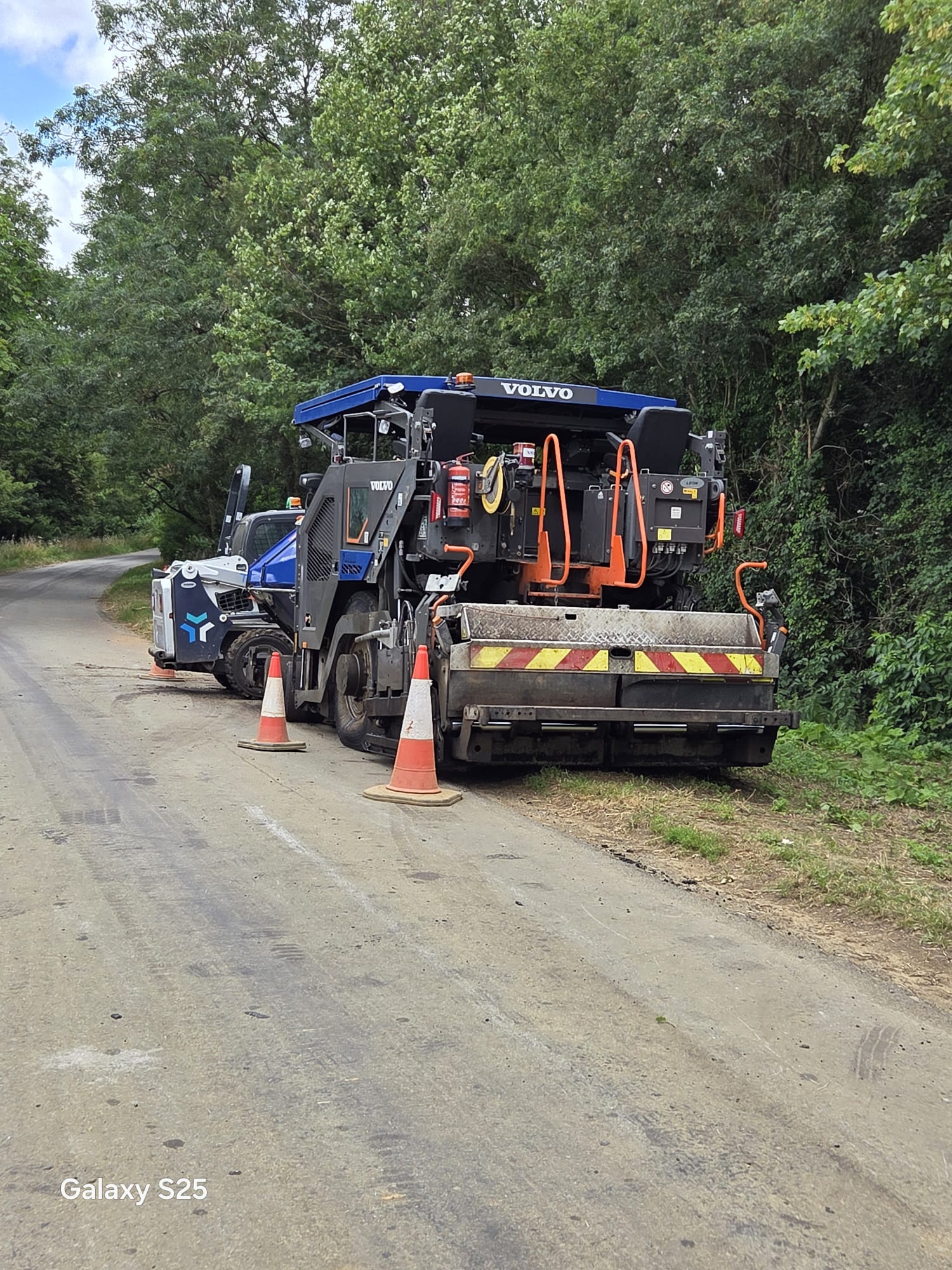
24/7 cover · Nationwide from Oxfordshire

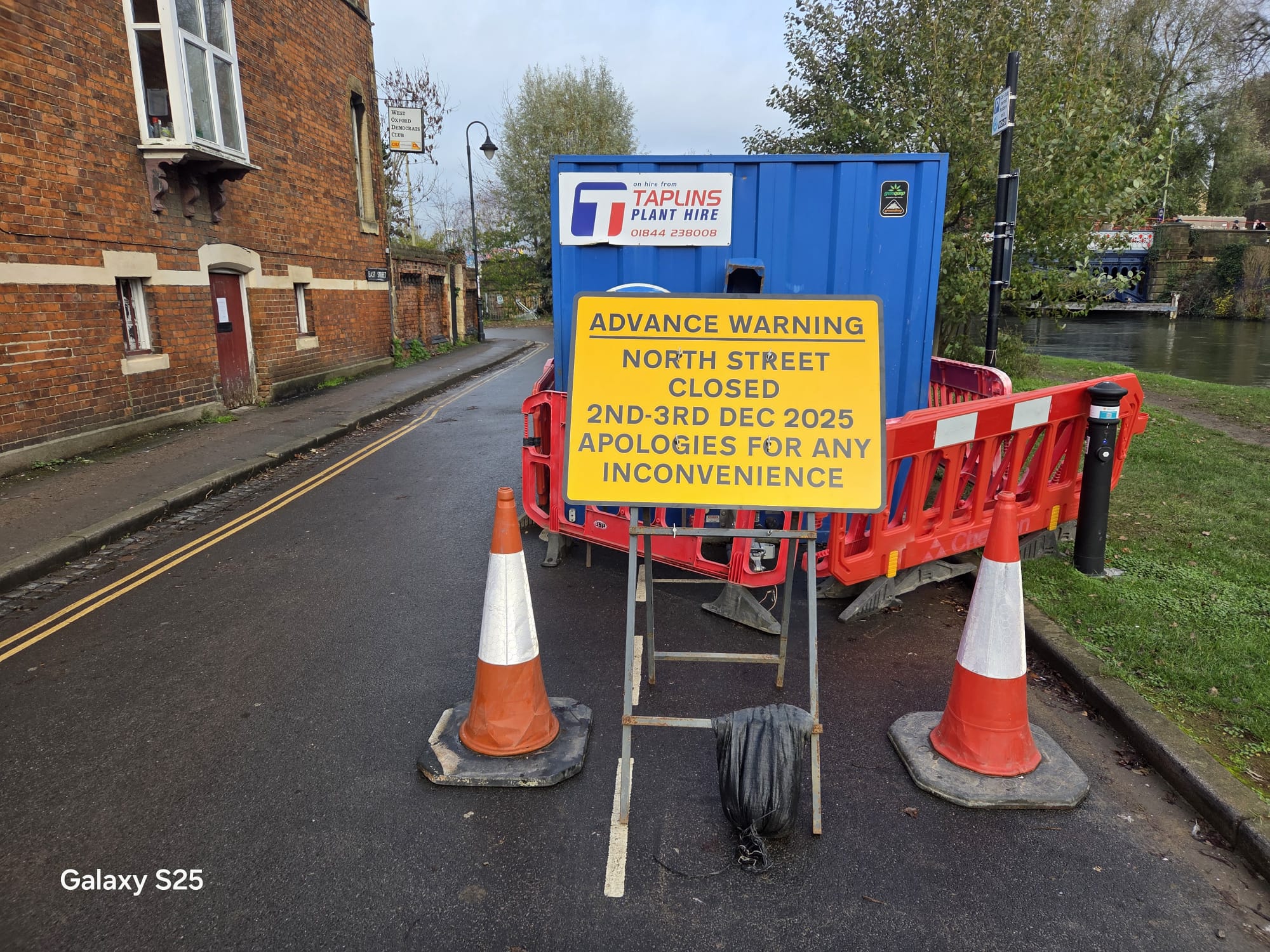
Yellow advance warning sign on cones giving notice of a street closure and its dates

Permits, TTROs & authority liaison

Permits and TTROs handledend to end, so your start datestops being a guess.

Approval lead time — not crews or equipment — is what usually decides when your works can begin. We run the applications, the notice periods and the council conversations, and give you confirmed dates you can build a programme around.

25 years of local authority liaison · applications, TTROs, notices and consultation handled · nationwide across all authority areas · Sector Scheme 12A–12D · £10m public liability.

25

Years in traffic management

~300

Operatives & staff

~150

Lorries, vans & cars

£10m

Public liability cover

24/7

Cover, including call-outs

The service

Local authority liaison, permit applications and Temporary Traffic Regulation Orders

Almost anything you do in or beside the public highway needs permission. Under the New Roads and Street Works Act framework, street works require a permit or notice with defined notice periods. Anything that changes the legal use of the road — a full closure, a parking suspension, a temporary speed restriction, a prohibition of movement or a footway closure — generally requires a Temporary Traffic Regulation Order.

We handle that whole process: identifying what your works actually need, preparing and submitting the applications, aligning them with the traffic management design, running the notice periods, dealing with statutory advertising and consultation where required, liaising with the authority, emergency services and bus operators, and obtaining sign-off.

It suits utilities and civils contractors who need the works permitted but do not want to staff the paperwork, developers whose site access affects the highway, event organisers needing road space on a fixed date, local authority teams working across neighbouring areas with different processes, and anyone whose application has already been refused.

Professional help matters because the process is procedural rather than negotiable. Applications are refused for missing information, wrong categories, inadequate drawings, clashes with other approved works or insufficient notice — and every refusal restarts the clock. Knowing what each authority expects before you submit is the whole value.

What it costs to get wrong

Nobody gets paid while a permit is being reapplied for

The most expensive week on many projects is the one spent waiting for a permission that was applied for incorrectly. Crews and plant are booked, the site is ready, and the works cannot legally start. A resubmission means running the notice period again, and the authority has no obligation to hurry because your programme is tight.

Working without the right permission is worse. Occupying the highway without a permit, or running a closure without a valid order, exposes you to enforcement action, charges under the relevant regime, and an authority relationship that makes every subsequent application harder. On many networks the same team will be assessing your next twenty applications.

There is also the clash problem. Authorities coordinate road space, and if somebody else's approved works occupy your street in your window, you will be the one asked to move. Applications submitted early and drawn precisely are what put you in the diary first.

Mistakes we are called in to unpick

  • Assuming a permit is a formality and applying a few days before the intended start.
  • Applying for the wrong category of works or the wrong permission type, so the application is refused on procedure rather than substance.
  • Submitting without an adequate traffic management drawing, which is one of the most common reasons for rejection.
  • Forgetting the associated permissions — parking suspensions, skip and scaffold licences, bus stop suspensions — and starting with only half of what is needed.
  • Overrunning an approved period without applying for an extension in time, which turns a compliant job into an enforcement matter.

Our process

How the scheme gets fromenquiry to signed-off completion

  1. Step 1

    Permission assessment

    We establish exactly what your works need: which permit or notice category applies, whether a Temporary Traffic Regulation Order is required, and what associated permissions — parking suspensions, bay signing, bus stop suspensions — go alongside it.

  2. Step 2

    Programme mapping against notice periods

    We work back from your target start date through the applicable notice periods, including the longer lead times for orders and statutory advertising, and tell you early if the date is not achievable rather than late.

  3. Step 3

    Drawing and documentation preparation

    Applications are submitted with the traffic management design that supports them, prepared in-house so the drawing and the application describe the same scheme rather than two different ones.

  4. Step 4

    Submission, consultation and liaison

    We submit, respond to the authority's comments, handle statutory advertising and consultation where required, and liaise with emergency services, bus operators and other stakeholders as the permission demands.

  5. Step 5

    Approval, dates and coordination

    Once granted, you get confirmed dates and conditions in writing, coordinated with any other works competing for the same road space and with the crew and equipment booked around them.

  6. Step 6

    Extensions, variations and close-out

    If the programme moves we apply for extensions or variations in good time, and at completion we close the permission out properly so the record with the authority is clean for your next application.

What you get

Specific outcomes,not vague reassurance

Dates you can commit to
Notice periods mapped against your programme up front means you find out about a lead-time problem at planning stage rather than the week before mobilisation.
Fewer refusals and resubmissions
Applications submitted in the right category, with the right drawing and the right supporting detail, avoid the refusals that quietly cost weeks.
Road space secured early
Getting into the authority's coordination diary first is often what determines whether you keep your window or somebody else does.
Nationwide process knowledge
Authority processes differ. Working across Oxfordshire, London, the South East, South West, Wales, the Midlands, the North and Scotland means we know those differences already.
One party for design and permission
The drawing and the application come from the same team, so the scheme that gets approved is the scheme that gets installed.
A clean authority record
Permissions closed out properly, extensions applied for in time, conditions complied with — which makes the next application easier, not harder.

In detail

Permission types, notice periods and the associated consents people forget

Highway permissions form a system rather than a single form. The detail below covers the main types, what triggers each, and the practical realities that determine whether a start date holds.

Permits and notices under NRSWA

Street works in the highway are governed by the New Roads and Street Works Act framework, with permit schemes or noticing regimes depending on the authority. Categories vary by the duration and disruption of the works, and each category carries its own notice period and conditions.

Getting the category right matters: applying as a minor works item for something that is in reality a standard or major activity is a common cause of refusal, and correcting it means starting the notice period again.

Temporary Traffic Regulation Orders

A TTRO is the legal instrument that changes how a road may be used: full closures, one-way working, prohibition of turns, temporary speed limits, waiting restrictions and footway closures. Without it, the physical arrangement has no legal basis.

TTROs generally carry the longest lead time in temporary traffic management because of statutory advertising and consultation requirements. There are shorter-notice routes for some situations and separate provisions for emergency works, but the planning assumption should always be that an order takes the longest.

Associated permissions and suspensions

Parking bay suspensions are the most commonly forgotten, and the most immediately painful — an unsuspended bay means cars in your working space on the first morning. Loading bays, disabled bays and taxi ranks each have their own process.

Bus stop suspensions or temporary relocations require operator liaison and temporary stop signing. Skips, scaffolds, hoardings, cranes and building material storage on the highway typically require their own licences, which we identify at assessment stage.

Emergency and urgent works

Emergency works follow a different route, usually involving immediate action to make safe followed by retrospective notification within a defined period. That is a specific legal route, not a general excuse for short notice.

We handle the notification alongside the physical response, and then convert the emergency arrangement into a properly permitted scheme for the repair works that follow.

Coordination, clashes and conditions

Authorities coordinate road space across all promoters, so an application can be granted with conditions on timing, working hours, seasonal or festive embargoes, or requirements to work around another party's approved works.

Conditions are part of the permission, not advisory. We make sure you know them in writing before mobilisation, because working outside a condition creates the same problems as working without a permit.

Extensions, variations and overruns

Programmes move. Extensions and variations have their own processes and are far easier to obtain before a permission expires than afterwards, so the practical rule is to tell us as soon as a slip looks likely.

Overrunning without an extension can attract charges under the applicable regime and damages your record with that authority. Where an extension is not achievable we plan a compliant reopening and a return visit instead.

Standards this work is delivered to

  • Sector Scheme 12 — 12A, 12B, 12C & 12D
  • Chapter 8 (Traffic Signs Manual)
  • New Roads & Street Works Act (NRSWA)
  • Lantra/NRSWA cards, T1/T2/T3 tickets
  • £10m public liability & £10m employers' liability insurance

Accreditations held

  • National Highway Sector Schemes
  • Constructionline Gold
  • BM Trada
  • CHAS
  • Acclaim
  • Achilles UVDB
  • Avetta
  • Builder's Profile
  • SafeContractor
  • ISO 9001

Certificates are issued for your pre-qualification pack on request. We work direct for end clients and as a subcontractor to principal contractors.

Straight answers

Permits & TTROsquestions we are asked

How much do permits and TTROs cost?

There are two elements: the authority's own fees and charges, which vary by area and by permission type, and our fee for preparing, submitting and managing the application including drawings and liaison. TTROs cost more than permits because of advertising and consultation. We set both out in the written estimate.

How long does a TTRO take to obtain?

It is normally the longest lead time in any traffic management programme because of statutory advertising and consultation, and it varies by authority. There are shorter-notice routes for some situations. The safe planning assumption is to start the process as soon as you have an indicative programme.

Do I need a permit or a TTRO?

Broadly: works in the highway need a permit or notice, while anything changing the legal use of the road — closure, one-way working, banned turns, temporary speed limit, parking restrictions, footway closure — needs an order. Many schemes need both. We assess your works and tell you exactly which permissions apply before you commit to dates.

What happens if my application is refused?

We deal with the reason and resubmit. Most refusals are procedural — wrong category, insufficient information, inadequate drawing, notice period, or a clash with other approved works — and each is fixable. What is not recoverable is the calendar time, which is precisely why the first submission matters.

Can you get a permit quickly for urgent works?

Genuine emergency works follow a separate route with immediate action and retrospective notification. Urgent-but-not-emergency works still have notice periods, though some authorities offer shorter-notice categories. We will tell you honestly what is achievable rather than promising a date the authority controls.

Do you handle parking suspensions and bus stop suspensions?

Yes, along with the other associated consents that get overlooked: loading and disabled bays, taxi ranks, skip and scaffold licences, hoarding and crane permissions. They are identified at assessment stage so nothing is discovered on the first morning.

Can you apply on behalf of our company as the works promoter?

Yes. We work direct for end clients and as a subcontractor to main and principal contractors, and we handle authority liaison in whichever arrangement suits the contract, keeping you copied on correspondence and conditions.

What if the works overrun the permitted period?

Tell us early and we apply for an extension in good time. Overrunning without one can attract charges and harms your standing with the authority. Where an extension is not available, a compliant reopening and a return visit is usually the cheaper outcome.

Do different councils have different requirements?

Yes, substantially: permit schemes versus noticing regimes, different categories, fees, working hour restrictions, seasonal embargoes and coordination practices. We work across all our coverage areas regularly, which is where the time saving comes from.

Do you provide the traffic management drawing with the application?

Yes. Drawings are produced in-house and submitted with the application, so the scheme described in the paperwork and the scheme on the drawing are the same one — which removes one of the most common causes of refusal.

Related services

  • CAD Drawings & TTM Design

    Scheme-specific CAD drawings and temporary traffic management design, taken through highway authority approval. Chapter 8 and Sector Scheme 12 compliant. Oxfordshire base, UK-wide.

  • Road & Lane Closures

    Full road closures, lane closures and contraflows in Oxfordshire and nationwide. Signed diversion routes, TTRO and permit handling, ticketed crews, 24/7 cover, £10m insurance.

  • Traffic Management

    Temporary traffic management in Oxfordshire and nationwide: TTM design, permits, signals, signage and ticketed crews from one contractor. 25 years, 24/7 cover, £10m insurance.

  • Low-Speed Traffic Management

    Urban and residential traffic management in Oxford, Oxfordshire and nationwide. Footway and lane closures, signals, pedestrian routes, permits handled. 25 years, £10m insurance.

Where we deliver it

Based in Oxfordshire and working nationwide. See the full service areas list, browse all traffic management services, read about the company, or return to the homepage.

  • Oxfordshire
  • Oxford
  • Banbury
  • Bicester
  • Witney
  • Abingdon-on-Thames
  • Didcot
  • Kidlington
  • London
  • South East
  • Gatwick
  • South West
  • Wales
  • Midlands
  • North
  • Scotland

Send us the worksand the date you want.We will tell you if it is achievable.

We map your target start against the real notice periods and handle every application, order and suspension it needs — then confirm your dates and conditions in writing.

25 years · Sector Scheme 12A–12D · £10m public liability · 24/7 cover

Send the details

Road type, duration and start date is enough to price it. We reply to every enquiry.