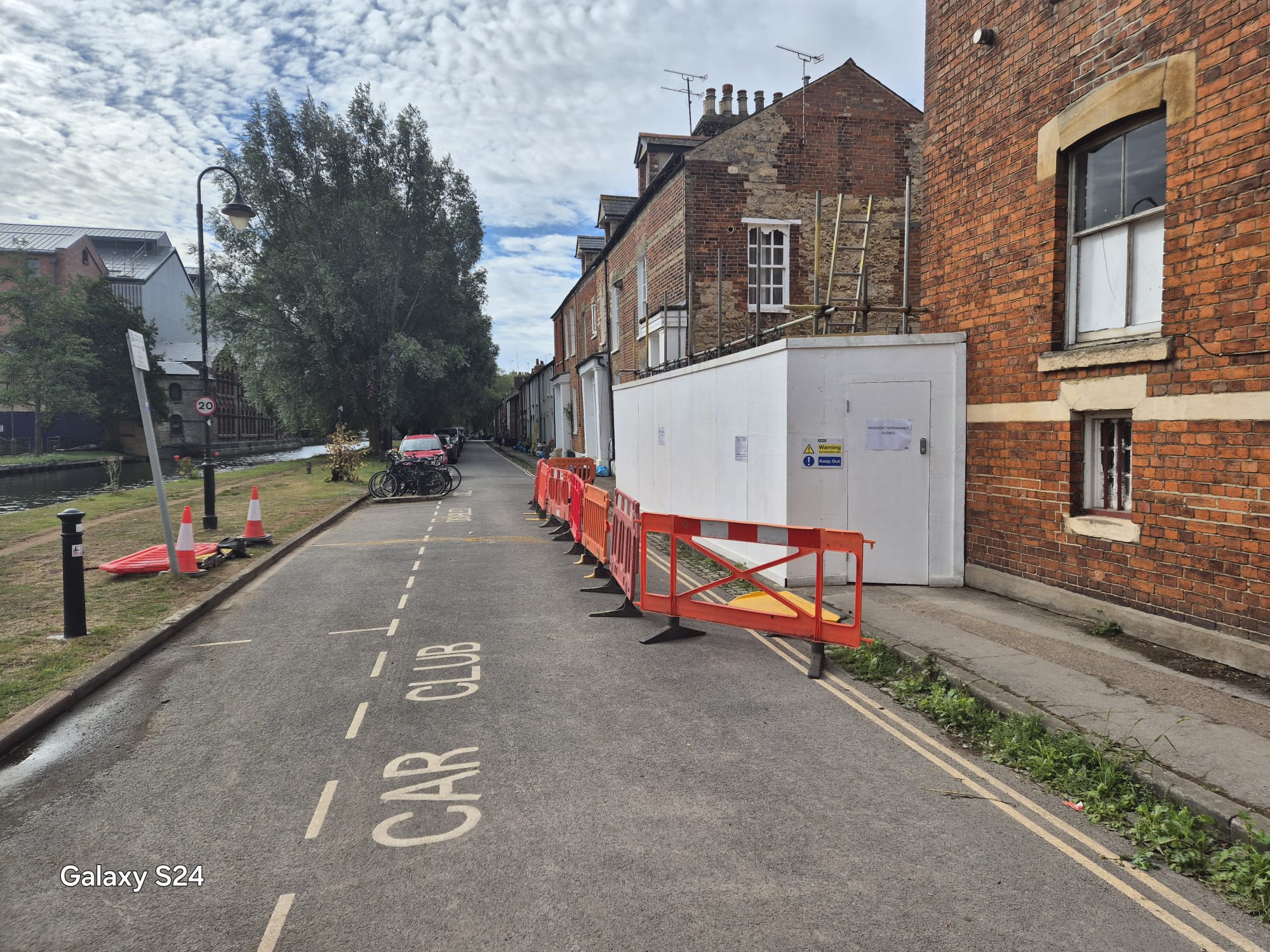
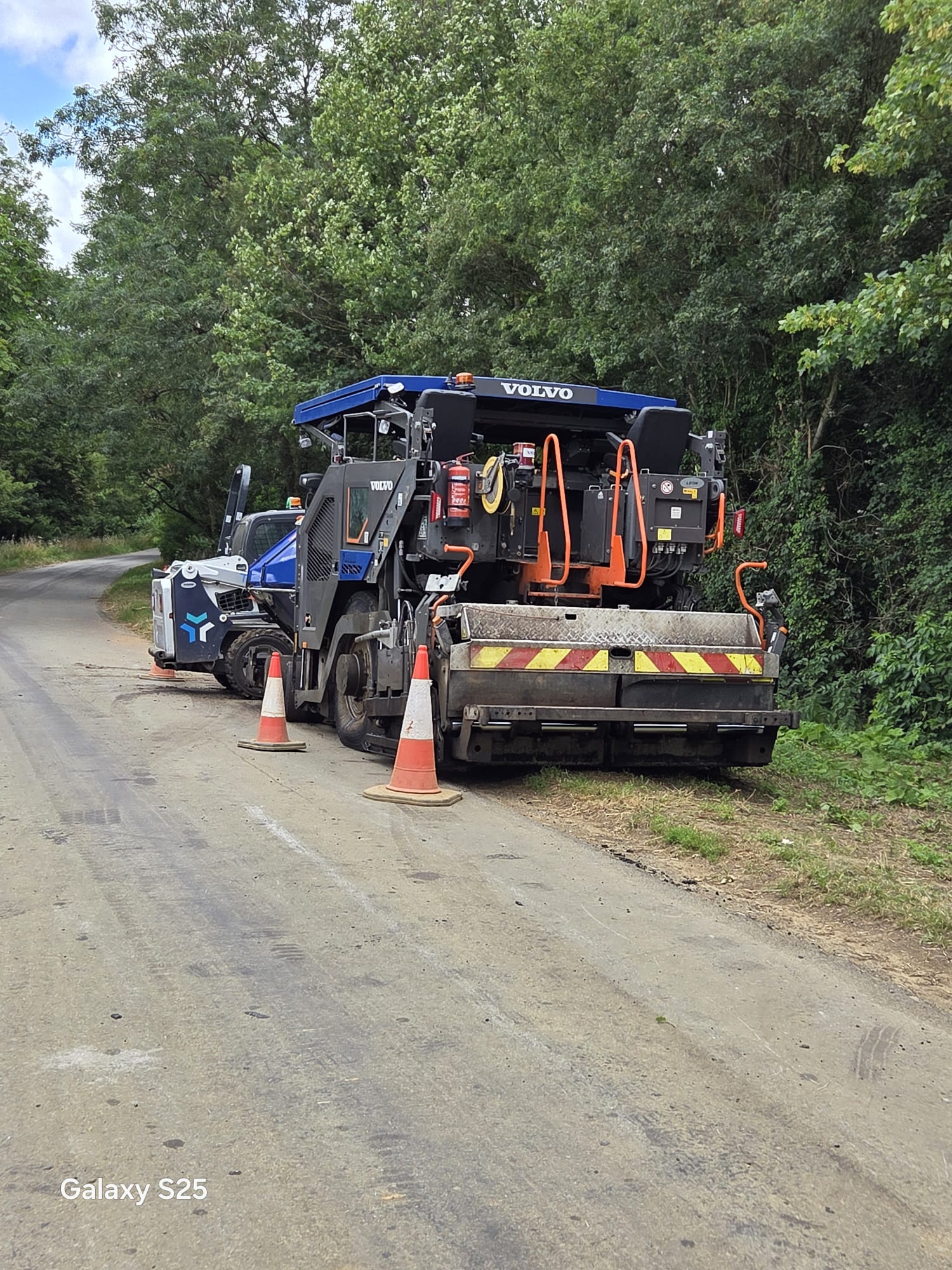
24/7 cover · Nationwide from Oxfordshire

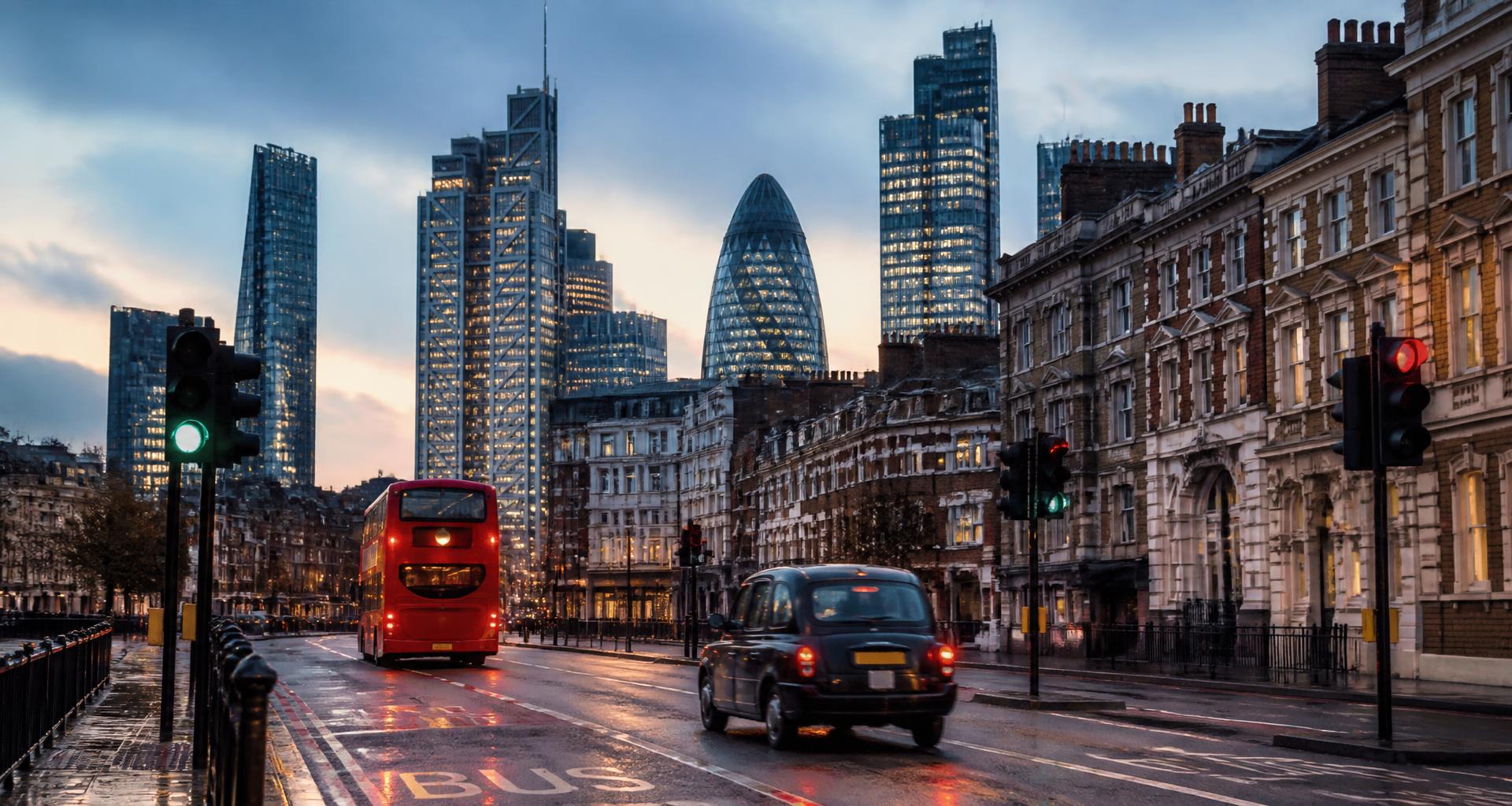
Central London street at dusk with a double-decker bus, black cab, traffic signals and the City skyline

London · all boroughs

Traffic Management in London,Across All Boroughsand the TfL Network.

London gives you the tightest working windows, the most conditions and the least forgiveness. We design schemes that get approved, install them in the window you were given, and keep the borough and the bus operator off your back.

All 32 boroughs and the City · borough and TfL road experience · night and off-peak delivery · 24/7 call-out · around 300 operatives · £10m public liability.

25

Years in traffic management

~300

Operatives & staff

~150

Lorries, vans & cars

£10m

Public liability cover

24/7

Cover, including call-outs

Local coverage

London coverage across every borough, on borough and TfL roads

Coverage
All London boroughs and the City, on both borough-managed and TfL road network sites
Availability
24/7, with night and off-peak delivery to suit London's working windows
Authorities
Individual borough highway authorities plus Transport for London on the TLRN
Site types
High streets, red routes and bus corridors, footway closures and hoardings, basement and refurbishment works, rail and station sites, events and film

We work throughout Greater London — central boroughs, inner London, outer London and the City — on borough-managed streets and on the Transport for London road network, where the approval route, the conditions and the timing rules are all different.

Because we are resourced nationally with around 300 operatives and around 150 vehicles, London volume is not a problem: multiple concurrent schemes across different boroughs, phased works over months, and short-notice additional crews when a programme moves.

London work is defined by its restrictions. Peak-hour embargoes, bus route protection, cycle infrastructure, loading and parking suspensions, low-emission requirements, noise conditions on night works and event embargoes all shape what can be installed and when. A scheme that ignores any one of them does not get approved.

The sites reflect the city: utility and telecoms works in busy high streets, basement and refurbishment projects with long footway closures and hoardings, residential and commercial construction access onto red routes and bus corridors, rail and station works, and event and film traffic management in central boroughs.

Services in London

Everything the scheme needs,available across London

Every part of a London scheme is covered, including the parts that cause the delays — the borough or TfL approval, the pedestrian arrangement and the parking suspensions that have to be in place before you start.

Why us here

Why contractors in Londonkeep the work with us

Every borough, one contractor
Multiple boroughs on one programme without appointing a different local firm — and one point of contact whichever authority the works fall in.
Resourced for London volume
Around 300 operatives and around 150 lorries, vans and cars, so concurrent schemes and short-notice programme changes are absorbed.
25 years of approval experience
We know what boroughs and TfL will and will not approve, which stops you programming works around a scheme that was never going to be permitted.
Night and off-peak delivery
24/7 operation designed around embargoes and permitted hours, because in London the window decides the method.
Carded, ticketed crews
Operatives holding Lantra and NRSWA cards with T1, T2 and T3 tickets, supervised by staff who know how red routes and borough conditions are enforced.
Pre-qualified for London contractors
Constructionline, CHAS, SafeContractor, Achilles UVDB, Acclaim, BM Trada and ISO 9001, with £10m public and £10m employers' liability.

Local conditions

The London conditions that decide whether your scheme happens

London does not fail schemes on design quality alone — it fails them on conditions, timing and pedestrian provision. These are the recurring reasons works slip.

Peak embargoes and permitted hours

Most busy London roads cannot be occupied during peak periods, and many can only be worked off-peak or overnight. The permitted window, not the works duration, usually sets the programme.

That has a knock-on effect: installation and removal both have to fit inside the window, which means the arrangement is designed to be installed quickly and safely rather than being the theoretically ideal layout.

Bus routes and cycle infrastructure

Bus operators and TfL protect route reliability, and an arrangement that blocks a bus swept path or forces a route change attracts objection quickly. Cycle lanes and segregated tracks add another layer, especially at tapers and where a track has to be temporarily diverted.

Getting either wrong is the fastest route to a refused or amended scheme, so both are checked at design stage rather than discovered on the first night.

Footway volume and long-term hoardings

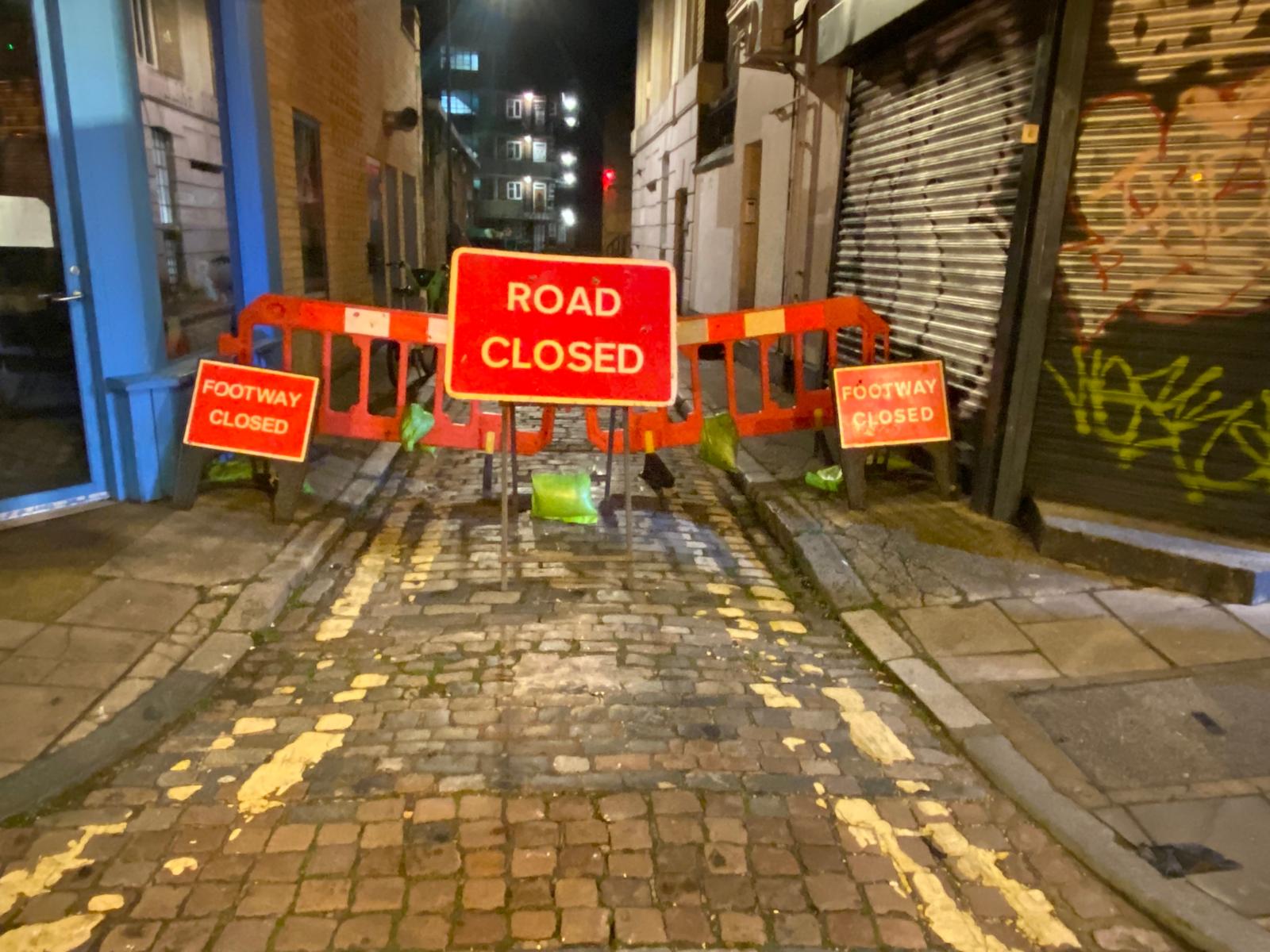
London footways carry very high pedestrian numbers, and refurbishment, basement and fit-out projects commonly need long-duration hoardings and footway closures with temporary walkways.

Compliant arrangements need barriers with tapping rails, usable widths, defined crossing points and continuous maintenance, because in London a displaced barrier is noticed within hours and often reported.

Older building stock and Victorian services

Much of London's housing and commercial stock is Victorian or earlier, sitting above utility infrastructure of similar age. Excavations frequently reveal unexpected apparatus and grow beyond the planned footprint.

When the hole grows, the traffic arrangement has to change under permit conditions rather than informally, and having the contractor who designed and submitted it already on site is what keeps that a same-day change instead of a shutdown.

Parking suspensions, loading and access

Almost every London scheme depends on bay suspensions and loading arrangements being in place before installation. Missing suspensions mean vehicles sitting in the working space on the morning of the works.

Frontage access is the parallel issue: residents, shops, deliveries and refuse collection all need maintained access, and the arrangement is expected to accommodate them, not simply exclude them.

Events, embargoes and network congestion

Major events, marathons, ceremonial routes and network-wide embargo periods can close the door on road space at short notice, and boroughs will not approve conflicting works.

The practical answer is early submission and honest programme advice: we tell you when a window is unrealistic rather than letting you find out after you have booked plant and labour.

Our process

How a London scheme gets fromenquiry to signed-off completion

  1. Step 1

    Enquiry and site review

    You send the location, the works and the dates. We check the road type, the speed limit, the highway authority involved and any local constraints before quoting.

  2. Step 2

    Scheme design and CAD drawing

    We produce the temporary traffic management design and scheme-specific CAD drawings for the arrangement your works actually need, not a generic layout.

  3. Step 3

    Permits, TTROs and authority approval

    We submit to the local highway authority and manage the process end to end — permits, Temporary Traffic Regulation Orders, notices and conditions — and confirm approval in writing.

  4. Step 4

    Programming and resourcing

    Crews, signals, signage and barriers are allocated from our fleet of around 150 vehicles and team of around 300, and booked to the dates you have been given.

  5. Step 5

    Installation by our own crews

    Carded and ticketed operatives working under our supervision install to the approved drawing, with the arrangement checked against the drawing before works start.

  6. Step 6

    Maintenance, phase changes and collection

    The scheme is inspected and maintained, damage and displacement dealt with including out of hours, phases changed as planned operations, and everything collected at completion.

Standards we work to in London

  • Sector Scheme 12 — 12A, 12B, 12C & 12D
  • Chapter 8 (Traffic Signs Manual)
  • New Roads & Street Works Act (NRSWA)
  • Lantra/NRSWA cards, T1/T2/T3 tickets
  • £10m public liability & £10m employers' liability insurance

Accreditations held

  • National Highway Sector Schemes
  • Constructionline Gold
  • BM Trada
  • CHAS
  • Acclaim
  • Achilles UVDB
  • Avetta
  • Builder's Profile
  • SafeContractor
  • ISO 9001

Certificates are issued for your pre-qualification pack on request. We work direct for end clients and as a subcontractor to principal contractors.

Straight answers

Traffic management in Londonquestions we are asked

Do you serve London?

Yes — all London boroughs and the City, on borough-managed streets and on the Transport for London road network. We work in central, inner and outer London, and can run concurrent schemes across multiple boroughs on one programme.

How fast can you reach a site in London?

London is a routine coverage area for us, with crews and equipment allocated from a fleet of around 150 vehicles and a team of around 300. Planned works are booked to your permitted window, and emergency call-outs are covered 24 hours a day, seven days a week.

How much does traffic management cost in London?

London schemes are priced on the road type and authority, the arrangement required, the permitted working hours, the equipment on hire, the duration, the crew requirement and the borough or TfL fees. Night and off-peak working and long pedestrian arrangements increase cost, so every scheme is quoted individually in writing.

Is emergency traffic management available in London?

Yes, 24/7. That covers burst mains, collapsed carriageways, collisions, damaged temporary traffic management and any situation where a London road or footway has to be made safe immediately.

Can you get permits and TTROs from London boroughs?

Yes. We handle borough permit applications, TfL approvals and Temporary Traffic Regulation Orders end to end, including notice periods, conditions and resubmissions, and confirm approval in writing before your works start.

Can you work on red routes and the TfL network?

Yes. TLRN schemes follow a different approval route and tighter conditions than borough streets, including protection of bus reliability and cycle infrastructure, and are usually delivered off-peak or overnight.

Do you handle parking bay suspensions?

Suspensions and loading arrangements are part of the scheme we manage with the borough, because a scheme cannot be installed if vehicles are still parked in the working space on the day.

Can you provide long-term footway closures and hoarding protection?

Yes. Long-duration pedestrian arrangements with barriers, tapping rails, temporary walkways and defined crossings are common London work, and they include the inspection and resetting needed to keep them compliant for months.

Do you work nights in London?

Constantly — for many locations it is the only permitted option. Night schemes are planned as night shifts, with lighting, conspicuity and noise conditions accounted for, and installation and removal designed to fit the window.

What accreditations do you hold for London contractors' pre-qualification?

Sector Scheme 12 registration across 12A to 12D, Chapter 8 and NRSWA compliance, Constructionline, BM Trada, CHAS, Acclaim, Achilles UVDB, SafeContractor and ISO 9001, plus £10 million public liability and £10 million employers' liability. Certificates are issued on request.

Nearby areas we also cover

  • Traffic management in the South East

    Traffic management across the South East and home counties: Berkshire, Buckinghamshire, Surrey, Kent, Sussex, Hampshire. Closures, signals, permits, TTROs, night works, 24/7 cover.

  • Traffic management in Gatwick

    Traffic management around Gatwick and Crawley: airport approach roads, M23 and A23 schemes, night works, signals, permits and TTROs. 25 years, 24/7 emergency cover, £10m insurance.

  • Traffic management in Oxfordshire

    Temporary traffic management in Oxfordshire from our county base: road and lane closures, traffic light hire, permits and TTROs with Oxfordshire County Council. 25 years, 24/7 cover, £10m insurance.

  • Traffic management in the Midlands

    Traffic management across the East and West Midlands: Birmingham, Coventry, Leicester, Nottingham, Derby, Northampton. Closures, signals, permits, TTROs, night works, 24/7 cover.

Keep going

See every service area, browse all traffic management services, read about the company, return to the homepage or contact the team.

London works,London conditions.Send us the site.

Give us the borough, the road, the works and the window. You get a written estimate covering the design, the borough or TfL approval, the suspensions, the equipment and the crews.

25 years · Sector Scheme 12A–12D · £10m public liability · 24/7 cover

Send the details

Road type, duration and start date is enough to price it. We reply to every enquiry.