24/7 cover · Nationwide from Oxfordshire

Rural Oxfordshire road curving between dry-stone walls and Cotswold stone cottages

Oxfordshire · our home county

Traffic Management in Oxfordshire,Delivered From a BaseInside the County.

We are an Oxfordshire traffic management contractor, not a national firm servicing the county from three hours away. Drawings, permits, signals and crews come from here — which is why Oxfordshire schemes start on the day they were promised.

Oxfordshire base · Oxfordshire County Council permits and TTROs · 24/7 including emergency call-outs · around 300 operatives · Sector Scheme 12A–12D · £10m public liability.

25

Years in traffic management

~300

Operatives & staff

~150

Lorries, vans & cars

£10m

Public liability cover

24/7

Cover, including call-outs

Local coverage

Oxfordshire is where we are based and where we work most

Distance to site
Oxfordshire is our home county — equipment and crews are local, not dispatched from another region
Availability
24 hours, 7 days, including night works and emergency rapid-response call-outs
Highway authorities
Oxfordshire County Council for local roads; National Highways for the A34 and M40
Site types
Market-town street works, Oxford ring road and A-road schemes, growth-corridor developer accesses, rural lanes, estates and events

Nationwide Traffic Ltd operates from a base in Oxfordshire, and the county is the area we work in most often. That covers Oxford and its ring road, Banbury, Bicester, Witney, Abingdon, Didcot, Kidlington, Carterton, Thame, Henley-on-Thames, Wallingford, Chipping Norton, Wantage and Faringdon, along with the villages and single-track lanes in between.

Being based in the county changes practical things. Equipment does not travel far, so signals, signage and barriers reach an Oxfordshire site quickly. Crews are not staying in hotels, so early starts and night works are straightforward. And when something is damaged at two in the morning on the A34 or the Oxford ring road, the response is a local one rather than a long drive.

It also means we know the highway authority. Oxfordshire County Council is the authority for most of the county's roads, with National Highways responsible for the A34 and the M40, and we deal with both routinely — permit applications, Temporary Traffic Regulation Orders, conditions on sensitive routes and negotiations over timing windows on roads the council will not close during the day.

The works themselves follow the county's mix: utility and civils works in the market towns, developer access schemes on the growth corridors at Didcot, Bicester and Wantage, science and research park works around Harwell and Culham, event and film traffic management on estate and village roads, and long-term construction traffic management on the edges of Oxford where a site has to keep a busy road running while it builds.


Services in Oxfordshire

Everything the scheme needs,available across Oxfordshire

The full range is available across Oxfordshire, from a one-day stop-go on a village lane to a long-term contraflow on a distributor road, with the design, the authority approval and the crews from the same contractor.

Why us here

Why contractors in Oxfordshirekeep the work with us

Based in the county
Not a regional depot and not a national contractor covering Oxfordshire on a promise. Our base, our fleet of around 150 vehicles and our team of around 300 sit here.
25 years on these roads
A quarter of a century of temporary traffic management, much of it on Oxfordshire's A-roads, market towns and rural lanes.
We know the authority process
Oxfordshire County Council permits, TTROs and conditions are routine work for us, including the routes where timing windows are tightly controlled.
Carded, ticketed crews
Operatives holding Lantra and NRSWA cards with T1, T2 and T3 tickets, working to the approved drawing under our own supervision.
24/7 local response
Night works and emergency call-outs answered from inside the county, which is when the difference between local and national actually shows.
Fully accredited
Constructionline, CHAS, SafeContractor, Achilles UVDB, Acclaim, BM Trada and ISO 9001, with £10m public liability and £10m employers' liability.

Local conditions

What makes Oxfordshire schemes harder than they look

The county is a mix of a congested historic city, fast A-roads, fast-growing towns and single-track rural lanes — and each of those breaks a generic traffic management arrangement in a different way.

Narrow rural lanes with no diversion

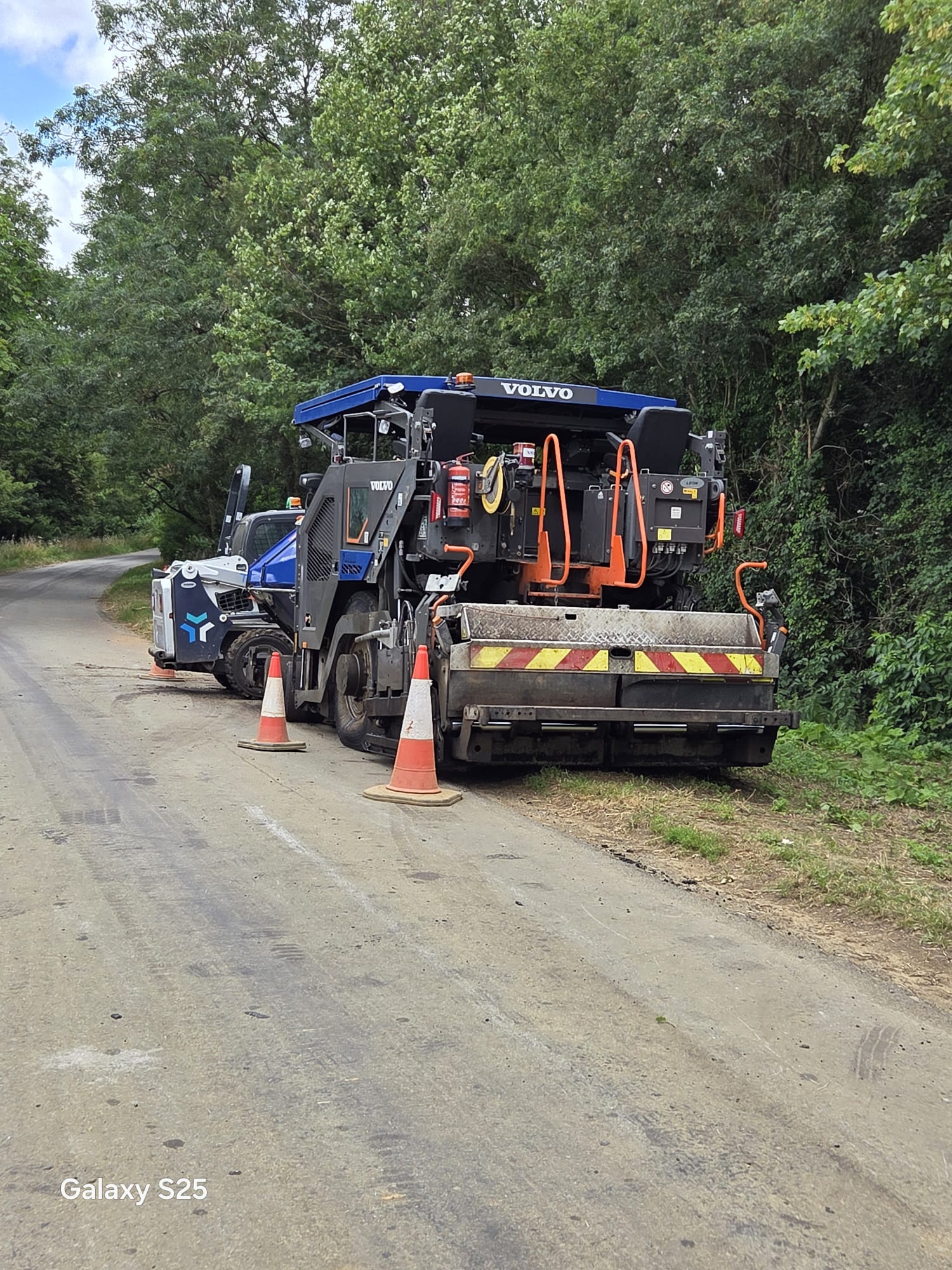
Large parts of the county are served by single-track lanes with passing places, high hedges and no parallel route. A closure there does not divert traffic a few hundred metres; it can add several miles and push HGVs onto lanes that cannot take them.

That is why so much Oxfordshire work is convoy or stop-go rather than closure, and why the diversion route has to be driven and assessed rather than drawn from a map.

A historic city and constrained market towns

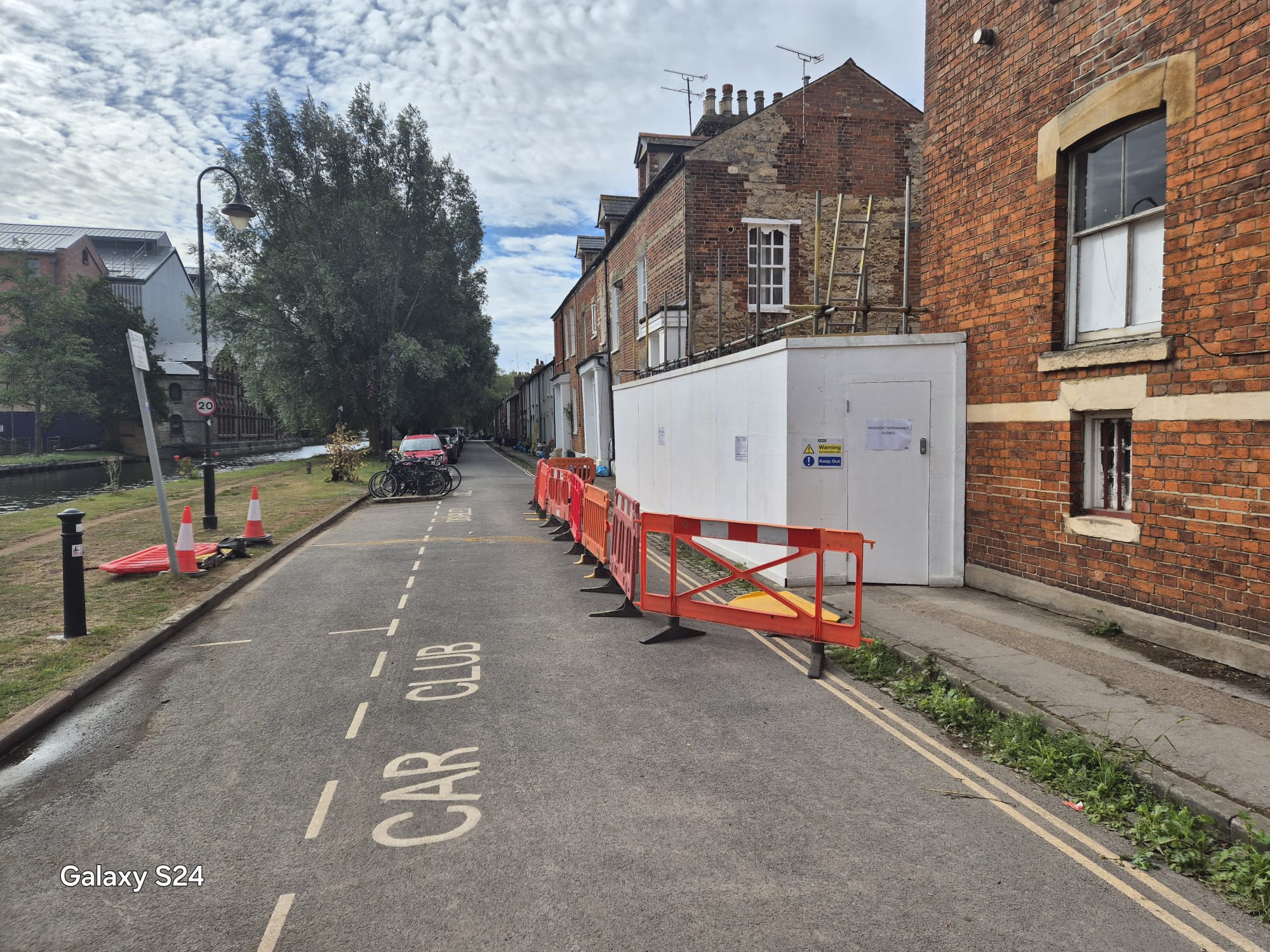
Oxford's centre and the older parts of Banbury, Abingdon, Henley, Thame and Witney have narrow carriageways, listed frontages, bus routes, cycle traffic and heavy footfall. There is rarely room to do the obvious thing.

Pedestrian management usually decides these schemes: keeping a compliant, barriered route with tapping rails past the works matters more to the authority than the vehicle arrangement does.

Fast A-roads and the ring road

The A34, A40, A420, A43, A44, A4074 and the Oxford ring road carry high volumes at speed, and works on them need correct taper lengths, safety zones and advance signing, with high-speed schemes delivered under Sector Scheme 12D by ticketed crews.

Timing is as important as design: many of these routes are effectively unavailable during peak periods, which pushes works into evenings and nights.

Growth corridors and long-term development

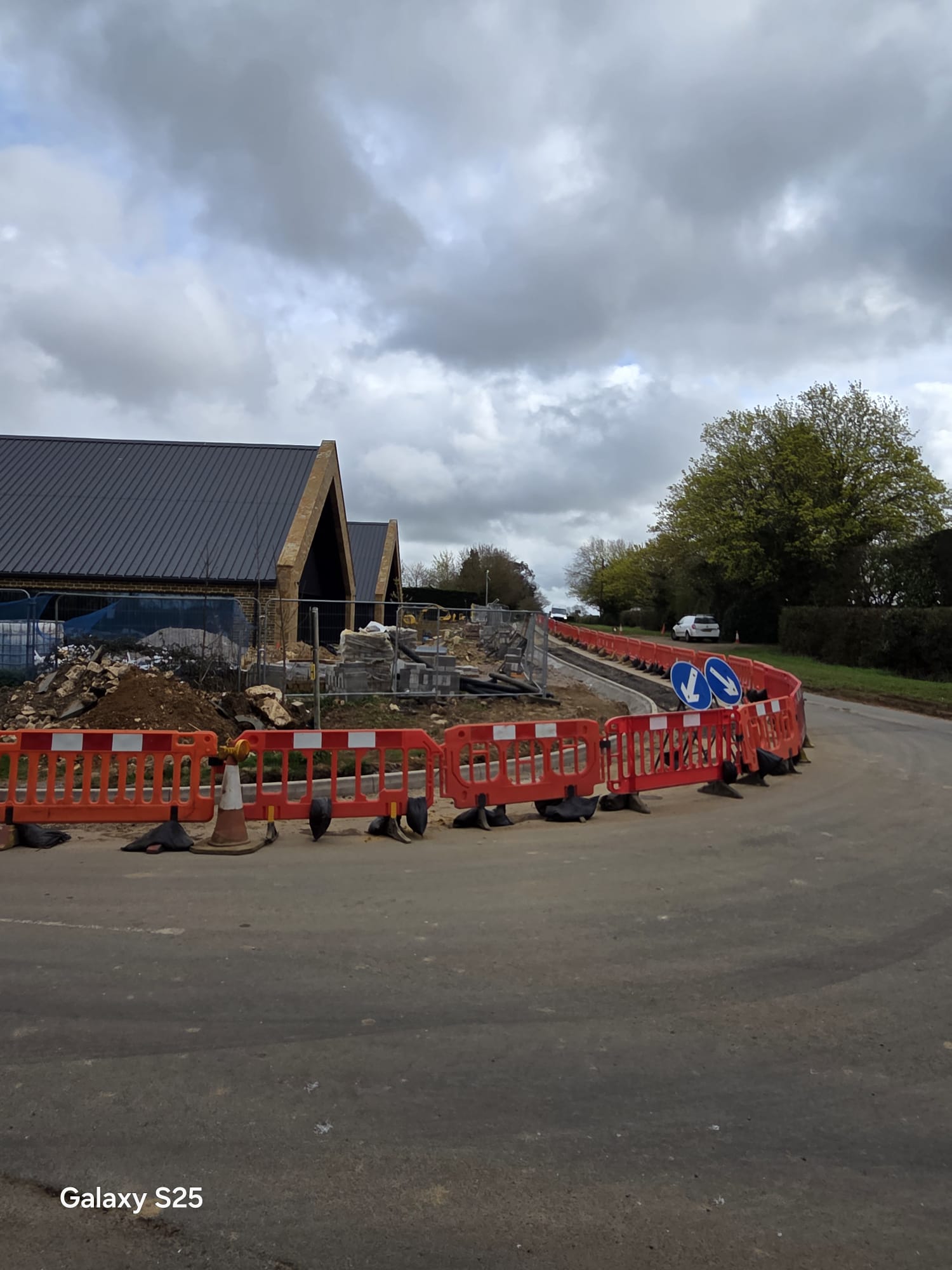
Didcot, Bicester, Wantage, Carterton and the edges of Oxford have sustained housing and commercial development, which means long-duration site accesses onto busy roads, repeated phase changes and arrangements that have to be revised as a site progresses.

Long-duration schemes fail through drift rather than design — signs go missing, barriers get moved, arrangements stop matching the drawing — so inspection and resetting matter more than the initial installation.

Buried services, older infrastructure and weather

Much of the county's utility infrastructure sits under older street layouts, so excavations open in awkward positions and often need more space than expected, changing the traffic arrangement mid-job.

Winter brings a second problem: wet, dark, leaf-covered rural roads reduce conspicuity badly, and signage condition, cleanliness and lighting become the difference between a scheme drivers see and one they do not.

Events, estates and film work

Oxfordshire has a heavy calendar of events, plus estate and film location work, and those schemes cannot slip — the date is fixed and the road space window is short.

They also mix large pedestrian numbers with vehicles on roads never designed for either, so crossing points, barrier lines and marshalling are planned rather than improvised.

Our process

How a Oxfordshire scheme gets fromenquiry to signed-off completion

  1. Step 1

    Enquiry and site review

    You send the location, the works and the dates. We check the road type, the speed limit, the highway authority involved and any local constraints before quoting.

  2. Step 2

    Scheme design and CAD drawing

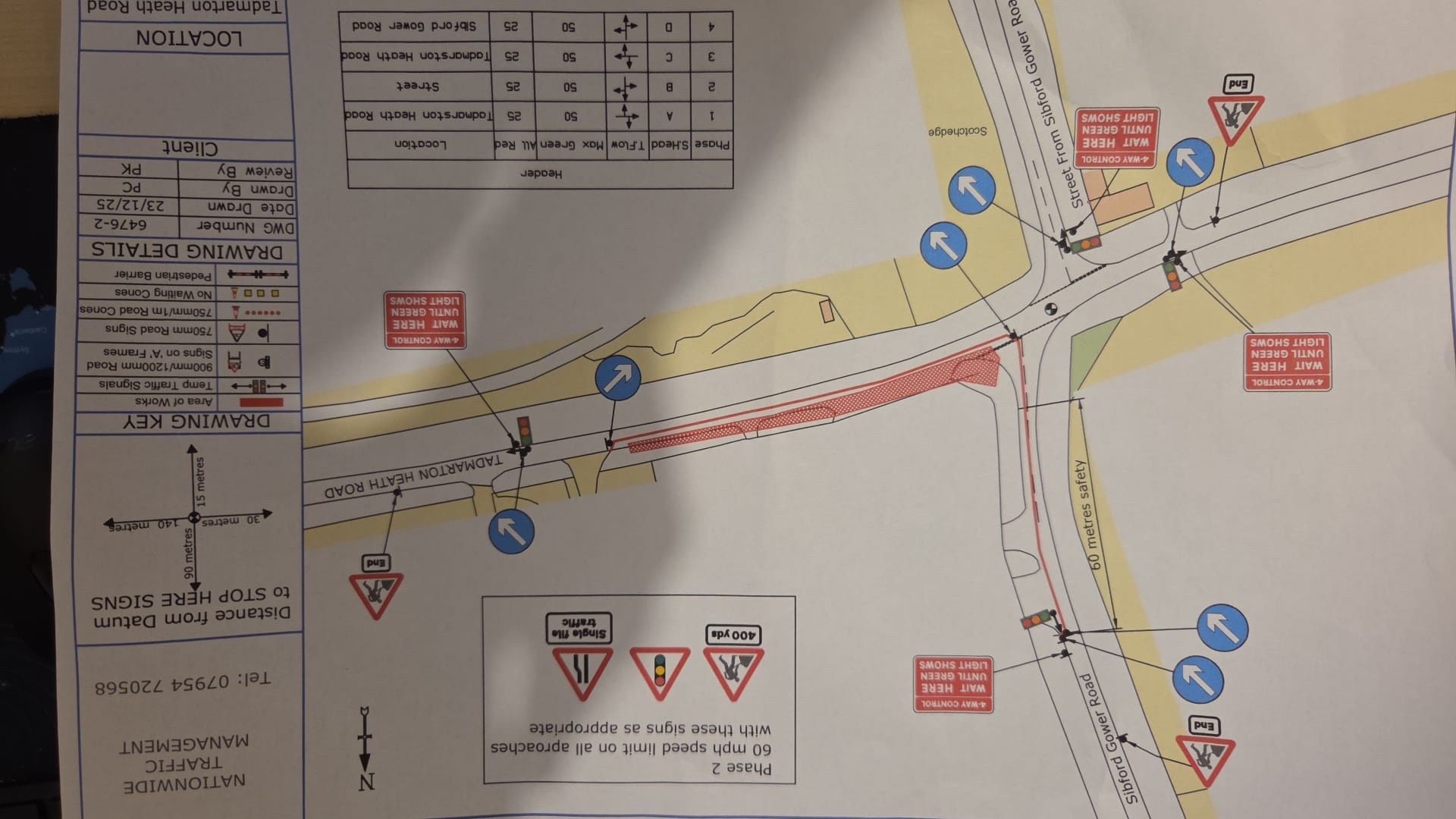
    We produce the temporary traffic management design and scheme-specific CAD drawings for the arrangement your works actually need, not a generic layout.

  3. Step 3

    Permits, TTROs and authority approval

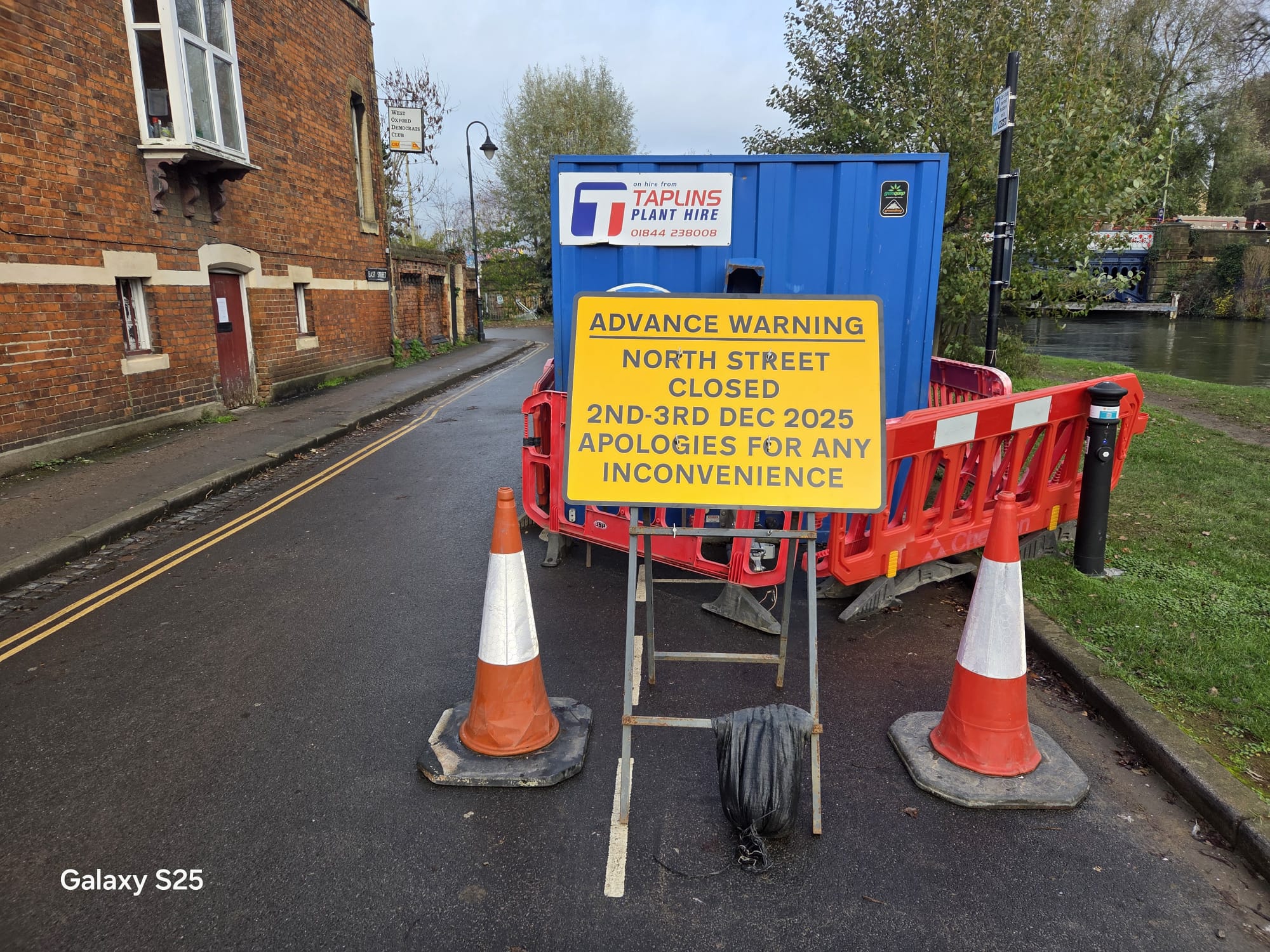
    We submit to the local highway authority and manage the process end to end — permits, Temporary Traffic Regulation Orders, notices and conditions — and confirm approval in writing.

  4. Step 4

    Programming and resourcing

    Crews, signals, signage and barriers are allocated from our fleet of around 150 vehicles and team of around 300, and booked to the dates you have been given.

  5. Step 5

    Installation by our own crews

    Carded and ticketed operatives working under our supervision install to the approved drawing, with the arrangement checked against the drawing before works start.

  6. Step 6

    Maintenance, phase changes and collection

    The scheme is inspected and maintained, damage and displacement dealt with including out of hours, phases changed as planned operations, and everything collected at completion.

Standards we work to in Oxfordshire

  • Sector Scheme 12 — 12A, 12B, 12C & 12D
  • Chapter 8 (Traffic Signs Manual)
  • New Roads & Street Works Act (NRSWA)
  • Lantra/NRSWA cards, T1/T2/T3 tickets
  • £10m public liability & £10m employers' liability insurance

Accreditations held

  • National Highway Sector Schemes
  • Constructionline Gold
  • BM Trada
  • CHAS
  • Acclaim
  • Achilles UVDB
  • Avetta
  • Builder's Profile
  • SafeContractor
  • ISO 9001

Certificates are issued for your pre-qualification pack on request. We work direct for end clients and as a subcontractor to principal contractors.

Straight answers

Traffic management in Oxfordshirequestions we are asked

Do you cover Oxfordshire?

Yes — Oxfordshire is our home county and where we are based. That includes Oxford, Banbury, Bicester, Witney, Abingdon, Didcot, Kidlington, Carterton, Thame, Henley-on-Thames, Wallingford, Chipping Norton, Wantage, Faringdon and the surrounding villages and rural lanes.

How quickly can you get to a site in Oxfordshire?

Because our base, equipment and crews are in the county, Oxfordshire is the fastest area we serve. Planned works are booked to your dates, and emergency call-outs are covered 24 hours a day, seven days a week, including nights and weekends.

How much does traffic management cost in Oxfordshire?

Cost depends on the road type and speed limit, the arrangement required, the equipment on hire, the duration, whether crews are needed on site throughout, and any permit or TTRO fees charged by the authority. We quote every Oxfordshire scheme individually in writing rather than publishing a rate that would not fit your works.

Do you offer emergency traffic management in Oxfordshire?

Yes. We provide 24/7 rapid-response call-outs, so a burst main, a collapsed carriageway, a road traffic collision or damaged temporary traffic management gets attended and made safe rather than left until the morning.

Can you handle permits and TTROs with Oxfordshire County Council?

Yes, end to end. We prepare the scheme drawing, submit the permit application or Temporary Traffic Regulation Order, manage the notice periods and conditions, and confirm approval in writing before your works start. On the A34 and M40 we deal with National Highways instead.

Which roads in Oxfordshire can you work on?

All of them: single-track rural lanes, residential and town-centre streets, distributor roads, the Oxford ring road and high-speed A-roads and dual carriageways. High-speed work is delivered under Sector Scheme 12D registration by ticketed crews.

Do you work at night in Oxfordshire?

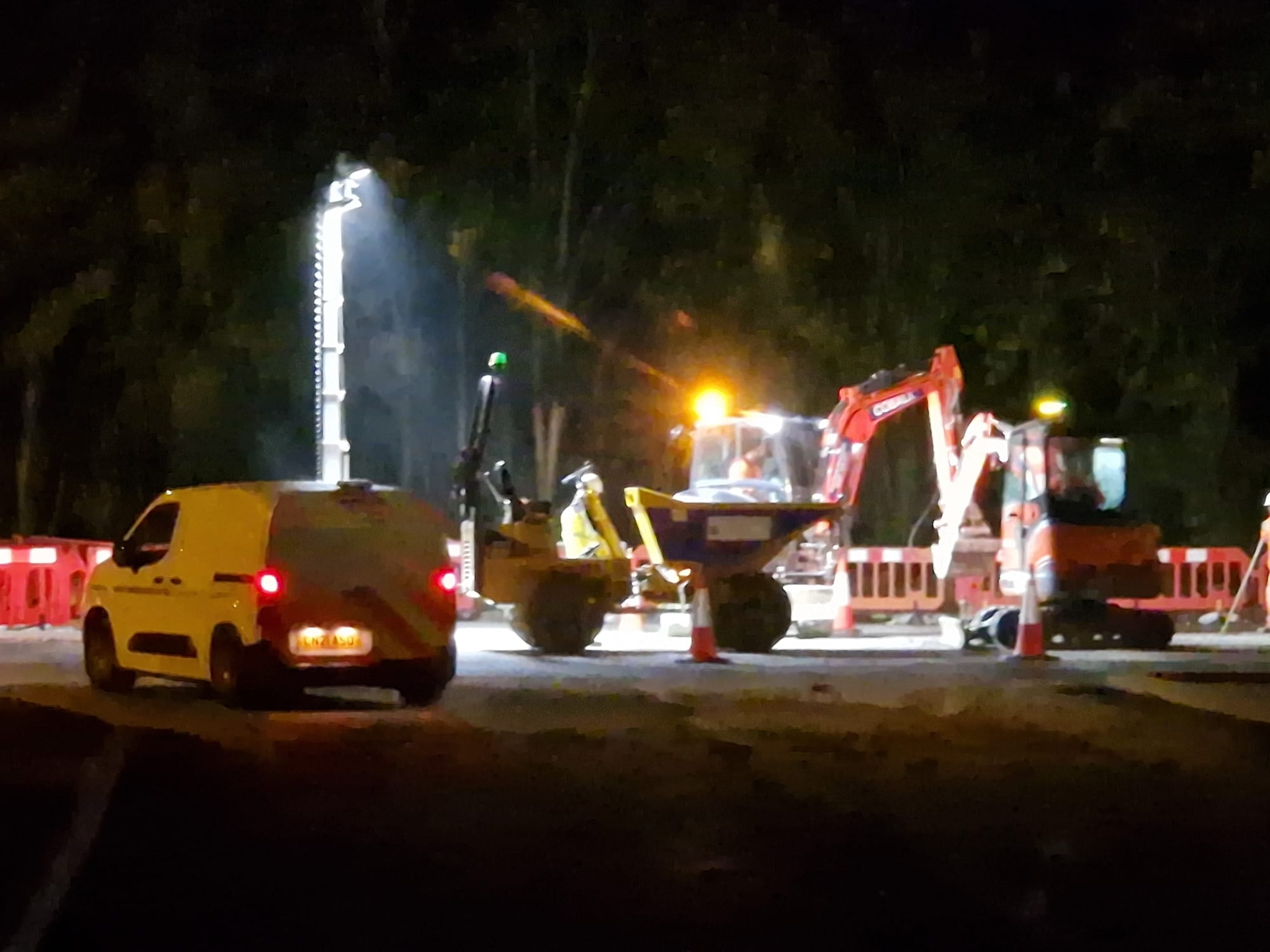
Regularly. Oxfordshire County Council and National Highways restrict daytime working on many busy routes, so night working is often the only approvable option — and it is planned as a night shift with lighting and conspicuity designed for it, not a day scheme run late.

Can you supply traffic lights for a short job in Oxfordshire?

Yes. Portable and temporary signals, including vehicle-actuated units for busier junctions, are supplied, installed and maintained for the whole hire period, from a couple of days to several months.

Do you work for both councils and private contractors?

Both. We work direct for end clients, local authorities and utilities, and as a subcontractor to main and principal contractors, and we hold Constructionline, CHAS, SafeContractor, Achilles UVDB, Acclaim, BM Trada and ISO 9001 for pre-qualification.

What insurance cover do you carry?

£10 million public liability and £10 million employers' liability. Certificates are issued for your pre-qualification pack on request.

Nearby areas we also cover

  • Traffic management in Oxford

    Traffic management in Oxford: city centre street works, ring road and A34 schemes, pedestrian management, signals, permits and TTROs. Local Oxfordshire base, 24/7 cover, £10m insurance.

  • Traffic management in the South East

    Traffic management across the South East and home counties: Berkshire, Buckinghamshire, Surrey, Kent, Sussex, Hampshire. Closures, signals, permits, TTROs, night works, 24/7 cover.

  • Traffic management in the Midlands

    Traffic management across the East and West Midlands: Birmingham, Coventry, Leicester, Nottingham, Derby, Northampton. Closures, signals, permits, TTROs, night works, 24/7 cover.

  • Traffic management in the South West

    Traffic management across the South West: Bristol, Bath, Swindon, Gloucester, Somerset, Devon and Cornwall. Closures, stop-go, signals, permits and TTROs with 24/7 cover and £10m insurance.

Keep going

See every service area, browse all traffic management services, read about the company, return to the homepage or contact the team.

Oxfordshire works?We are already here.Send us the site.

Give us the location, the works and the dates. You get a written estimate covering the design, the Oxfordshire County Council permit or TTRO, the equipment and the crews.

25 years · Sector Scheme 12A–12D · £10m public liability · 24/7 cover

Send the details

Road type, duration and start date is enough to price it. We reply to every enquiry.