24/7 cover · Nationwide from Oxfordshire

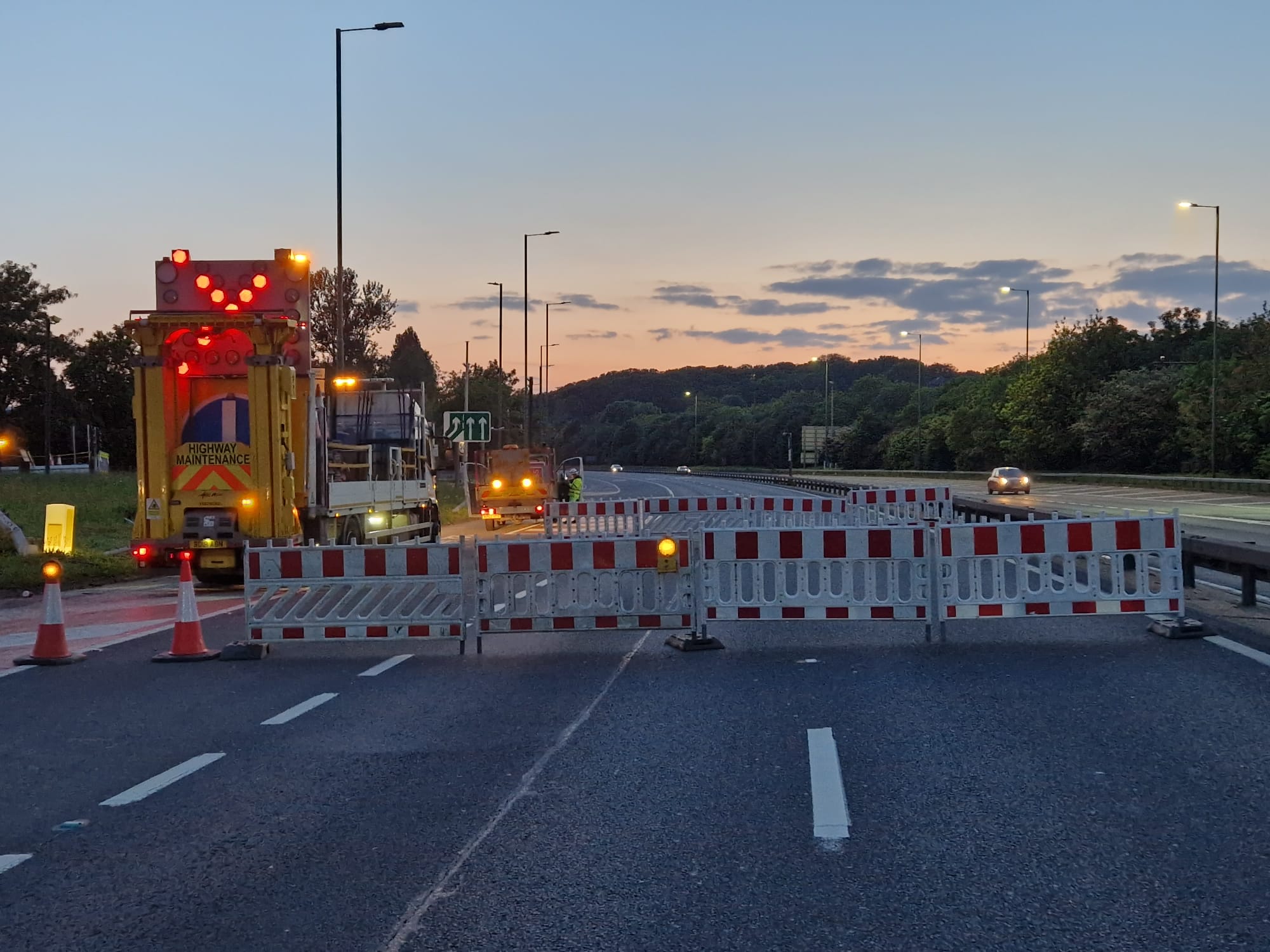
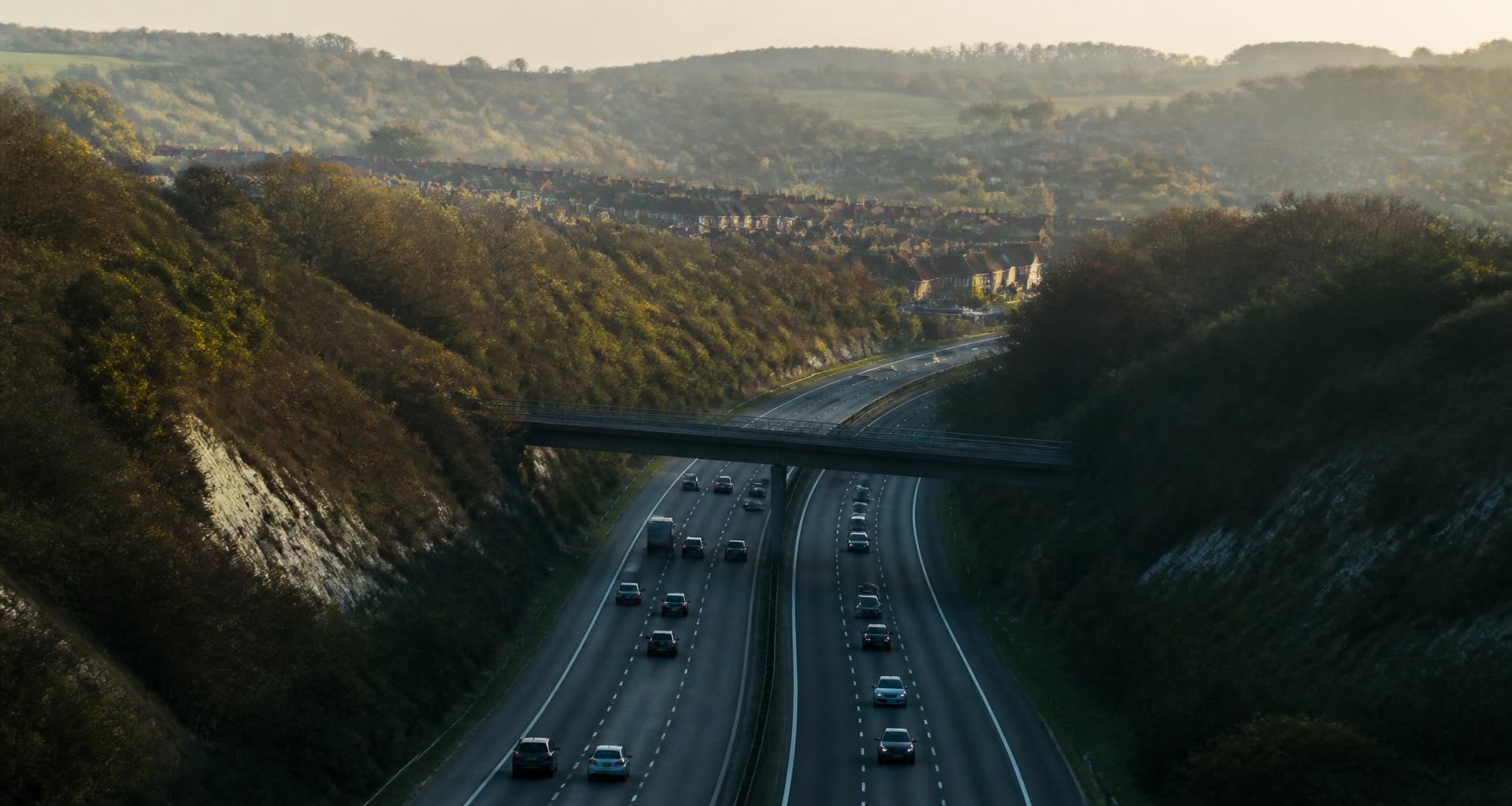
South East England dual carriageway cutting through wooded chalk downland below a commuter town

The South East · home counties

Traffic Management Acrossthe South East andthe Home Counties.

Commuter volumes, motorway corridors and a dozen different highway authorities in one region. We handle the design, the approvals and the crews across all of them, so a multi-county programme stays one contract.

Berkshire, Buckinghamshire, Surrey, Kent, Sussex, Hampshire and Hertfordshire · multi-authority approvals · high-speed 12D capability · 24/7 call-out · £10m public liability.

25

Years in traffic management

~300

Operatives & staff

~150

Lorries, vans & cars

£10m

Public liability cover

24/7

Cover, including call-outs

Local coverage

One contractor across a region of many highway authorities

Coverage
Berkshire, Buckinghamshire, Hertfordshire, Surrey, Kent, East and West Sussex and Hampshire
Availability
24/7, including night works on corridors that cannot be occupied during commuter peaks
Authorities
Multiple county and unitary highway authorities plus National Highways on motorways and trunk roads
Site types
Motorway and dual carriageway works, commuter high streets, development accesses, utility programmes, rural lanes and events

Our South East coverage runs from Berkshire and Buckinghamshire round through Hertfordshire, Surrey, Kent, East and West Sussex and Hampshire — Reading, Slough, Maidenhead, High Wycombe, Aylesbury, Milton Keynes, Watford, Guildford, Woking, Reigate, Maidstone, Canterbury, Ashford, Brighton, Crawley, Basingstoke, Winchester and the towns between them.

The defining feature is administrative rather than physical: a single programme can cross four or five highway authorities, each with its own permit scheme, notice expectations, conditions and preferences. Running that through separate local suppliers multiplies your interfaces and your risk.

We work it as one contract from our Oxfordshire base, with around 300 operatives and around 150 vehicles to allocate, so crews reach South East sites for early starts and night shifts without depending on a single depot's capacity.

The work is a mix of motorway and trunk corridor schemes on the M3, M4, M20, M23, M25, M40, A3, A2 and A27, commuter-town street works, housing and commercial development accesses across the growth areas, utility and telecoms programmes, and event and estate work in the countryside between.

Services in the South East

Everything the scheme needs,available across the South East

The whole range across the region, with one point of contact regardless of which county your next phase falls in.

Why us here

Why contractors in the South Eastkeep the work with us

Multi-authority as standard
We submit to several South East highway authorities regularly, so differing permit schemes and conditions are routine rather than a learning curve on your job.
One contract, one contact
A programme spanning Berkshire, Surrey and Kent stays with one contractor, which removes the interfaces where schemes usually fall apart.
Motorway corridor capability
Sector Scheme 12D registration and ticketed crews for the M3, M4, M20, M23, M25, M40 and the region's dual carriageways.
Resourced for peak-avoiding work
Around 300 operatives and around 150 vehicles, so night and early-morning windows can be staffed properly across several sites at once.
25 years of experience
A quarter of a century of temporary traffic management, on everything from village lanes to high-speed dual carriageways.
Accredited and insured
Constructionline, CHAS, SafeContractor, Achilles UVDB, Acclaim, BM Trada and ISO 9001, with £10m public and £10m employers' liability.

Local conditions

What makes South East schemes slip

The region's problems come from density of demand rather than difficulty of terrain: too much traffic, too many authorities and too little tolerance for delay.

Commuter peaks with no slack

South East corridors carry heavy commuter volumes morning and evening, and authorities protect those peaks tightly. Many routes are effectively unavailable between the early morning and mid-evening.

That pushes works into nights and weekends, and it makes installation and removal speed part of the design rather than an afterthought.

Multiple authorities, multiple rule sets

Each county and unitary authority runs its own permit scheme with its own notice expectations, drawing requirements, conditions and attitudes to closure versus signals.

Submitting the same drawing to all of them is how programmes lose weeks. Each submission is prepared for the authority receiving it.

Motorway and trunk road interfaces

Works near junctions on the M25, M23, M20, M3, M4 and M40 can involve National Highways as well as the local authority, and slip roads and junction approaches carry high speeds with short decision distances.

High-speed arrangements need correct taper lengths, safety zones, advance signing and 12D-ticketed crews. There is no partial version of that which is still safe.

Growth areas and long-term development

Sustained housing and commercial growth across Berkshire, Buckinghamshire, Kent and Sussex means long-duration site accesses onto busy roads and arrangements that need revising as sites progress.

These schemes degrade over months — signs disappear, barriers move, ground protection shifts — so maintenance and inspection are what keep them compliant, not the original installation.

Mixed building age and buried services

Historic town centres in Kent, Sussex, Surrey and Hampshire sit alongside post-war and modern estates, so excavation conditions and street geometry vary widely across a single utility programme.

Older streets bring unexpected apparatus and growing excavations; newer estates bring narrow adopted roads, parked cars and turning heads where large vehicles cannot manoeuvre.

Coastal weather and seasonal traffic

Coastal and downland routes in Sussex, Kent and Hampshire take exposure and wind, which moves signage and cones and reduces conspicuity in wet, dark conditions.

Seasonal traffic adds another constraint: routes to the coast and to ports and airports have peak periods that make daytime occupation unrealistic in summer and around holidays.

Our process

How a the South East scheme gets fromenquiry to signed-off completion

  1. Step 1

    Enquiry and site review

    You send the location, the works and the dates. We check the road type, the speed limit, the highway authority involved and any local constraints before quoting.

  2. Step 2

    Scheme design and CAD drawing

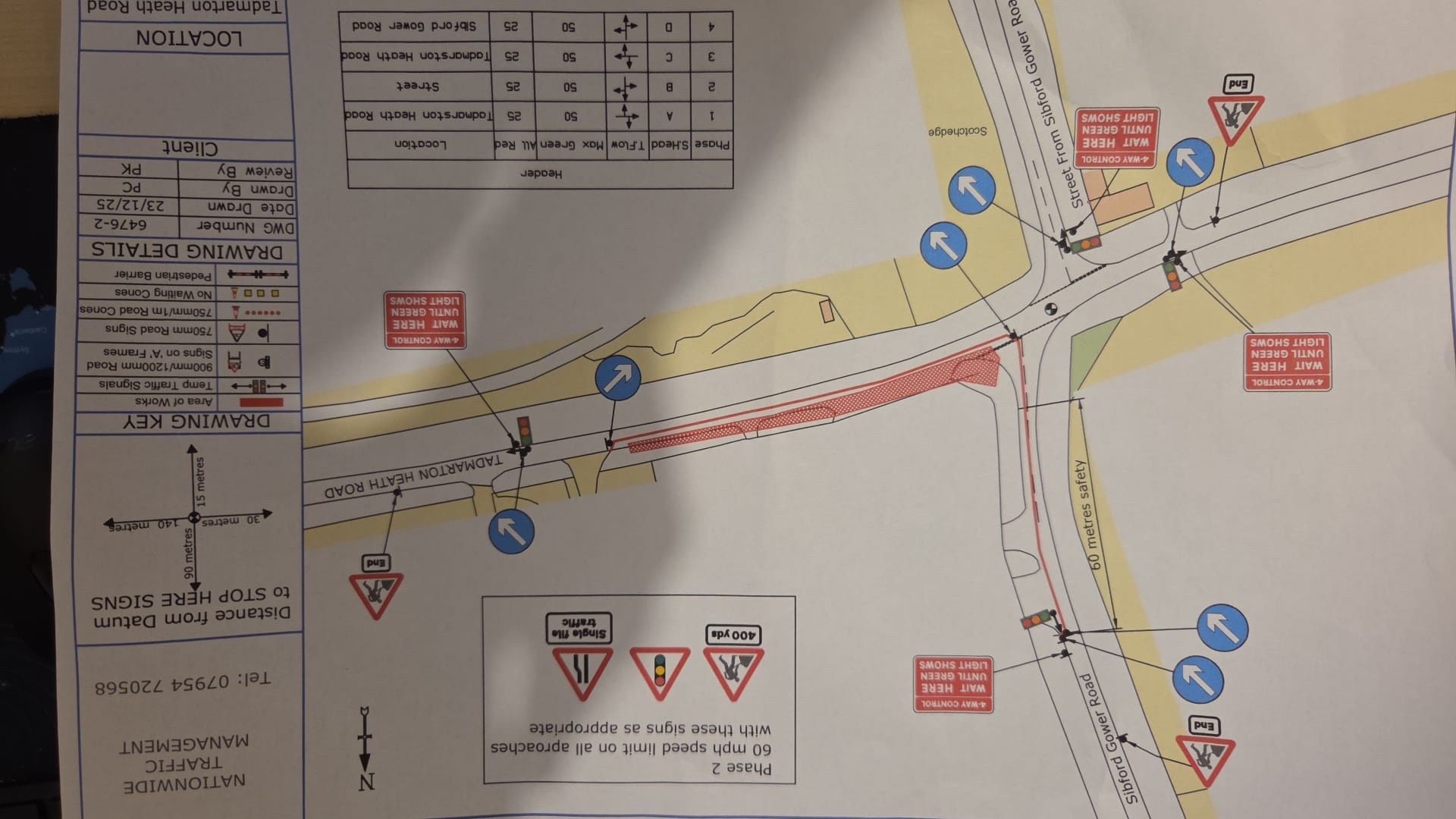
    We produce the temporary traffic management design and scheme-specific CAD drawings for the arrangement your works actually need, not a generic layout.

  3. Step 3

    Permits, TTROs and authority approval

    We submit to the local highway authority and manage the process end to end — permits, Temporary Traffic Regulation Orders, notices and conditions — and confirm approval in writing.

  4. Step 4

    Programming and resourcing

    Crews, signals, signage and barriers are allocated from our fleet of around 150 vehicles and team of around 300, and booked to the dates you have been given.

  5. Step 5

    Installation by our own crews

    Carded and ticketed operatives working under our supervision install to the approved drawing, with the arrangement checked against the drawing before works start.

  6. Step 6

    Maintenance, phase changes and collection

    The scheme is inspected and maintained, damage and displacement dealt with including out of hours, phases changed as planned operations, and everything collected at completion.

Standards we work to in the South East

  • Sector Scheme 12 — 12A, 12B, 12C & 12D
  • Chapter 8 (Traffic Signs Manual)
  • New Roads & Street Works Act (NRSWA)
  • Lantra/NRSWA cards, T1/T2/T3 tickets
  • £10m public liability & £10m employers' liability insurance

Accreditations held

  • National Highway Sector Schemes
  • Constructionline Gold
  • BM Trada
  • CHAS
  • Acclaim
  • Achilles UVDB
  • Avetta
  • Builder's Profile
  • SafeContractor
  • ISO 9001

Certificates are issued for your pre-qualification pack on request. We work direct for end clients and as a subcontractor to principal contractors.

Straight answers

Traffic management in the South Eastquestions we are asked

Do you cover the South East?

Yes — Berkshire, Buckinghamshire, Hertfordshire, Surrey, Kent, East and West Sussex and Hampshire, including Reading, Slough, Maidenhead, High Wycombe, Aylesbury, Milton Keynes, Watford, Guildford, Woking, Maidstone, Canterbury, Ashford, Brighton, Crawley, Basingstoke and Winchester.

How fast can you reach a South East site?

The region borders our Oxfordshire base, and crews and equipment are allocated from around 150 vehicles and around 300 staff. Planned works are booked to your dates and approved window; emergency call-outs are available 24 hours a day, seven days a week.

How much does traffic management cost in the South East?

Pricing follows the road type and speed limit, the arrangement required, the number of authorities involved, the working hours permitted, the equipment on hire, the duration and the crew requirement, plus authority permit or TTRO fees. Night and weekend working costs more than daytime work, so each scheme is quoted in writing.

Is emergency cover available across the South East?

Yes, 24/7 rapid-response call-outs across the region for burst mains, carriageway failures, collisions and damaged temporary traffic management.

Can you handle several counties on one programme?

That is one of the main reasons contractors use us here. A programme crossing four or five highway authorities stays one contract with one point of contact, and each authority's submission is prepared to its own permit scheme and notice periods.

Can you work on the M25, M4, M3, M20 and M23?

Yes. Motorway and dual carriageway schemes are delivered under Sector Scheme 12D registration by ticketed crews, in windows agreed with National Highways or the relevant authority.

Do you work nights and weekends in the South East?

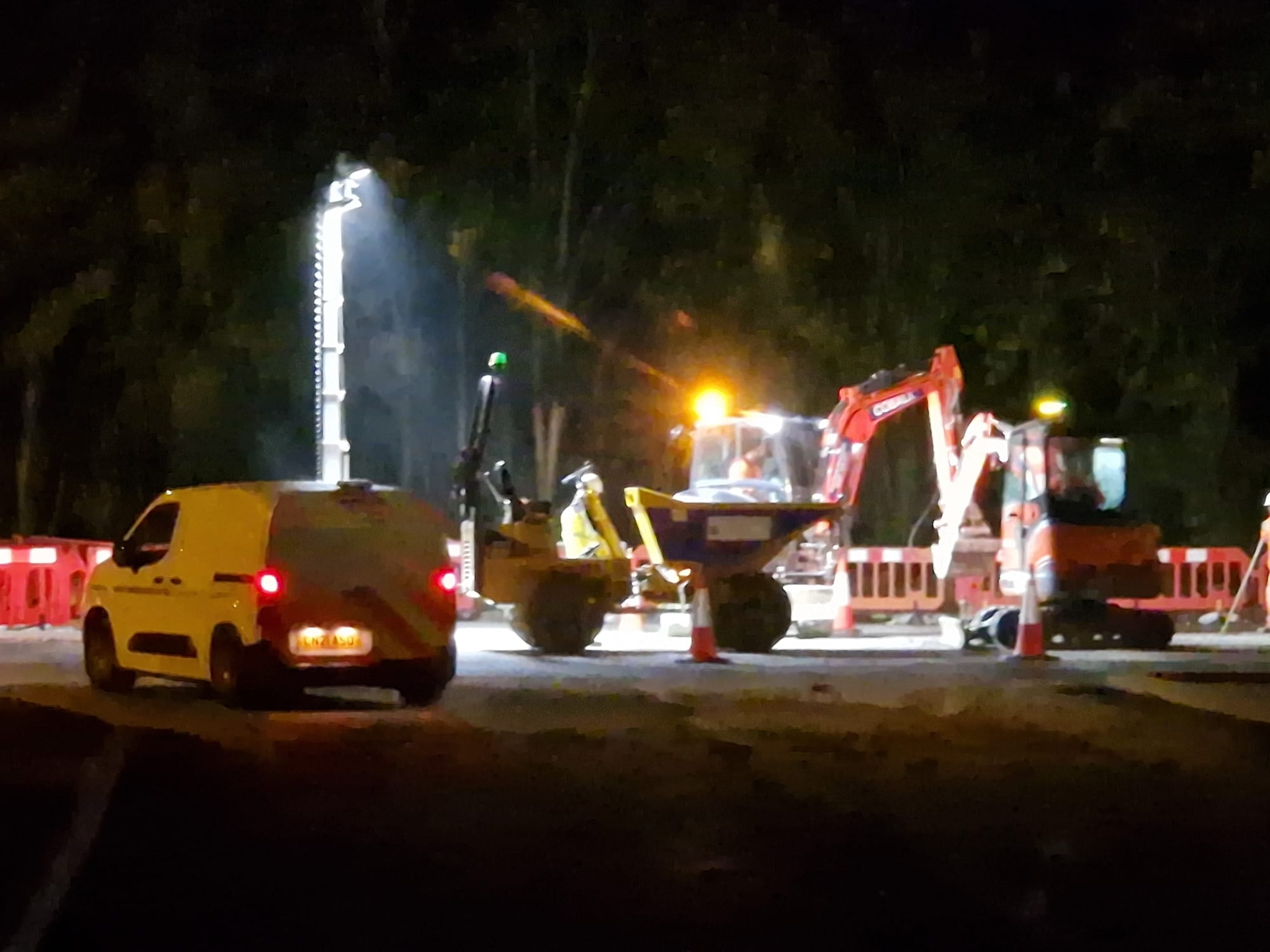
Regularly, because commuter peaks make many routes unavailable during the day. Night schemes are planned as night shifts with lighting and conspicuity designed in, and the installation and removal sequence built to fit the window.

Can you supply signals for a short job in the home counties?

Yes. Portable and vehicle-actuated signals are supplied, installed and maintained for the whole hire period, whether that is a few days on a residential street or months on a distributor road.

Do you take care of the permits and TTROs?

Yes, end to end with each relevant authority — permit applications, Temporary Traffic Regulation Orders, notices and conditions — with approval confirmed in writing before you mobilise.

What insurance and accreditations do you hold?

£10 million public liability and £10 million employers' liability, with Sector Scheme 12 registration across 12A to 12D, Chapter 8 and NRSWA compliance, and Constructionline, BM Trada, CHAS, Acclaim, Achilles UVDB, SafeContractor and ISO 9001.

Nearby areas we also cover

  • Traffic management in London

    Traffic management across London and all boroughs: lane and road closures, footway closures, signals, permits, TTROs, night works and 24/7 emergency cover. 25 years, £10m insurance.

  • Traffic management in Gatwick

    Traffic management around Gatwick and Crawley: airport approach roads, M23 and A23 schemes, night works, signals, permits and TTROs. 25 years, 24/7 emergency cover, £10m insurance.

  • Traffic management in Oxfordshire

    Temporary traffic management in Oxfordshire from our county base: road and lane closures, traffic light hire, permits and TTROs with Oxfordshire County Council. 25 years, 24/7 cover, £10m insurance.

  • Traffic management in the South West

    Traffic management across the South West: Bristol, Bath, Swindon, Gloucester, Somerset, Devon and Cornwall. Closures, stop-go, signals, permits and TTROs with 24/7 cover and £10m insurance.

Keep going

See every service area, browse all traffic management services, read about the company, return to the homepage or contact the team.

Several counties,one traffic managementcontract.

Send the sites, the counties and the dates. You get a written estimate covering the design, each authority's permit or TTRO, the equipment and the crews.

25 years · Sector Scheme 12A–12D · £10m public liability · 24/7 cover

Send the details

Road type, duration and start date is enough to price it. We reply to every enquiry.