24/7 cover · Nationwide from Oxfordshire

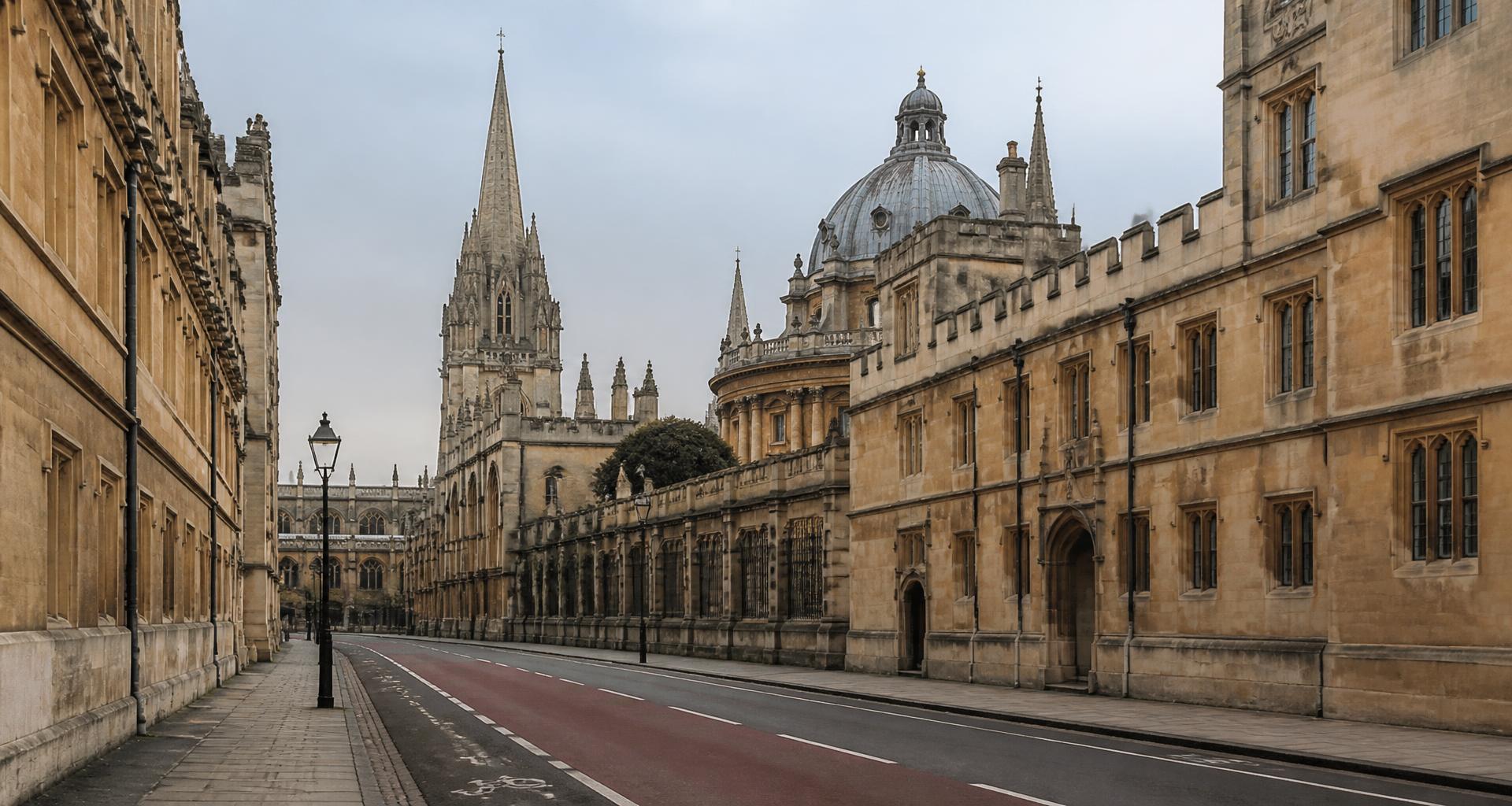
Oxford city centre street lined with historic limestone college buildings, spires and a cycle lane

Oxford · city centre & ring road

Traffic Management in Oxford,From the City Centreto the Ring Road.

Oxford punishes generic traffic management: narrow historic streets, bus and cycle traffic, huge pedestrian numbers and a ring road that cannot be slowed at peak. We design for that city, get it approved, and install it with our own crews.

Minutes from the city, not hours · pedestrian and cycle routes designed in · ring road and A34 schemes under Sector Scheme 12D · 24/7 call-out · £10m public liability.

25

Years in traffic management

~300

Operatives & staff

~150

Lorries, vans & cars

£10m

Public liability cover

24/7

Cover, including call-outs

Local coverage

Oxford is on our doorstep, and it is a city with its own rules

Distance to site
Our Oxfordshire base is minutes from the ring road — the shortest response of anywhere we cover
Availability
24/7 including night works, which is when most Oxford road space is actually available
Highway authorities
Oxfordshire County Council in the city; National Highways on the A34
Site types
Historic city-centre streets, bus and cycle corridors, hospital and university sites, science and business parks, ring road and A34

Our base is in Oxfordshire, so Oxford is effectively a local job. Crews, signals, signage and barriers reach the city quickly, which matters in a place where road space windows are short and an authority-agreed start time is not negotiable.

We work across the whole city: the historic centre and High Street area, Cowley, Headington and the hospital corridor, Summertown, Jericho, Botley, Iffley, Marston, Blackbird Leys and the science and business parks on the edge, plus the A34, A40, A420, A4074 and the ring road itself.

Oxford's traffic management is dominated by three things: pedestrians and cyclists in very high numbers, buses and coaches on fixed routes that cannot simply be diverted, and a road network with very few alternatives. That combination is why the arrangement has to be designed rather than adapted from a standard drawing.

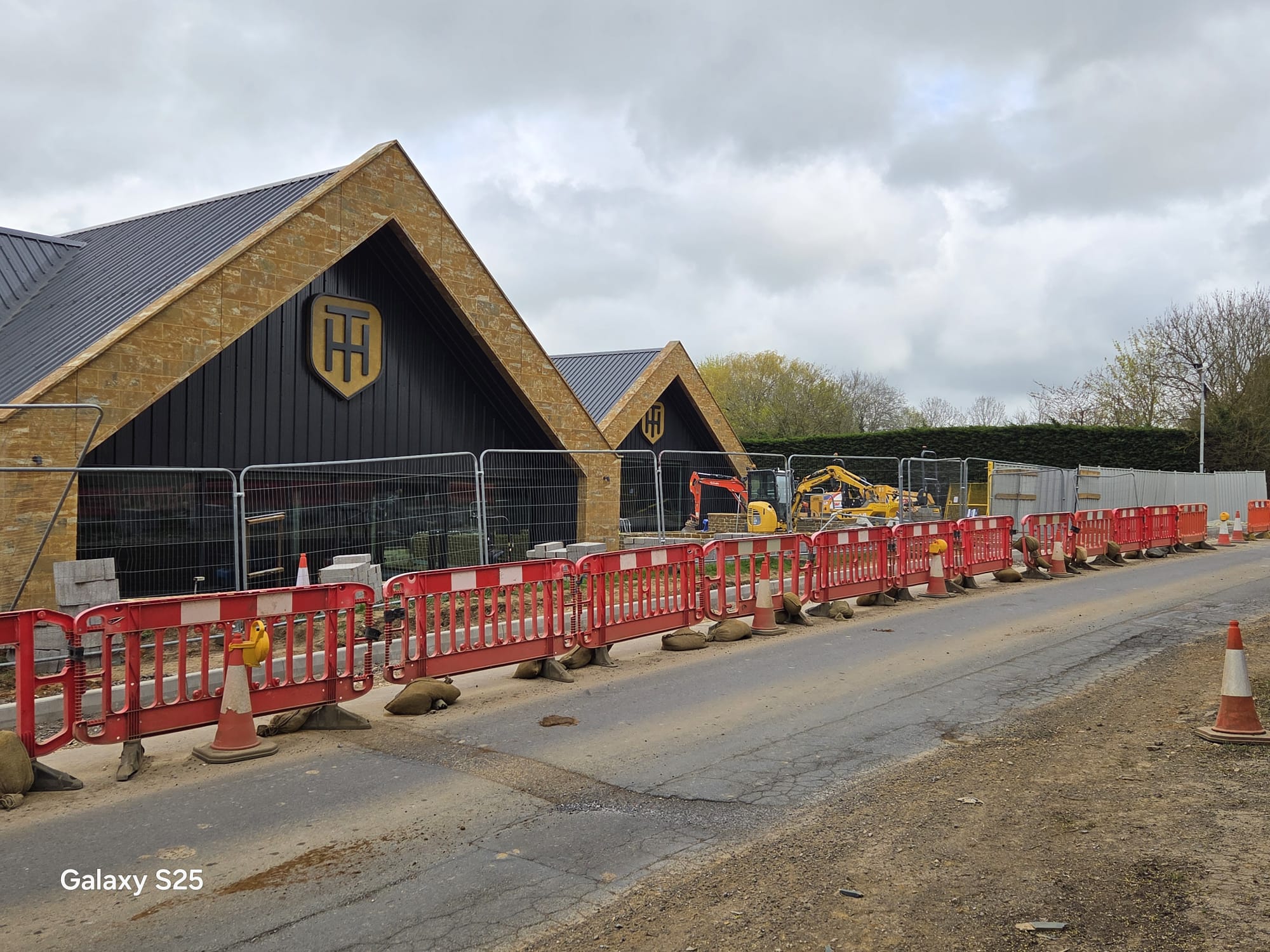
The work we do here ranges from utility excavations in narrow city streets and scaffold and hoarding footway closures, to college, hospital and university construction access, science park and Cowley industrial works, event and film schemes, and high-speed lane closures on the ring road and A34 delivered overnight.

Services in Oxford

Everything the scheme needs,available across Oxford

Everything an Oxford scheme needs, from a barriered footway route past a scaffold in the centre to an overnight lane closure with signals on the ring road, delivered by one contractor.

Why us here

Why contractors in Oxfordkeep the work with us

Genuinely local to Oxford
Our base is in the county, so equipment and crews are close by rather than travelling in from another region on the morning of the works.
Experience of the city's constraints
25 years of temporary traffic management, including narrow historic streets, bus corridors, cycle traffic and heavy pedestrian numbers.
Pedestrian management taken seriously
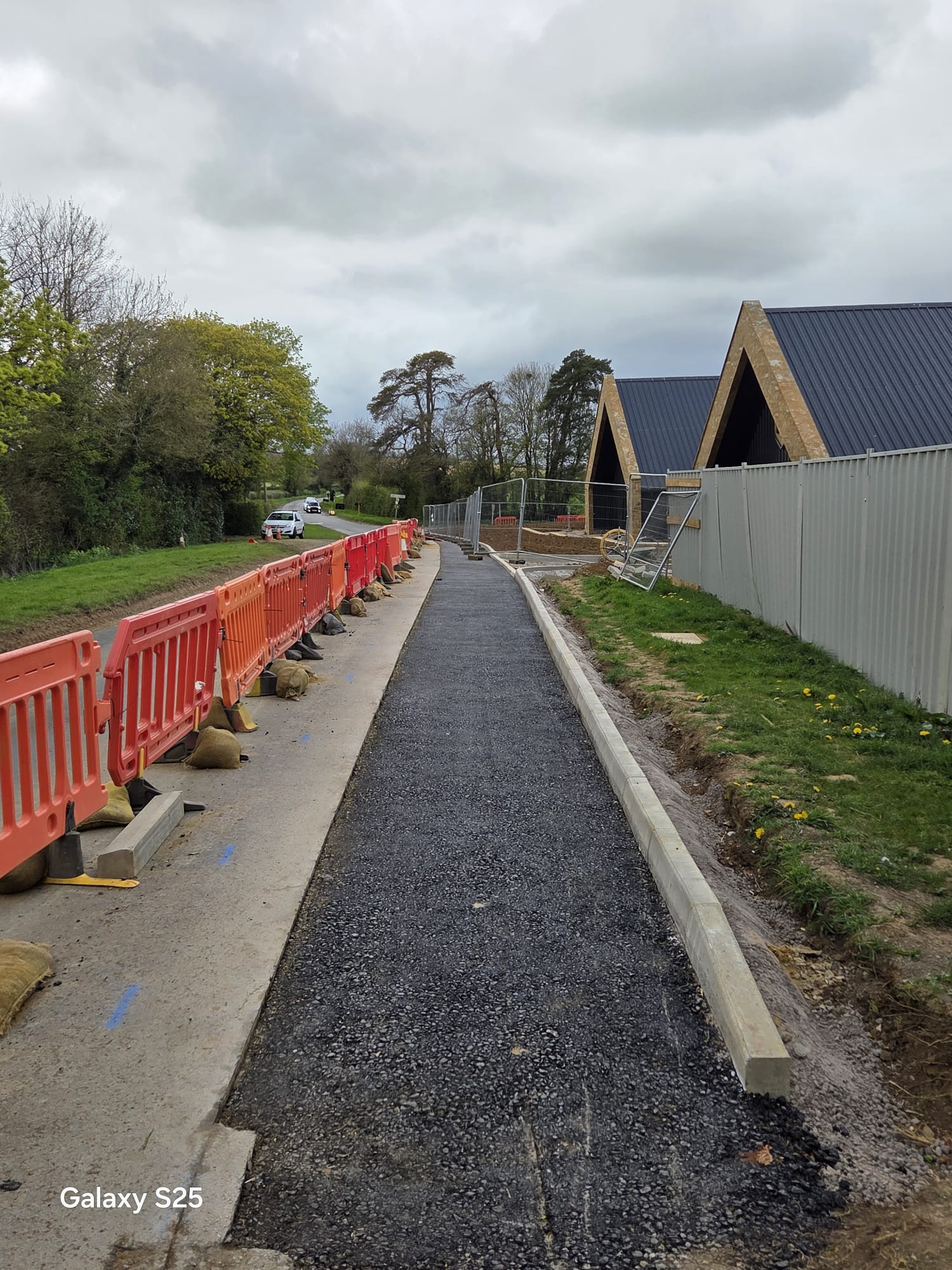
Barriered routes with tapping rails and workable widths, because in Oxford the pedestrian arrangement is usually what the authority scrutinises hardest.
Ring road and A34 capability
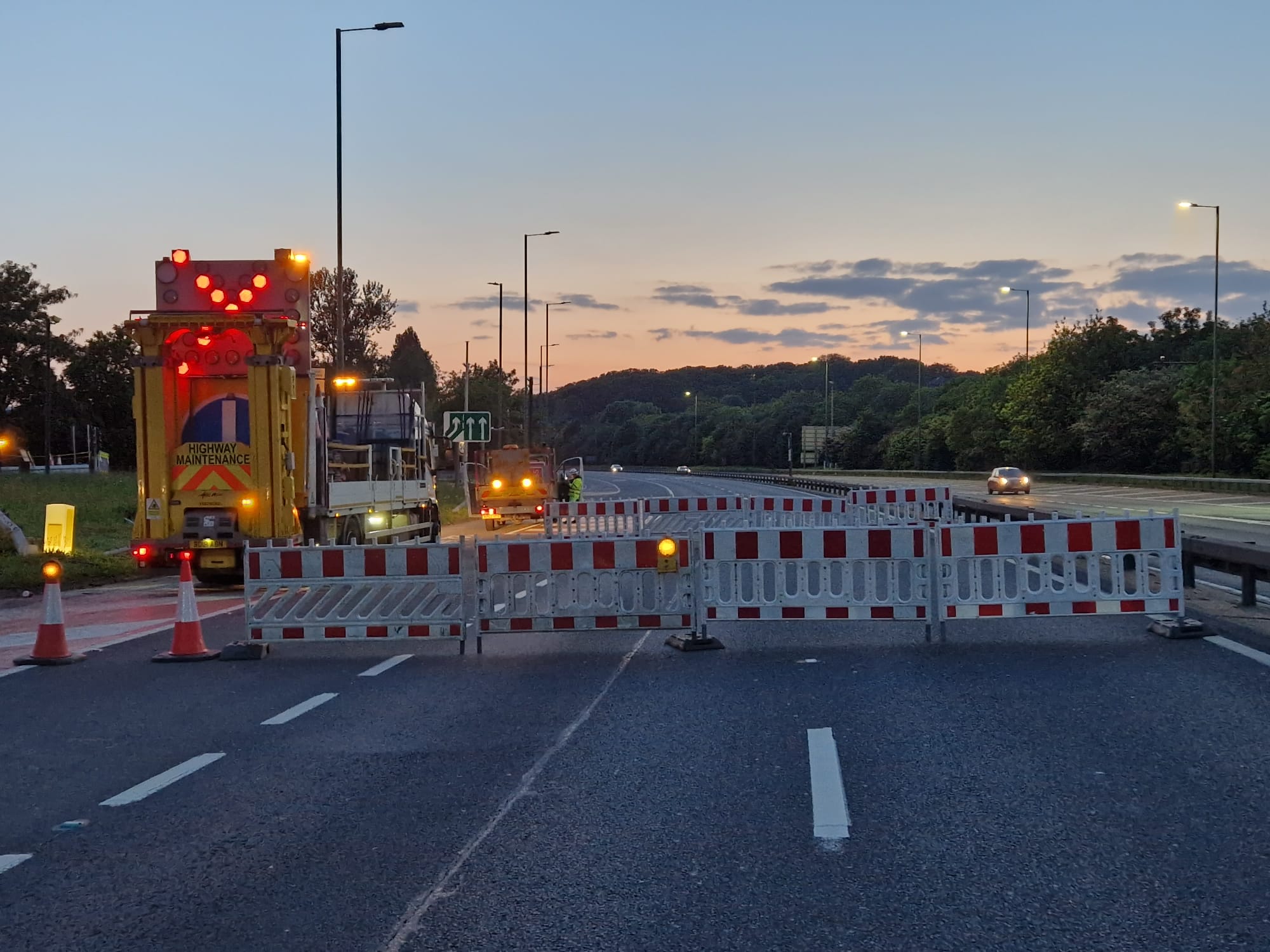
Sector Scheme 12D registration and ticketed crews for high-speed dual carriageway work, delivered in overnight windows.
Night and out-of-hours delivery
24/7 operation, which is how most Oxford road space gets used — with lighting and conspicuity designed for night working.
Fully accredited and insured
Constructionline, CHAS, SafeContractor, Achilles UVDB, Acclaim, BM Trada, ISO 9001, and £10m public and £10m employers' liability cover.

Local conditions

Why Oxford schemes fail when they are designed elsewhere

A drawing produced without standing in the street rarely survives contact with Oxford. The city's age, its traffic mix and its lack of alternative routes create specific, repeatable failures.

Medieval street pattern, modern traffic

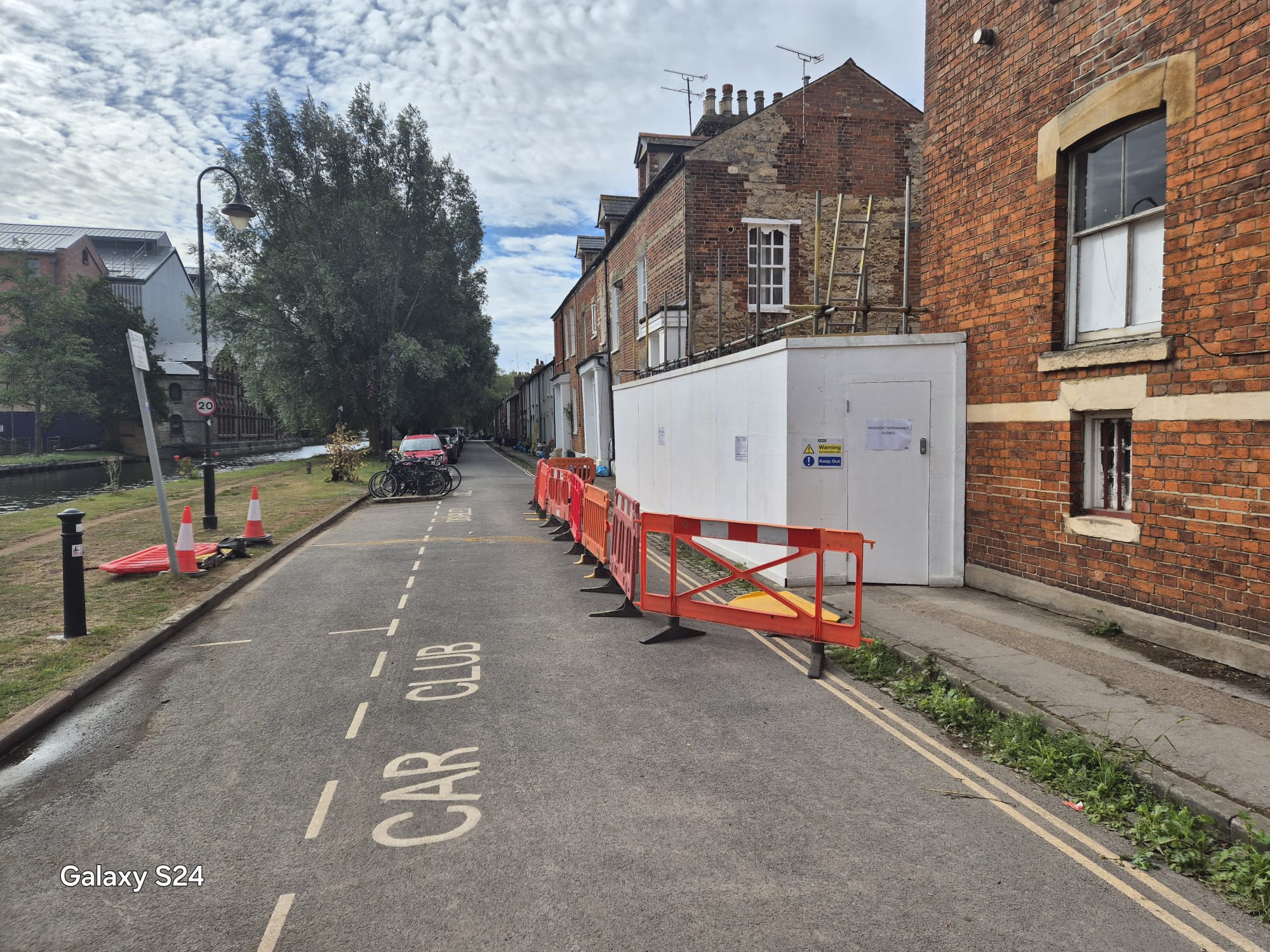
Much of central Oxford follows a street layout laid out centuries before motor traffic. Carriageways are narrow, footways narrower, and many streets have listed frontages and no set-back at all.

That means the working space, the pedestrian route and the traffic lane are competing for the same few metres, and something has to be formally given up — which is a design and approval decision, not a site decision.

Buses, coaches and cycle traffic

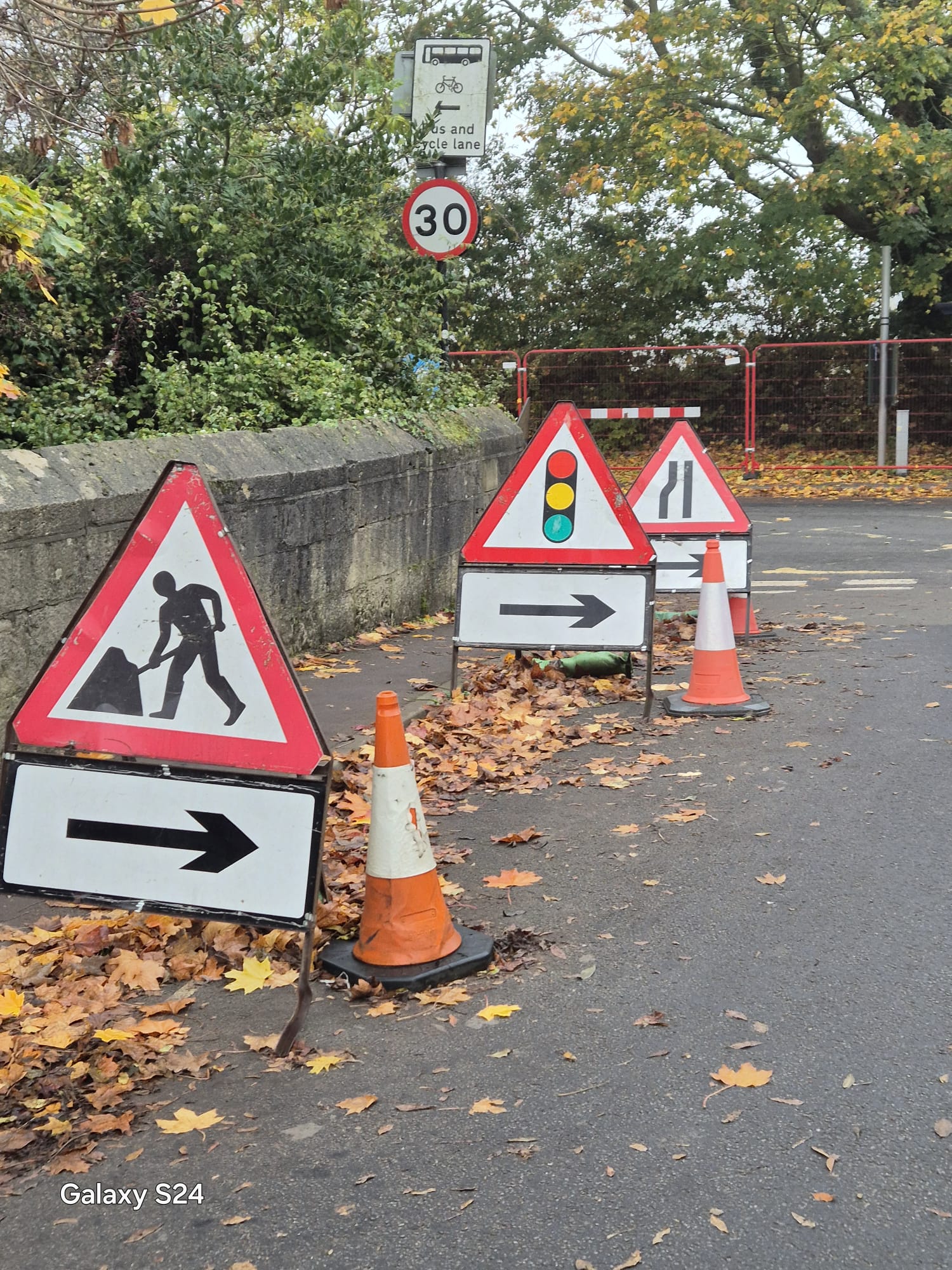
Oxford has intensive bus and coach movements on fixed routes plus one of the highest cycling levels in the country. A lane arrangement that works for cars can be unusable for a bus swept path and hostile to cyclists being squeezed at a taper.

Getting this wrong produces the two complaints that stop a scheme fastest: an operator reporting that buses cannot get through, and a cyclist safety objection.

Pedestrian volume and accessibility

Footfall in the centre is very high and includes tourists unfamiliar with the street layout, students, families and visitors with mobility and visual impairments.

Cones and tape are not a pedestrian route. Compliant arrangements use barriers with tapping rails, adequate width for wheelchairs and pushchairs, and defined crossing points — and they must stay that way as the public moves things.

Very few diversion options

The city has limited parallel routes, restricted access streets and a ring road that is already at capacity in peaks. A closure often has only one viable diversion, and it may be several miles long.

That is why diversion routes have to be driven and checked for width, height and turning restrictions before submission, and why the authority frequently prefers signals or stop-go over closure.

Older buildings, scaffolds and buried services

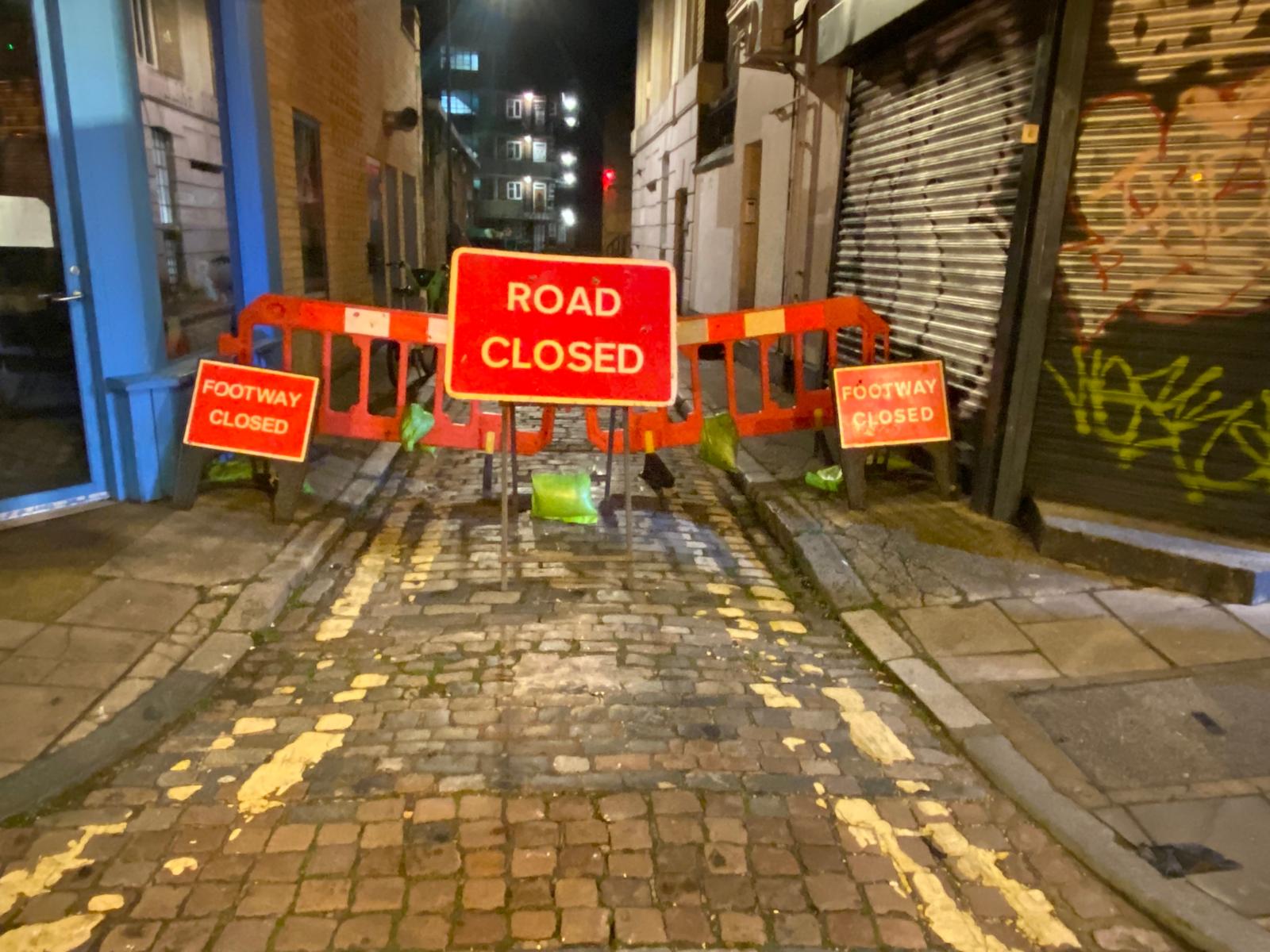
Oxford's older building stock means frequent scaffold, hoarding and roof works over footways, each needing a licence and a protected pedestinated route, often for months.

Buried services under historic streets are also poorly aligned with modern layouts, so excavations open in awkward positions and grow, changing the traffic arrangement mid-job.

Peak restrictions, term time and events

Working windows are shaped by peaks, term dates, hospital access, market and event days, and the city's tourist season. The same arrangement can be approvable in August and refused in October.

We plan Oxford schemes around those windows and, where the road cannot be given up by day, take the works to night with the lighting and signing that a night scheme requires.

Our process

How a Oxford scheme gets fromenquiry to signed-off completion

  1. Step 1

    Enquiry and site review

    You send the location, the works and the dates. We check the road type, the speed limit, the highway authority involved and any local constraints before quoting.

  2. Step 2

    Scheme design and CAD drawing

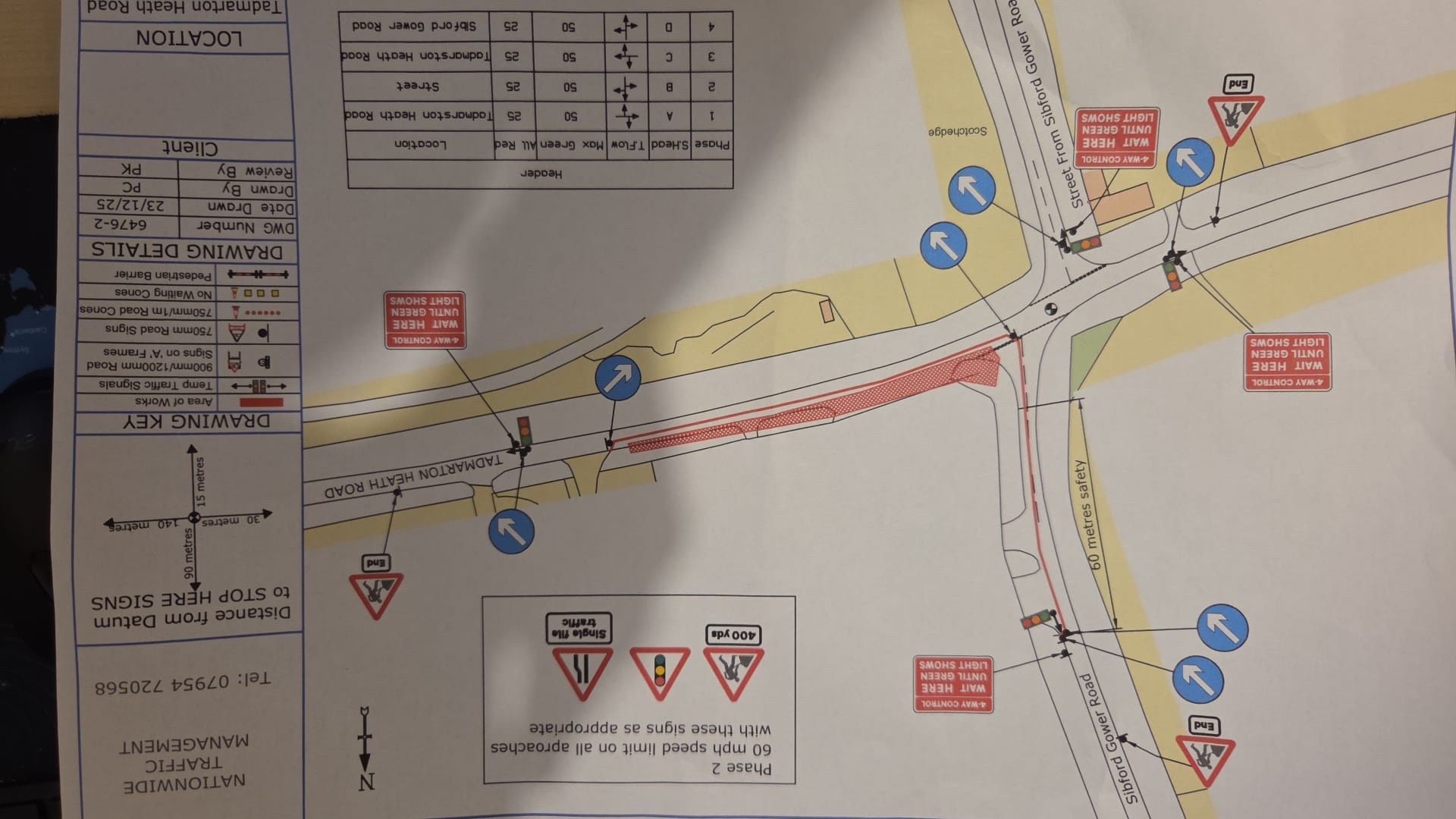
    We produce the temporary traffic management design and scheme-specific CAD drawings for the arrangement your works actually need, not a generic layout.

  3. Step 3

    Permits, TTROs and authority approval

    We submit to the local highway authority and manage the process end to end — permits, Temporary Traffic Regulation Orders, notices and conditions — and confirm approval in writing.

  4. Step 4

    Programming and resourcing

    Crews, signals, signage and barriers are allocated from our fleet of around 150 vehicles and team of around 300, and booked to the dates you have been given.

  5. Step 5

    Installation by our own crews

    Carded and ticketed operatives working under our supervision install to the approved drawing, with the arrangement checked against the drawing before works start.

  6. Step 6

    Maintenance, phase changes and collection

    The scheme is inspected and maintained, damage and displacement dealt with including out of hours, phases changed as planned operations, and everything collected at completion.

Standards we work to in Oxford

  • Sector Scheme 12 — 12A, 12B, 12C & 12D
  • Chapter 8 (Traffic Signs Manual)
  • New Roads & Street Works Act (NRSWA)
  • Lantra/NRSWA cards, T1/T2/T3 tickets
  • £10m public liability & £10m employers' liability insurance

Accreditations held

  • National Highway Sector Schemes
  • Constructionline Gold
  • BM Trada
  • CHAS
  • Acclaim
  • Achilles UVDB
  • Avetta
  • Builder's Profile
  • SafeContractor
  • ISO 9001

Certificates are issued for your pre-qualification pack on request. We work direct for end clients and as a subcontractor to principal contractors.

Straight answers

Traffic management in Oxfordquestions we are asked

Do you serve Oxford?

Yes. Oxford is one of our most frequently worked areas, covering the city centre, Cowley, Headington and the hospital corridor, Summertown, Jericho, Botley, Iffley, Marston, Blackbird Leys, the science and business parks, and the ring road and A34.

How fast can you reach Oxford?

Our Oxfordshire base is minutes from the ring road, so Oxford has the shortest response time of any area we cover. Planned schemes are booked to your dates, and emergency call-outs are available 24 hours a day, seven days a week.

How much does traffic management cost in Oxford?

It depends on the street or road, the arrangement the authority will approve, the equipment required, the duration, whether operatives stay on site, and the council's permit or TTRO fees. City-centre schemes with pedestrian management and short working windows cost more than a straightforward suburban job, so we price each one in writing.

Is emergency traffic management available in Oxford?

Yes, 24/7. Burst mains, collapsed carriageways, collisions and damaged temporary traffic management are attended and made safe at the time, including overnight and at weekends.

Can you close a street in central Oxford?

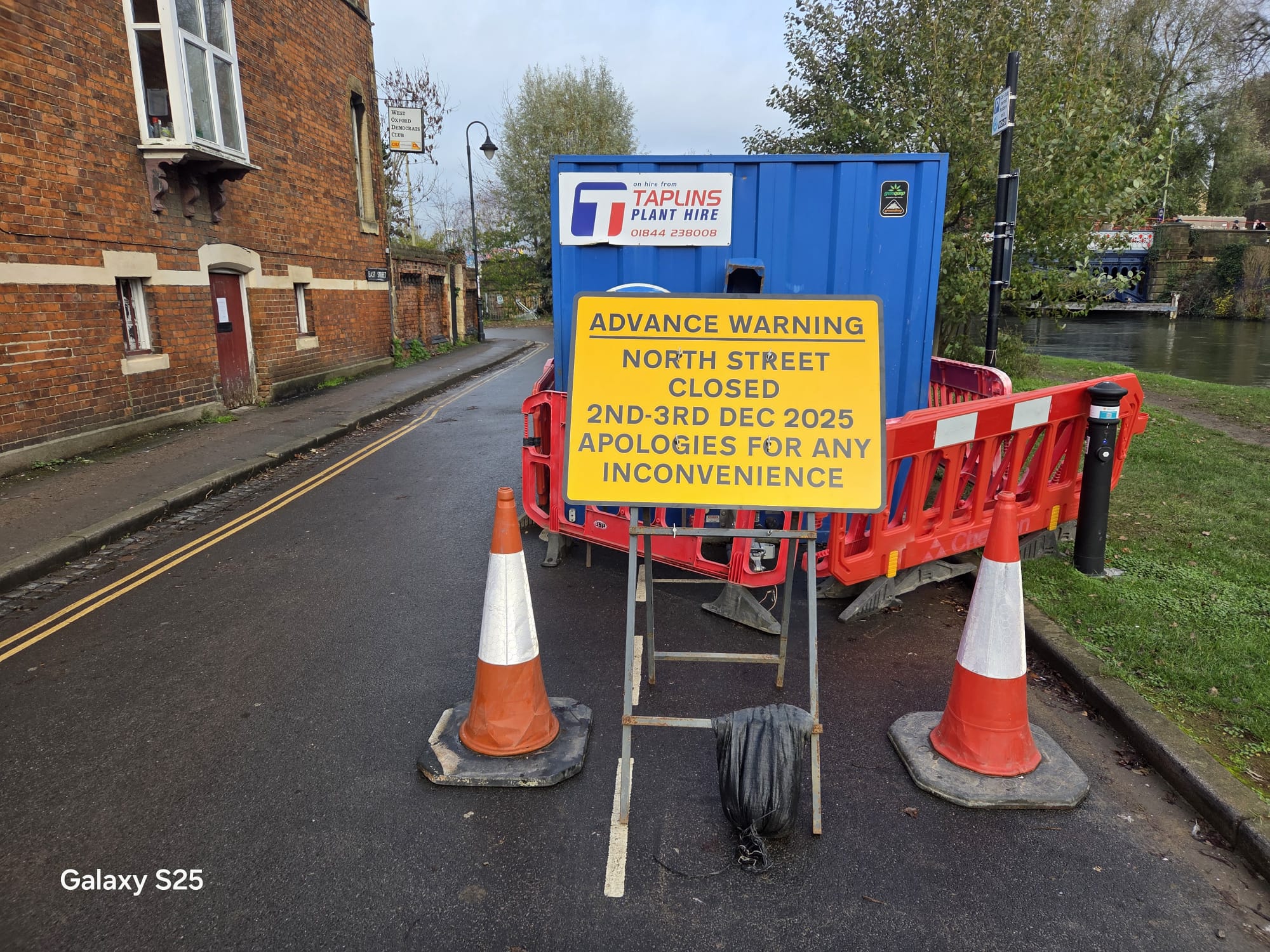
Where it is justified and the diversion works, yes — through a Temporary Traffic Regulation Order or permit with Oxfordshire County Council. Often the authority prefers signals, stop-go or a lane arrangement instead, and we will tell you which route is realistic before you programme the works.

How do you handle pedestrians and cyclists in the city?

As a designed element, not an afterthought. That means barriered pedestrian routes with tapping rails at usable widths, defined crossing points, cycle provision considered at tapers, and bus swept paths checked so operators are not blocked.

Can you work on the Oxford ring road and the A34?

Yes. Those are high-speed schemes delivered under Sector Scheme 12D registration by ticketed crews, usually in overnight windows, with correct taper lengths, safety zones and advance signing. The A34 involves National Highways rather than the county council.

Do you work nights in Oxford?

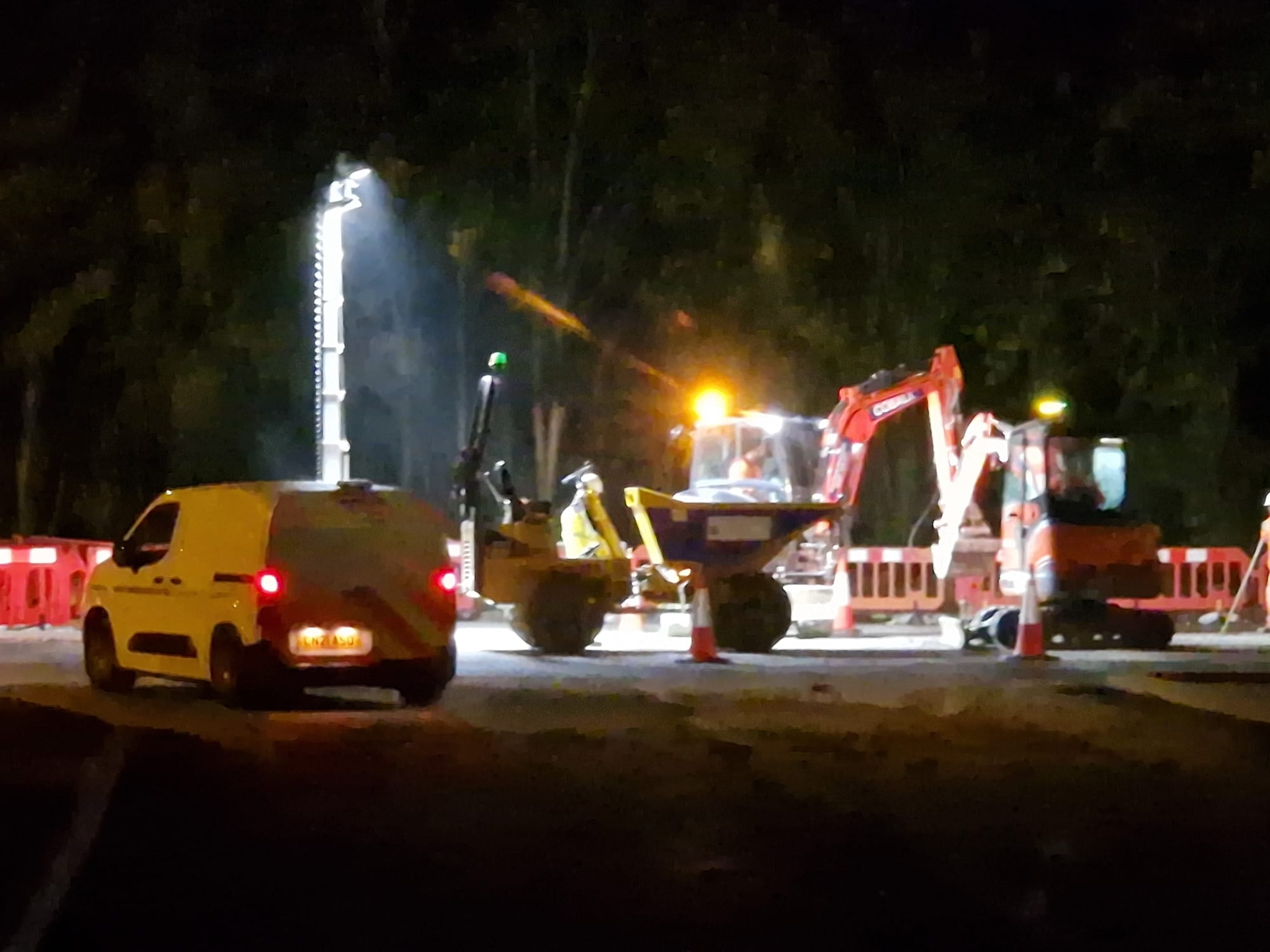
Frequently — for many city and ring road locations it is the only approvable option. Night schemes are planned as night shifts, with lighting, conspicuity and noise conditions accounted for rather than a day scheme running late.

Do you deal with the council on our behalf?

Yes. Permit applications, TTROs, footway closure licences, notice periods and conditions are handled end to end, and we confirm approval in writing before your start date.

What accreditations and insurance do you hold for Oxford work?

Sector Scheme 12 registration across 12A to 12D, Chapter 8 and NRSWA compliance, plus Constructionline, BM Trada, CHAS, Acclaim, Achilles UVDB, SafeContractor and ISO 9001, with £10 million public liability and £10 million employers' liability.

Nearby areas we also cover

  • Traffic management in Oxfordshire

    Temporary traffic management in Oxfordshire from our county base: road and lane closures, traffic light hire, permits and TTROs with Oxfordshire County Council. 25 years, 24/7 cover, £10m insurance.

  • Traffic management in the South East

    Traffic management across the South East and home counties: Berkshire, Buckinghamshire, Surrey, Kent, Sussex, Hampshire. Closures, signals, permits, TTROs, night works, 24/7 cover.

  • Traffic management in the Midlands

    Traffic management across the East and West Midlands: Birmingham, Coventry, Leicester, Nottingham, Derby, Northampton. Closures, signals, permits, TTROs, night works, 24/7 cover.

  • Traffic management in London

    Traffic management across London and all boroughs: lane and road closures, footway closures, signals, permits, TTROs, night works and 24/7 emergency cover. 25 years, £10m insurance.

Keep going

See every service area, browse all traffic management services, read about the company, return to the homepage or contact the team.

Working in Oxford?Send the streetand the dates.

Tell us the location, the works and the window. You get a written estimate covering the design, the pedestrian arrangement, the council permit or TTRO, the equipment and the crews.

25 years · Sector Scheme 12A–12D · £10m public liability · 24/7 cover

Send the details

Road type, duration and start date is enough to price it. We reply to every enquiry.