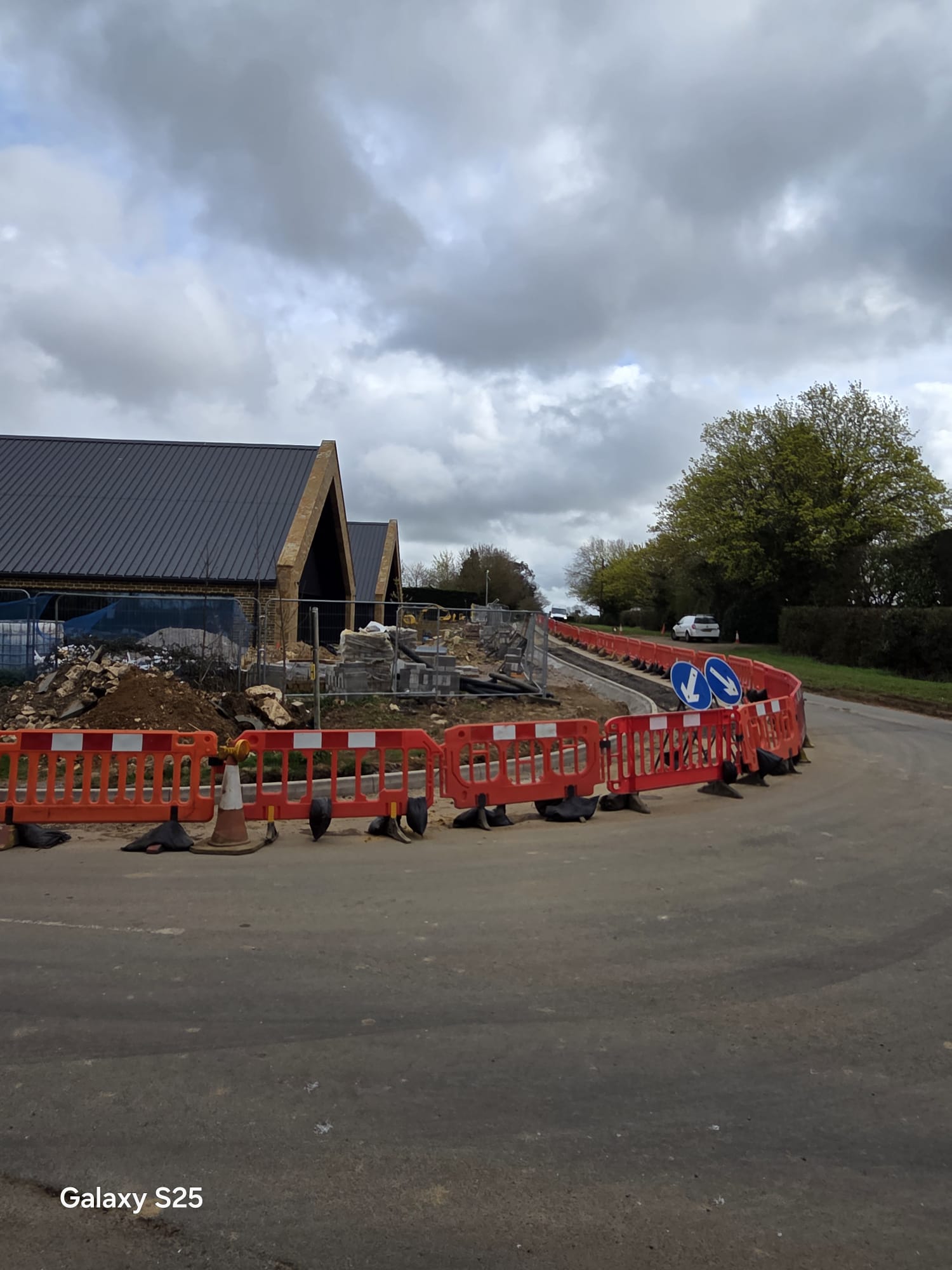
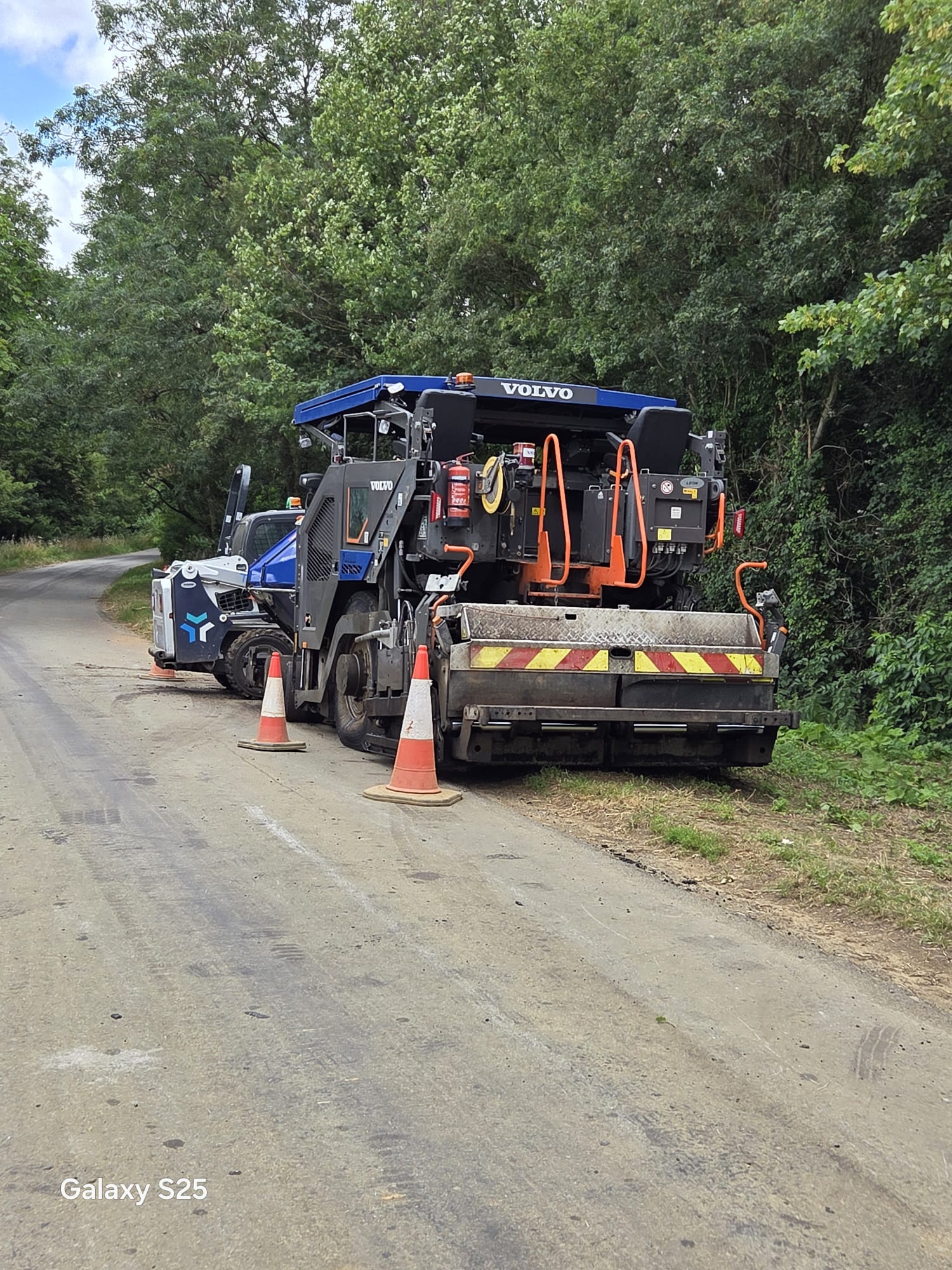
24/7 cover · Nationwide from Oxfordshire

South West England motorway viaduct sweeping across a green valley of hedgerowed fields

The South West · M4 & M5 corridors

Traffic Management Acrossthe South West and theM4 and M5 Corridors.

Cities with Georgian and Victorian street patterns, motorway corridors carrying holiday traffic, and rural lanes where a closure adds ten miles. We design for each of those separately, because they fail for different reasons.

Bristol, Bath, Swindon, Gloucester, Somerset, Wiltshire, Devon and Cornwall · M4/M5 12D capability · stop-go and convoy for rural routes · 24/7 call-out · £10m public liability.

25

Years in traffic management

~300

Operatives & staff

~150

Lorries, vans & cars

£10m

Public liability cover

24/7

Cover, including call-outs

Local coverage

From the M4 corridor to the far South West

Coverage
Swindon, Bristol, Bath, Gloucestershire, Wiltshire, Somerset, Devon and Cornwall
Availability
24/7, including night working on motorway corridors and city routes
Authorities
Several county and unitary highway authorities, plus National Highways on the M4, M5 and trunk roads
Site types
Historic city streets, motorway corridors, growth-edge development accesses, narrow rural lanes, coastal and event routes

Our South West coverage runs from Swindon and the M4 corridor through Bristol, Bath, Gloucester, Cheltenham and Chippenham, down the M5 through Somerset, Taunton and Exeter, and on into Devon and Cornwall.

The region contains three quite different traffic management problems. There are dense historic cities — Bath and central Bristol especially — with narrow streets and heritage constraints. There are the M4 and M5 corridors carrying freight and seasonal holiday volumes. And there is a very large rural network of narrow lanes where a closure has no short diversion.

We work all three from an Oxfordshire base with around 300 operatives and around 150 vehicles, which means a Bristol or Swindon scheme is a routine allocation, and a longer-distance Devon or Cornwall programme is planned and resourced properly rather than squeezed.

The work includes utility and civils programmes in Bristol, Bath, Swindon and Gloucester, development access schemes on the growth edges of those cities, M4 and M5 lane closures and contraflows, rural stop-go and convoy working on Somerset, Devon and Cornwall lanes, and event traffic management on estate and coastal routes.


Services in the South West

Everything the scheme needs,available across the South West

The full range across the region, chosen to fit the road: a closure in a city grid, signals on a distributor road, and convoy or stop-go where a rural lane has no alternative.

Why us here

Why contractors in the South Westkeep the work with us

Right method for the road
We do not force a closure onto a lane that cannot take a diversion, or run stop-go where a signal arrangement is safer and quicker.
25 years of mixed-terrain work
A quarter of a century covering historic city centres, high-speed corridors and rural single-track roads.
Resourced for distance
Around 300 operatives and around 150 vehicles, so a Devon or Cornwall programme is properly crewed rather than stretched.
Motorway corridor capability
Sector Scheme 12D registration and ticketed crews for M4 and M5 schemes, with correct geometry and advance signing.
Diversion routes actually checked
Long rural diversions are assessed on the ground before submission, because a route that fails for an HGV becomes your problem on day one.
Accredited and insured
Constructionline, CHAS, SafeContractor, Achilles UVDB, Acclaim, BM Trada and ISO 9001, with £10m public and £10m employers' liability.

Local conditions

Three regions in one: what goes wrong in the South West

The same scheme design cannot serve a Georgian city street, a motorway corridor and a Cornish lane. Each has its own failure mode.

Georgian and Victorian city streets

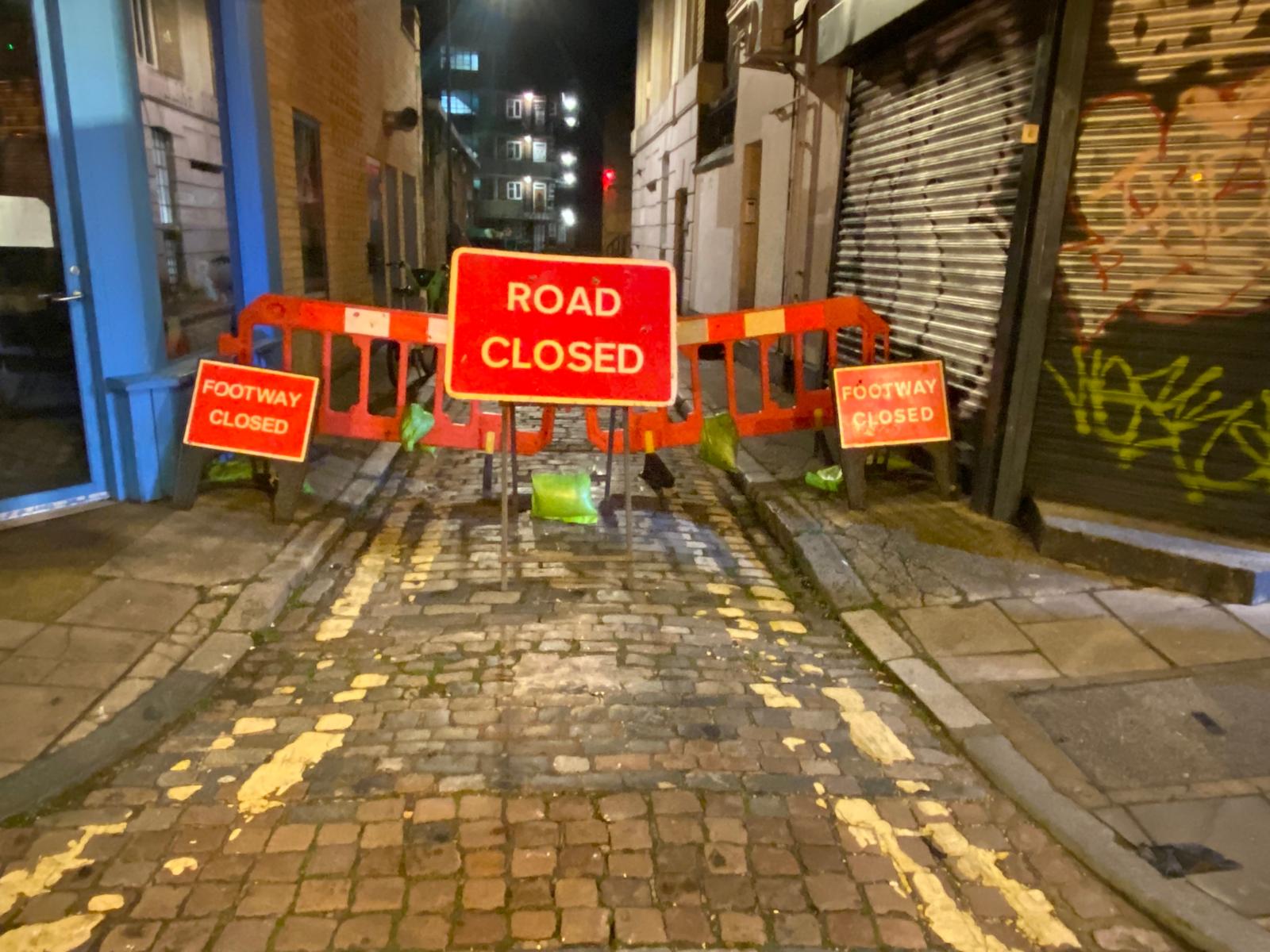
Bath and much of central Bristol have narrow carriageways, listed frontages, steep gradients and heritage conditions that limit what can be fixed to the ground or attached to street furniture.

There is rarely room for a working space, a pedestrian route and a running lane, so the arrangement has to formally give something up — and the pedestrian route is the element the authority will not compromise on.

Narrow rural lanes with no diversion

Across Somerset, Devon and Cornwall, single-track lanes with high hedges and passing places are the norm. A closure can add many miles and route HGVs onto lanes that cannot accommodate them.

Stop-go and convoy working are usually the answer, with the length of the shuttle, sight lines and the number of operatives set by the road rather than by convenience.

Seasonal and holiday traffic

The M5 and the routes into Devon and Cornwall carry very heavy seasonal traffic, much of it unfamiliar drivers towing caravans and trailers, and authorities restrict works accordingly during peak periods.

Programmes have to be planned around those restrictions, and diversion signing has to be unambiguous for drivers who do not know the area.

Gradients, weather and exposure

Steep gradients in Bath, Bristol and much of the West Country affect braking distances, sign siting and the practicality of stop-go over a long shuttle.

Coastal and moorland exposure brings wind, driving rain and fog that displace signage and cut conspicuity, so sign condition, weighting and inspection matter more here than on a sheltered urban street.

Older infrastructure and buried services

Much of the region's utility apparatus sits beneath older street layouts and rural verges with poor records, so excavations open in awkward places and frequently grow.

When the footprint changes the traffic arrangement has to change with it under the permit conditions, which is far quicker when the contractor who designed and submitted the scheme is already on site.

Long distances between sites

A South West programme can spread over a hundred miles or more, and a contractor without proper resourcing will drift on attendance, inspections and reactive call-outs.

We plan those programmes as programmes — allocated crews, planned inspection visits and 24/7 response — rather than reacting to whichever site shouts loudest.

Our process

How a the South West scheme gets fromenquiry to signed-off completion

  1. Step 1

    Enquiry and site review

    You send the location, the works and the dates. We check the road type, the speed limit, the highway authority involved and any local constraints before quoting.

  2. Step 2

    Scheme design and CAD drawing

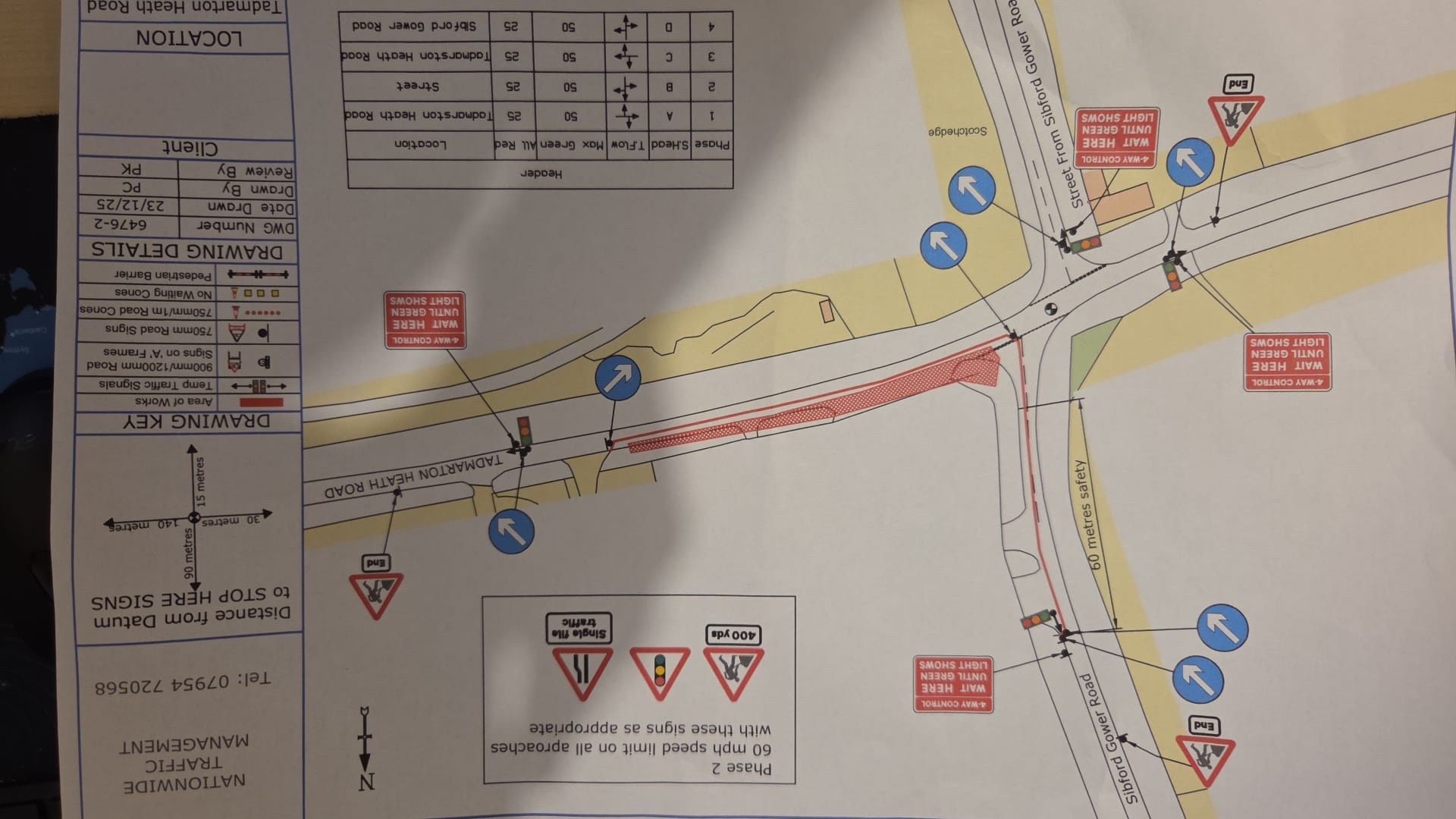
    We produce the temporary traffic management design and scheme-specific CAD drawings for the arrangement your works actually need, not a generic layout.

  3. Step 3

    Permits, TTROs and authority approval

    We submit to the local highway authority and manage the process end to end — permits, Temporary Traffic Regulation Orders, notices and conditions — and confirm approval in writing.

  4. Step 4

    Programming and resourcing

    Crews, signals, signage and barriers are allocated from our fleet of around 150 vehicles and team of around 300, and booked to the dates you have been given.

  5. Step 5

    Installation by our own crews

    Carded and ticketed operatives working under our supervision install to the approved drawing, with the arrangement checked against the drawing before works start.

  6. Step 6

    Maintenance, phase changes and collection

    The scheme is inspected and maintained, damage and displacement dealt with including out of hours, phases changed as planned operations, and everything collected at completion.

Standards we work to in the South West

  • Sector Scheme 12 — 12A, 12B, 12C & 12D
  • Chapter 8 (Traffic Signs Manual)
  • New Roads & Street Works Act (NRSWA)
  • Lantra/NRSWA cards, T1/T2/T3 tickets
  • £10m public liability & £10m employers' liability insurance

Accreditations held

  • National Highway Sector Schemes
  • Constructionline Gold
  • BM Trada
  • CHAS
  • Acclaim
  • Achilles UVDB
  • Avetta
  • Builder's Profile
  • SafeContractor
  • ISO 9001

Certificates are issued for your pre-qualification pack on request. We work direct for end clients and as a subcontractor to principal contractors.

Straight answers

Traffic management in the South Westquestions we are asked

Do you cover the South West?

Yes — Swindon and the M4 corridor, Bristol, Bath, Gloucester, Cheltenham, Chippenham, Wiltshire, Somerset, Taunton, Exeter, Devon and Cornwall.

How fast can you reach a South West site?

Swindon, Bristol, Bath and Gloucestershire are close to our Oxfordshire base and are routine allocations. Further west, programmes are planned with allocated crews and equipment from a fleet of around 150 vehicles. Emergency call-out cover is 24 hours a day, seven days a week.

How much does traffic management cost in the South West?

It depends on the road type, the arrangement — closure, signals, stop-go or convoy — the equipment on hire, the duration, the crew requirement and travel to site, plus authority permit or TTRO fees. Rural stop-go with several operatives is priced differently from a set of portable signals, so we quote in writing per scheme.

Is emergency traffic management available in the South West?

Yes, 24/7 rapid-response call-outs for burst mains, carriageway failures, collisions and damaged temporary traffic management.

Can you work on narrow lanes in Devon and Cornwall?

Yes, and it is usually stop-go or convoy working rather than closure, because a rural closure can add many miles and push HGVs onto unsuitable lanes. Shuttle length, sight lines and operative numbers are set by the road itself.

Can you work on the M4 and M5?

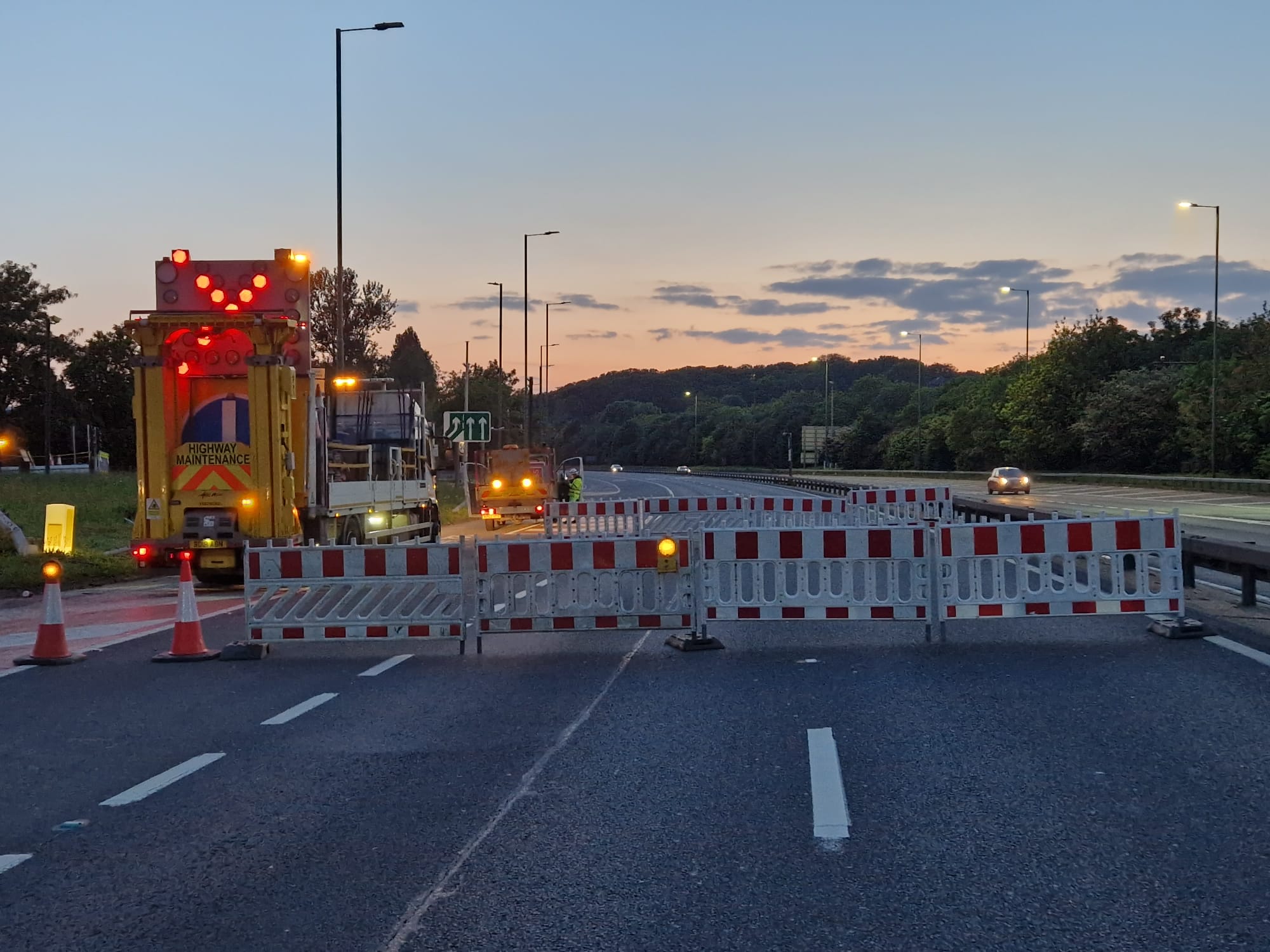
Yes. Motorway schemes are delivered under Sector Scheme 12D registration by ticketed crews, in windows agreed with National Highways, with correct taper lengths, safety zones and advance signing.

Do you handle permits and TTROs in the region?

Yes, end to end with each relevant authority, including permit applications, Temporary Traffic Regulation Orders, notice periods and conditions, with approval confirmed in writing before you mobilise.

Can you work in Bath and central Bristol?

Yes. Those schemes are dominated by narrow historic streets, gradients and heritage constraints, so the pedestrian arrangement and what can be fixed to the ground drive the design, and drawings are prepared for the specific street rather than a template.

Do you work nights in the South West?

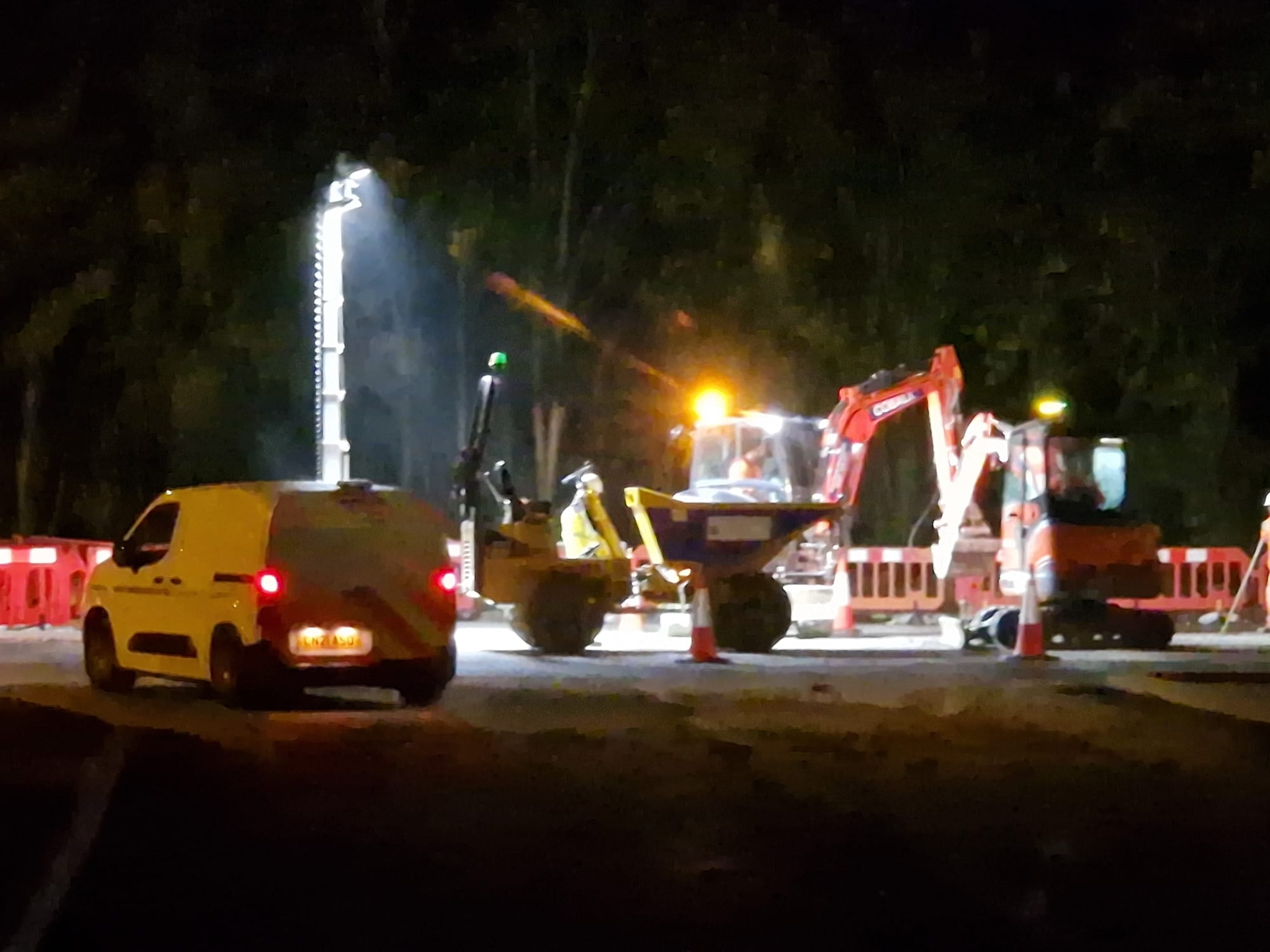
Yes, on motorway corridors and busy city routes where daytime occupation is restricted. Night schemes are planned as night shifts, with lighting and conspicuity designed in.

What accreditations and insurance do you hold?

Sector Scheme 12 registration across 12A to 12D, Chapter 8 and NRSWA compliance, Constructionline, BM Trada, CHAS, Acclaim, Achilles UVDB, SafeContractor and ISO 9001, with £10 million public liability and £10 million employers' liability.

Nearby areas we also cover

  • Traffic management in Wales

    Traffic management across North and South Wales: Cardiff, Newport, Swansea, Wrexham and rural routes. Closures, convoy and stop-go, signals, permits and TTROs. 24/7 cover, £10m insurance.

  • Traffic management in Oxfordshire

    Temporary traffic management in Oxfordshire from our county base: road and lane closures, traffic light hire, permits and TTROs with Oxfordshire County Council. 25 years, 24/7 cover, £10m insurance.

  • Traffic management in the South East

    Traffic management across the South East and home counties: Berkshire, Buckinghamshire, Surrey, Kent, Sussex, Hampshire. Closures, signals, permits, TTROs, night works, 24/7 cover.

  • Traffic management in the Midlands

    Traffic management across the East and West Midlands: Birmingham, Coventry, Leicester, Nottingham, Derby, Northampton. Closures, signals, permits, TTROs, night works, 24/7 cover.

Keep going

See every service area, browse all traffic management services, read about the company, return to the homepage or contact the team.

City street, motorwayor single-track lane.Send us the road.

Give us the location, the works and the dates. You get a written estimate covering the method we would use, the authority permit or TTRO, the equipment and the crews.

25 years · Sector Scheme 12A–12D · £10m public liability · 24/7 cover

Send the details

Road type, duration and start date is enough to price it. We reply to every enquiry.