24/7 cover · Nationwide from Oxfordshire

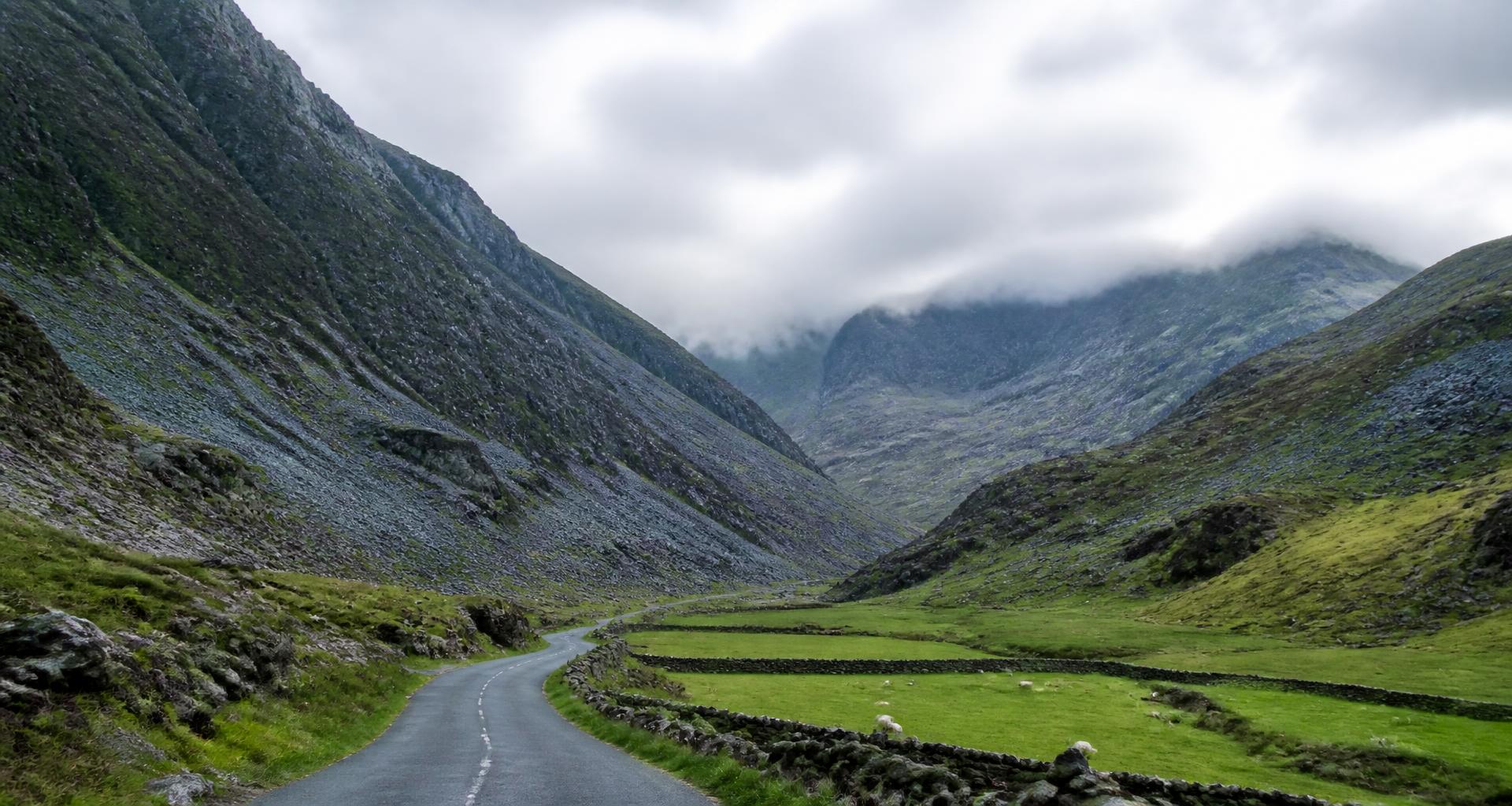
Narrow Welsh mountain road winding through a green valley beneath slate-grey rock faces

Wales · north & south

Traffic Management AcrossWales, North and South,Valleys and Coast.

Long-distance rural routes, valley roads with a single way in and out, and city works in Cardiff, Newport, Swansea and Wrexham. Different problems, one contractor with the crews and equipment to cover all of them.

North and South Wales · valley and mountain routes · convoy and stop-go specialists · M4 corridor 12D capability · 24/7 call-out · £10m public liability.

25

Years in traffic management

~300

Operatives & staff

~150

Lorries, vans & cars

£10m

Public liability cover

24/7

Cover, including call-outs

Local coverage

Coverage across Wales, from the M4 corridor to the north coast

Coverage
South Wales including Cardiff, Newport, Swansea and the valleys; North Wales including Wrexham, Deeside and the A55 corridor; plus mid-Wales
Availability
24 hours, 7 days, including night works and emergency rapid-response call-outs
Authorities
Welsh local highway authorities plus the trunk road agencies for the M4, A55 and other trunk routes
Site types
Valley roads, mountain and rural routes, city and town centre streets, M4 and A55 corridors, coastal routes and events

We deliver traffic management across South Wales — Cardiff, Newport, Swansea, Bridgend, Merthyr Tydfil, the valleys and the M4 corridor — and across North Wales, including Wrexham, Deeside, the A55 corridor and the towns along the north coast, along with mid-Wales in between.

Wales is a long country with a road network shaped by terrain. Many communities are served by a single valley road or a single coastal route, so a closure does not shift traffic to a parallel street; it can remove access to a whole community or add a very long detour over higher ground.

That makes method selection the most important decision on a Welsh scheme. Convoy working, stop-go and signal arrangements often keep a route open where a closure would be unacceptable to the authority and to residents — and where a closure is genuinely necessary, the diversion has to be assessed properly, including height, width and gradient restrictions.

The work includes utility and civils programmes in the South Wales cities and valleys, A-road and M4 corridor schemes, A55 and North Wales trunk route works, long-duration development accesses, rural stop-go and convoy on mountain and valley roads, and event traffic management on constrained routes.

Why us here

Why contractors in Waleskeep the work with us

Method matched to terrain
Convoy, stop-go or signals where a valley or mountain route cannot be closed, and a properly assessed diversion where it can.
Resourced for a long country
Around 300 operatives and around 150 vehicles, so North and South Wales programmes are crewed and inspected rather than visited occasionally.
25 years of experience
A quarter of a century of temporary traffic management on rural routes, corridors and city streets alike.
Diversions checked on the ground
Height, width and gradient restrictions are assessed before submission, because a failed diversion in Wales can add many miles.
Carded, ticketed crews
Lantra and NRSWA cards with T1, T2 and T3 tickets, and 12D-registered crews for high-speed work.
Accredited and insured
Constructionline, CHAS, SafeContractor, Achilles UVDB, Acclaim, BM Trada and ISO 9001, with £10m public and £10m employers' liability.

Local conditions

What terrain does to a traffic management scheme in Wales

Welsh schemes are shaped less by traffic volume than by geography: where the road goes, whether anything runs parallel to it, and how steep and exposed it is.

Single-access valleys and communities

Many valley communities have one main road in and out. Closing it does not divert traffic; it isolates people, blocks bus routes and can obstruct emergency access.

That is why so much valley work uses signals, stop-go or convoy arrangements, with maintained access for residents, deliveries and emergency services designed in from the start.

Long rural and mountain diversions

Where closure is unavoidable, the alternative route can be very long and may include narrow lanes, steep gradients, weight limits or low structures unsuitable for HGVs.

Diversion routes are driven and assessed, and signed continuously, because a driver who loses the route on a mountain road does not simply take the next left.

Weather, exposure and gradient

Wind, driving rain, fog and winter conditions on exposed and upland routes displace cones and signage and reduce conspicuity badly, and gradients lengthen braking distances.

Sign siting, weighting, cleanliness and inspection frequency all have to reflect that, and a stop-go shuttle on a steep or blind section needs its length and sight lines set conservatively.

Older infrastructure and industrial legacy

The valleys and industrial South Wales carry a legacy of older utility apparatus, mine workings, retaining structures and narrow carriageways built for far less traffic.

Excavations there frequently reveal unexpected apparatus and need more space than planned, which changes the traffic arrangement mid-job under the permit conditions.

City and town centre constraints

Cardiff, Newport, Swansea and Wrexham bring the urban set of problems: bus routes, pedestrian volume, cycle provision, loading and limited diversion options.

Pedestrian arrangements need barriers with tapping rails and workable widths, and bus swept paths need checking before submission rather than on the first morning.

Trunk corridors and seasonal coastal traffic

The M4 in the south and the A55 in the north carry high volumes at speed, including freight and seasonal holiday traffic to the coast, and works there are tightly restricted in peak periods.

High-speed arrangements are delivered under Sector Scheme 12D with correct taper lengths, safety zones and advance signing, usually inside agreed overnight or off-peak windows.

Our process

How a Wales scheme gets fromenquiry to signed-off completion

  1. Step 1

    Enquiry and site review

    You send the location, the works and the dates. We check the road type, the speed limit, the highway authority involved and any local constraints before quoting.

  2. Step 2

    Scheme design and CAD drawing

    We produce the temporary traffic management design and scheme-specific CAD drawings for the arrangement your works actually need, not a generic layout.

  3. Step 3

    Permits, TTROs and authority approval

    We submit to the local highway authority and manage the process end to end — permits, Temporary Traffic Regulation Orders, notices and conditions — and confirm approval in writing.

  4. Step 4

    Programming and resourcing

    Crews, signals, signage and barriers are allocated from our fleet of around 150 vehicles and team of around 300, and booked to the dates you have been given.

  5. Step 5

    Installation by our own crews

    Carded and ticketed operatives working under our supervision install to the approved drawing, with the arrangement checked against the drawing before works start.

  6. Step 6

    Maintenance, phase changes and collection

    The scheme is inspected and maintained, damage and displacement dealt with including out of hours, phases changed as planned operations, and everything collected at completion.

Standards we work to in Wales

  • Sector Scheme 12 — 12A, 12B, 12C & 12D
  • Chapter 8 (Traffic Signs Manual)
  • New Roads & Street Works Act (NRSWA)
  • Lantra/NRSWA cards, T1/T2/T3 tickets
  • £10m public liability & £10m employers' liability insurance

Accreditations held

  • National Highway Sector Schemes
  • Constructionline Gold
  • BM Trada
  • CHAS
  • Acclaim
  • Achilles UVDB
  • Avetta
  • Builder's Profile
  • SafeContractor
  • ISO 9001

Certificates are issued for your pre-qualification pack on request. We work direct for end clients and as a subcontractor to principal contractors.

Straight answers

Traffic management in Walesquestions we are asked

Do you cover Wales?

Yes, North and South Wales plus mid-Wales — including Cardiff, Newport, Swansea, Bridgend, Merthyr Tydfil and the valleys, and Wrexham, Deeside, the A55 corridor and the north coast towns.

How fast can you reach a site in Wales?

Wales is a planned coverage area with crews and equipment allocated from around 300 staff and around 150 vehicles. Planned schemes are booked to your dates, and emergency rapid-response call-out cover runs 24 hours a day, seven days a week.

How much does traffic management cost in Wales?

Cost is driven by the road type, the method the terrain allows — closure, signals, stop-go or convoy — the equipment on hire, the duration, the number of operatives and travel to site, plus authority permit or TTRO fees. A long convoy operation on a mountain road prices very differently from portable signals in a town, so we quote each scheme in writing.

Do you provide emergency traffic management in Wales?

Yes, 24/7. That includes securing a route after a collision, carriageway failure, burst main or landslip-related closure, and attending damaged temporary traffic management.

Can you keep a valley road open while we work?

Usually, yes — through signals, stop-go or convoy working with maintained access for residents, buses, deliveries and emergency services. Where the valley has a single access route, keeping it open is normally what the authority will insist on.

Can you work on the M4 and A55?

Yes, under Sector Scheme 12D registration with ticketed crews, in windows agreed with the relevant trunk road authority, with correct taper lengths, safety zones and advance signing.

Do you handle Welsh permits and TTROs?

Yes, end to end with the relevant local highway or trunk road authority: permit applications, Temporary Traffic Regulation Orders, notice periods and conditions, with approval confirmed in writing before your works start.

How do you deal with long diversion routes?

We assess them on the ground for width, height, weight limits and gradient before submission, then sign them continuously so drivers do not lose the route. On rural Welsh roads a missing sign creates U-turns and unsuitable rat-runs.

Do you work nights in Wales?

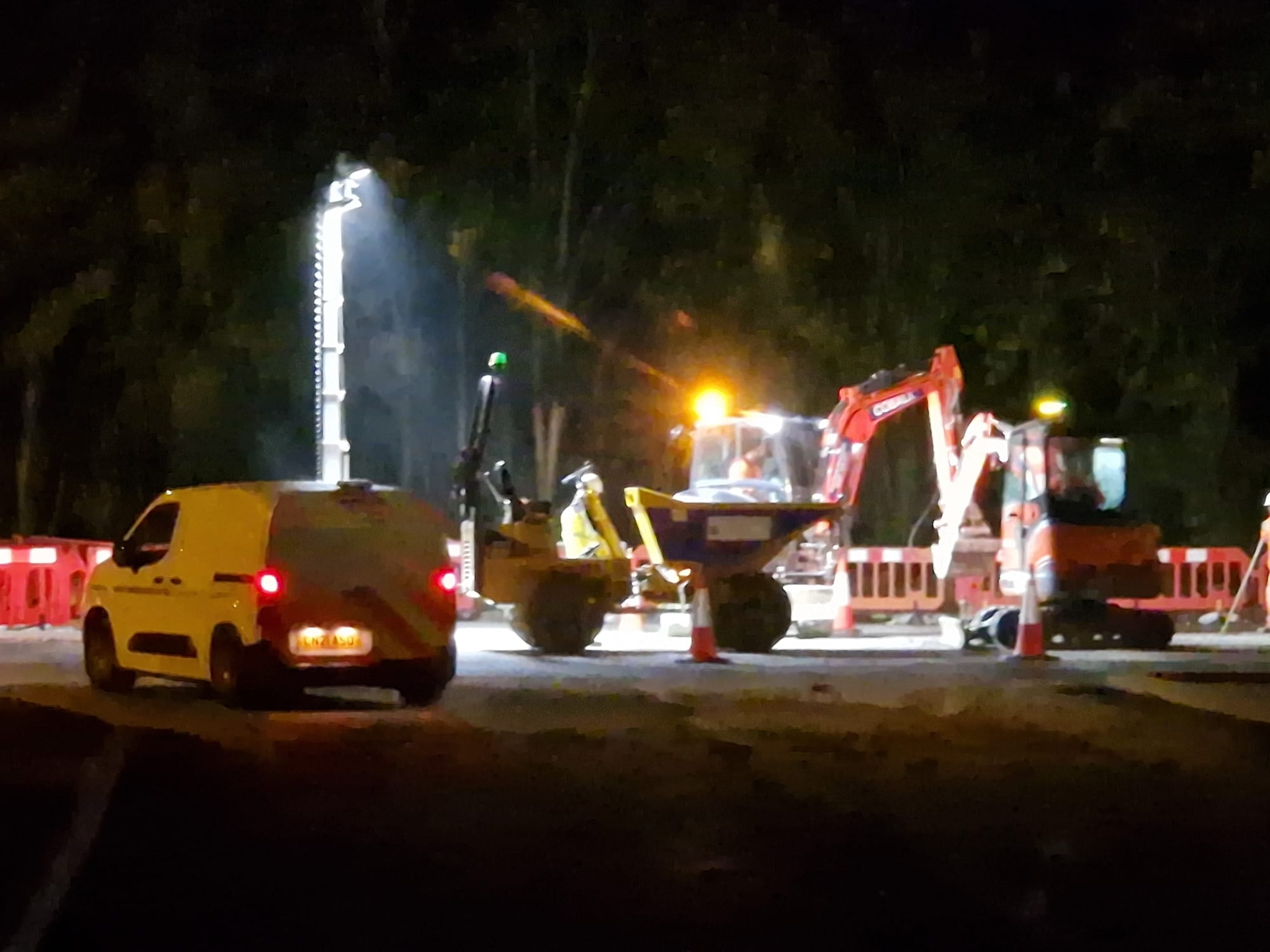
Yes, particularly on the M4, A55 and busy urban corridors where daytime occupation is restricted, with lighting and conspicuity planned for night working.

What accreditations and insurance do you hold?

Sector Scheme 12 registration across 12A to 12D, Chapter 8 and NRSWA compliance, Constructionline, BM Trada, CHAS, Acclaim, Achilles UVDB, SafeContractor and ISO 9001, with £10 million public liability and £10 million employers' liability.

Nearby areas we also cover

  • Traffic management in the South West

    Traffic management across the South West: Bristol, Bath, Swindon, Gloucester, Somerset, Devon and Cornwall. Closures, stop-go, signals, permits and TTROs with 24/7 cover and £10m insurance.

  • Traffic management in the Midlands

    Traffic management across the East and West Midlands: Birmingham, Coventry, Leicester, Nottingham, Derby, Northampton. Closures, signals, permits, TTROs, night works, 24/7 cover.

  • Traffic management in the North

    Traffic management across the North West and North East: Manchester, Liverpool, Leeds, Sheffield, Newcastle, Yorkshire and Cumbria. Closures, signals, permits, TTROs, 24/7 cover, £10m insurance.

  • Traffic management in Oxfordshire

    Temporary traffic management in Oxfordshire from our county base: road and lane closures, traffic light hire, permits and TTROs with Oxfordshire County Council. 25 years, 24/7 cover, £10m insurance.

Keep going

See every service area, browse all traffic management services, read about the company, return to the homepage or contact the team.

Valley road, coast roador city street.Tell us where.

Send the location, the works and the dates. You get a written estimate covering the method the terrain allows, the authority permit or TTRO, the equipment and the crews.

25 years · Sector Scheme 12A–12D · £10m public liability · 24/7 cover

Send the details

Road type, duration and start date is enough to price it. We reply to every enquiry.